Watch It First
Everyone’s first-amp story is basically the same. You get a guitar, you plug it into nothing, and about a week later you realize a guitar with no amp is just an oddly shaped decoration.
The Fender Frontman 10G is the amp a huge chunk of us actually started on. Tiny, cheap, and it’s got that Fender badge on the front, which matters more than it should when you’re 14.
So is it actually decent, or just a recognizable name riding on nostalgia? Let’s get into it.
Tone – What You’re Actually Working With
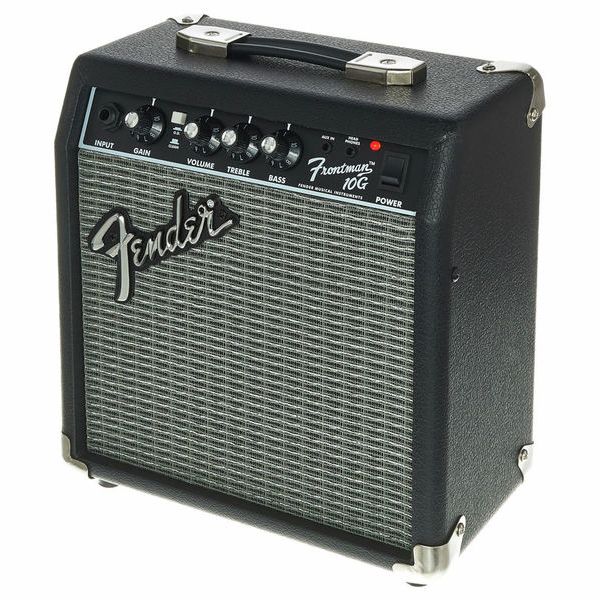
One channel, one 6″ speaker, 10 watts. That’s the whole spec sheet in a sentence, and honestly it tells you most of what you need to know.
Clean tone is where this thing actually earns its keep. It’s got that slightly glassy, slightly compressed Fender clean character – not blackface-amp good, but recognizably in the family.
Roll the volume up past halfway and the little 6″ speaker starts to break up naturally on its own, which is actually kind of charming. It’s not „amp in a room” breakup, it’s more „cheap speaker straining” breakup, but for practicing rhythm parts it works fine.
Flip the overdrive switch and things get more complicated. It’s not a bad drive sound exactly, it’s just a limited one – single-voiced, a bit fizzy at the top end, and it doesn’t clean up much when you back off your guitar’s volume knob.
If you’re mostly playing blues or classic rock rhythm parts at bedroom volume, it does the job. If you’re chasing tight palm-muted metal chug, this was never going to be your amp – no amp at this size and price really is.
The two-band EQ (bass and treble, no mids) is basic but usable. You won’t sculpt some magical tone out of it, but you can dial out the harshest fizz on the overdrive channel or brighten up the cleans a bit. That’s about all you can ask for at this price.
Playability and Build
At 3.8kg this thing is genuinely light. You can carry it one-handed to a friend’s house, a lesson, wherever, and not think twice about it.
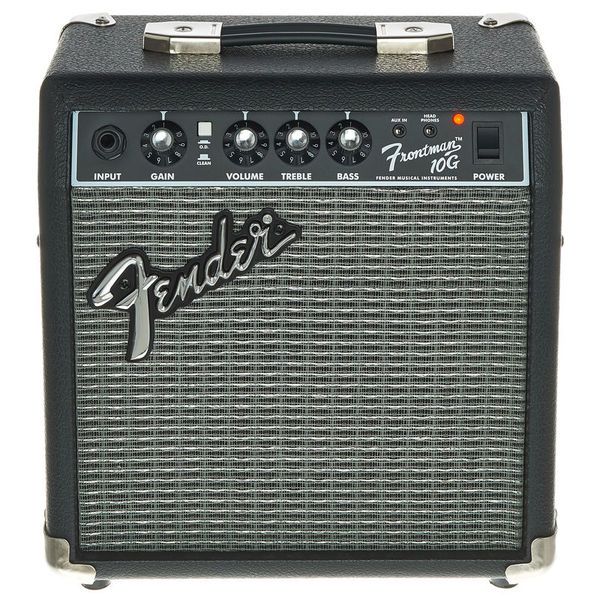
Build quality is fine for the price bracket. It’s not going to survive being thrown in the back of a touring van for ten years, but it’s not trying to. The controls (volume, two-band EQ, overdrive switch) are simple enough that you’ll never need the manual.
The cabinet is a fairly basic particleboard-and-vinyl build, which is standard at this price point. The handle up top is functional rather than comfortable – fine for short carries, less fine if you’re lugging it across town.
There’s a headphone output and an aux input for jamming along to backing tracks or Spotify, which honestly might be the single most-used feature on amps like this. Silent practice at 11pm without annoying the whole house? Yes please.
One thing worth flagging: plugging in headphones doesn’t just quiet the amp down, it changes the voicing slightly. It’s a bit thinner and more mid-focused than the speaker sound. Not a dealbreaker, just something to expect.
Who It’s For
This is a first amp, full stop. It’s for someone who just bought their first electric – maybe something like a Squier Sonic Strat or one of the other best cheap electric guitars for beginners – and needs something to actually hear it through.
It’s also a solid grab for a spare bedroom amp, a „keep it at grandma’s house” amp, or something to toss in the car for impromptu practice. Not a gigging amp. Not even really a „jamming with a drummer” amp – it’ll get drowned out instantly.
Parents buying a first guitar-and-amp package for a kid also land here a lot, and honestly it’s a sensible pick for that. Cheap enough that it’s not a huge loss if the interest fizzles out, decent enough that it won’t actively put someone off playing.
The Honest Niggles
No reverb. None. For a Fender amp that feels like a strange omission, since Fender basically invented „amp reverb you fall in love with.” You’ll want a reverb pedal eventually if you stick with this.
The overdrive channel gets a bit farty and undefined once you push the gain past halfway. IMO it’s usable for practice but not something you’d record with.
There’s also no effects loop and no line/recording output beyond the headphone jack, so don’t expect to plug this into an interface and call it a day. If you want to record direct, you’ll be routing through the headphone out into an interface, which works but isn’t ideal.
At higher volumes the single speaker just runs out of headroom – it starts to sound compressed and a bit boxy rather than loud. That’s just physics with a speaker this small, not really a flaw exclusive to this amp.
Worth comparing against a few other budget options before you decide – the Marshall MG10 is the classic rival, the Roland Cube-10GX punches well above its size, and if your budget stretches a bit further the Orange Crush 35RT is a genuinely different tier of amp with actual reverb and effects built in.
If you’re pairing this with something a bit more capable down the line, guitars like the Ibanez GRGA120 will outgrow this amp long before you outgrow the guitar – which is fine, that’s how the beginner-gear ladder usually works anyway.
Specs at a Glance
- Power: 10W into 1x 6″ Fender Special Design speaker
- 1 channel with overdrive switch
- 2-band EQ (bass, treble)
- Aux input for external players
- Headphone output (doubles as silent practice mode)
- No reverb, no effects loop
- Weight: 3.8kg
- Dimensions: 280 x 260 x 146mm
Final Verdict
The Fender Frontman 10G isn’t trying to be a great amp. It’s trying to be a cheap, reliable, no-fuss way to hear your guitar, and at that job it succeeds completely.
If you’re buying your first electric and need an amp to go with it, or you want a lightweight backup for silent practice sessions, this ticks the boxes. Just don’t expect it to still be your only amp in two years – most players outgrow it fast, and that’s fine. That’s what it’s for.
Budget-wise it’s about as low-risk a purchase as guitar gear gets. It won’t blow you away, it won’t hold you back for the first six months either, and by the time it does start to feel limiting you’ll know exactly what you want to upgrade to. Worth a look if you’re just starting out.