Watch It First
Quick note up top: if you came here looking for the Thunderbird „60s” reissue specifically, Thomann doesn’t currently stock that exact variant.
What they do have, in steady supply, is the Epiphone Thunderbird IV — the standard-bearer of the whole reverse-body Thunderbird shape that every „60s” or vintage-flavoured version is really just a spin on anyway.
I’ve owned one of these on and off for years, on and off because I keep selling it and then missing it, so let’s talk about why.
That Unmistakable Shape
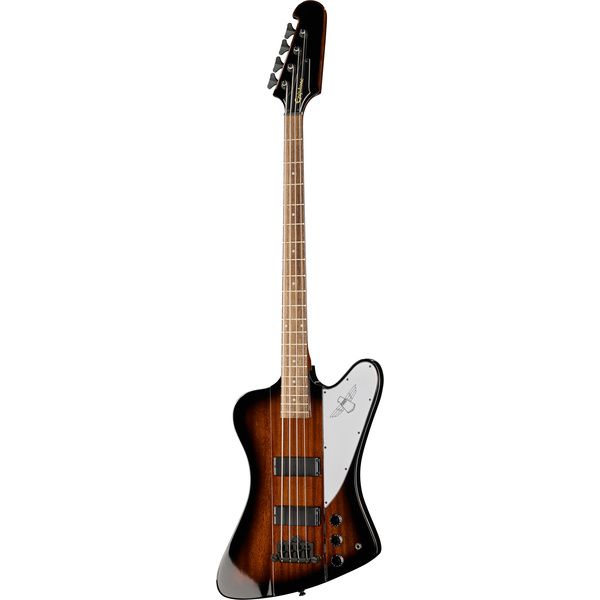
No other bass looks quite like a Thunderbird. That reverse „explorer meets spaceship” body has been polarising players since 1963, and honestly, that’s part of the charm.
You either love it on sight or you don’t, but every rock and metal bassist secretly wants to try one at least once. Nikki Sixx, Cliff Burton on occasion — this shape carries some serious pedigree.
Body and Neck
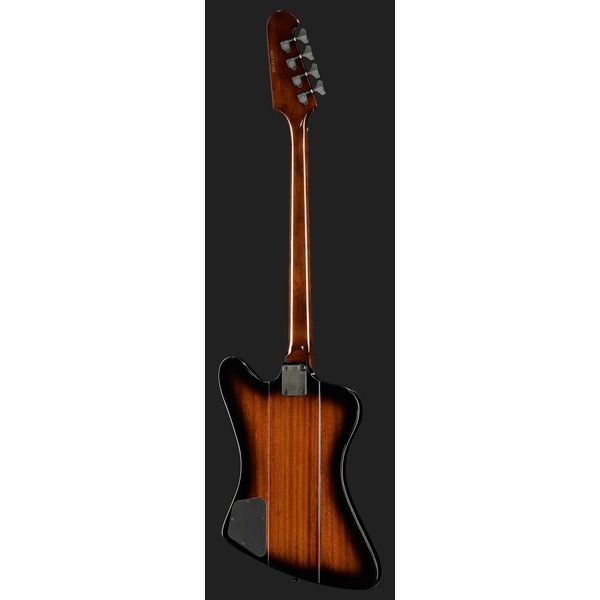
Mahogany body, bolt-on maple neck, Indian laurel fingerboard. This is a fairly classic recipe for a warm, slightly dark-voiced bass with plenty of low-mid character.
The nut sits at 1.73″ and it’s a long scale 34″ instrument, so nothing unusual there for anyone coming from a Precision or Jazz Bass. It feels immediately familiar in the hands despite looking like nothing else on the wall.
Tone: Deep, Growly, a Bit Metallic
Two humbuckers, passive electronics, black hardware. Simple setup, and it means the tone comes almost entirely from the wood and those pickups rather than any onboard EQ trickery.
What you get is a deep, punchy low end with a metallic edge on top that cuts through a mix without needing a ton of treble boost. It’s genuinely great for rock, punk, and metal, and it holds its own for classic rock too.
If you want something with a brighter, snappier voice for funk or jazz-leaning styles instead, the Squier Classic Vibe 70s Jazz Bass is a completely different animal worth comparing against.
Playability — Here’s the Honest Bit
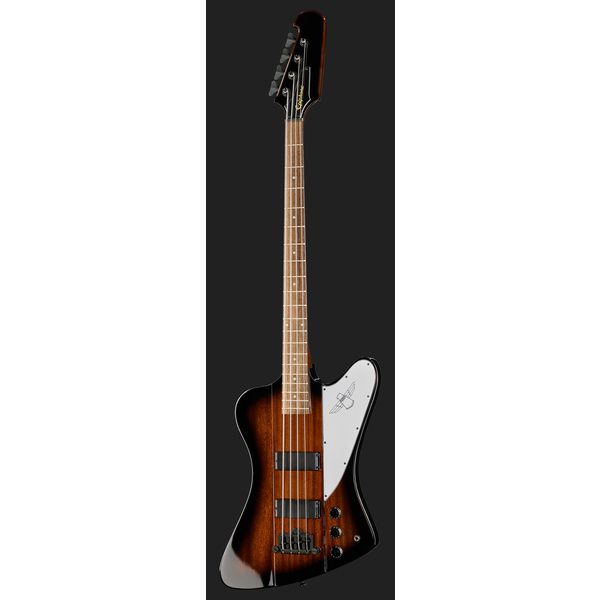
Thunderbirds are famously a bit neck-heavy. That reverse body shape means the balance point isn’t where you’d expect, and on a strap it wants to dive toward the headstock.
It’s manageable, and most players stop noticing after a couple of sessions, but if you’ve got a bad back or you’re precious about ergonomics, this isn’t the bass for you. Worth trying before you commit if you can.
Who This Bass Is For
Rock, punk, and metal players who want a genuinely distinctive look and a growly tone to match will get the most out of this. It’s also just a great „second bass” for anyone whose main instrument is a P or J style.
If ergonomics matter more to you than looks, something like the Ibanez EHB600 takes the opposite approach entirely and is worth a look too.
A Bit of Background
Gibson launched the original Thunderbird in 1963, and it’s been in and out of production ever since, going through non-reverse and reverse body eras depending on the decade.
Epiphone’s version, as Gibson’s sister brand, has always been the accessible way into that shape without the Gibson-level price tag. This particular Thunderbird IV has stuck around in Epiphone’s lineup for a long time because it nails the essentials without overcomplicating things.
It’s basically the meat-and-potatoes version of the Thunderbird formula. No flashy finishes options here, no gimmicks, just the classic shape and classic tone done reliably.
Pairing It With an Amp
Given how much low-mid character this bass already has, you don’t need an amp that adds a ton more mud. Something clean and punchy like the Fender Rumble 40 lets the Thunderbird’s natural growl come through without piling on extra colouration.
If you want a bit more headroom and a warmer voicing for home practice, the Warwick BC 20 Bass Combo is another solid, understated option worth cross-shopping.
How It Compares to Cheaper Options
If budget is genuinely tight and the Thunderbird shape isn’t a dealbreaker requirement, it’s worth knowing there are more affordable heavy-leaning basses out there, like the Harley Benton PJ-4 Deluxe, though obviously you won’t get that same silhouette.
And if short-scale is more your thing for comfort, the Ibanez TMB30 scratches a similar retro itch in a much smaller package.
One more thing worth a mention: stock strings on these are perfectly playable but nothing special. A lot of owners swap in a fresh set of roundwounds within the first few weeks just to wake the tone up a little further, and it’s a cheap upgrade that makes a real difference.
Specs at a Glance
- Body: Mahogany
- Neck: Bolt-on maple
- Fingerboard: Indian laurel
- Scale: Long scale (34″)
- Pickups: 2x humbuckers
- Electronics: Passive
- Hardware: Black
- Frets: 20
The Niggles
The neck-dive is real, not a myth people repeat online without trying one. A wide, grippy strap helps, but it never fully disappears.
The bridge can also be a bit fiddly to intonate properly straight out of the box — a lot of owners end up doing a basic setup themselves or having a tech look at it, which is a fair ask at this price but still worth budgeting for.
And being passive-only, you don’t get any onboard tone-shaping beyond the standard volume and tone knobs. Fine if you like a hands-off approach, less fine if you want to sculpt your sound at the instrument.
Final Verdict
I love this bass, niggles and all. The Thunderbird shape isn’t for everyone, but for players who want a genuinely distinctive look paired with a deep, growly tone, nothing else quite does the job the same way.
Build quality for the price is solid, the tone is unmistakably its own thing, and it’s held up as a rock and metal staple for decades for good reason.
If you can live with the neck-dive and fancy standing out from the usual sea of P and J basses, this one’s a genuine keeper.
A wide comfort strap and maybe a quick setup at your local shop, and you’ve got a bass that looks like nothing else in the room and sounds like it means business. That combination alone is worth the price of admission for a lot of players, myself included.