Watch It First
Some basses chase versatility. This one chases a very specific vibe, and nails it. The 70s Jazz Bass has a very specific job: sound like disco, funk, and Jaco all at once, with two pickups wide open and knobs barely touched.
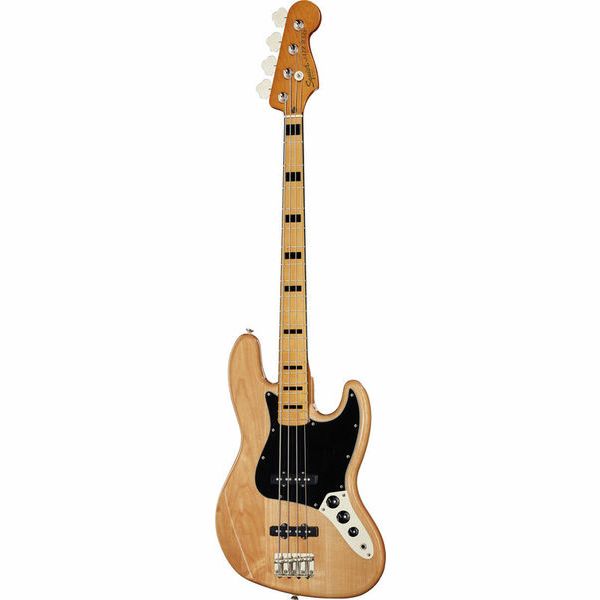
Squier’s Classic Vibe series has been quietly nailing this vibe for years, and the 70s Jazz Bass might be the best value entry in the whole lineup. Maple body, maple neck, maple board, two chunky single coils, black three-ply pickguard — it looks and plays the part.
I’ve had one of these in rotation for a while now, and it keeps finding its way back onto my strap over basses that cost three times as much.
Why the 70s Jazz Bass Is Different
Fender’s original 70s Jazz Basses moved away from the earlier 60s spec in a few key ways: wider headstocks, block inlays, and crucially, that fatter neck profile with a slightly wider nut. Squier’s Classic Vibe recreates all of that faithfully.
The control layout is the other giveaway — two separate volume knobs (one per pickup) plus a single master tone, rather than the blend-and-tone setup you’d find on a modern Jazz Bass. It’s a subtly different way of shaping your tone, more hands-on, more vintage in feel.
Body, Neck, and Feel
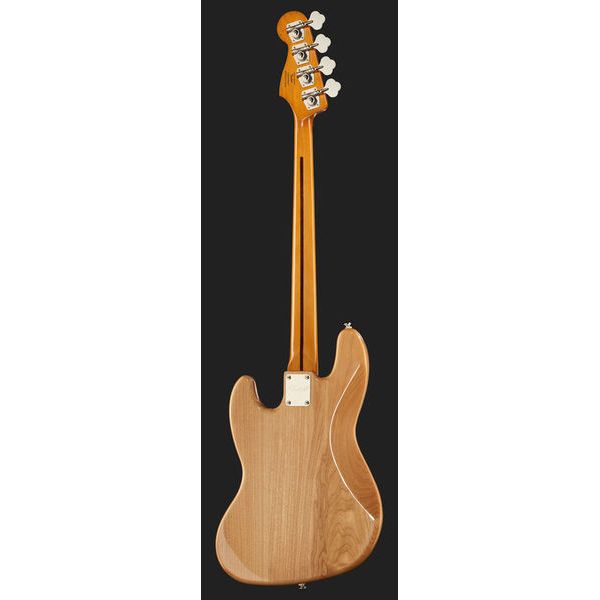
This particular finish uses a maple body and a matching maple neck and fretboard, which gives it a brighter, snappier voice compared to darker tonewood combos. The C-shaped neck profile is comfortable for extended playing, and the 9.5″ fretboard radius keeps things easy for both slap and fingerstyle technique.
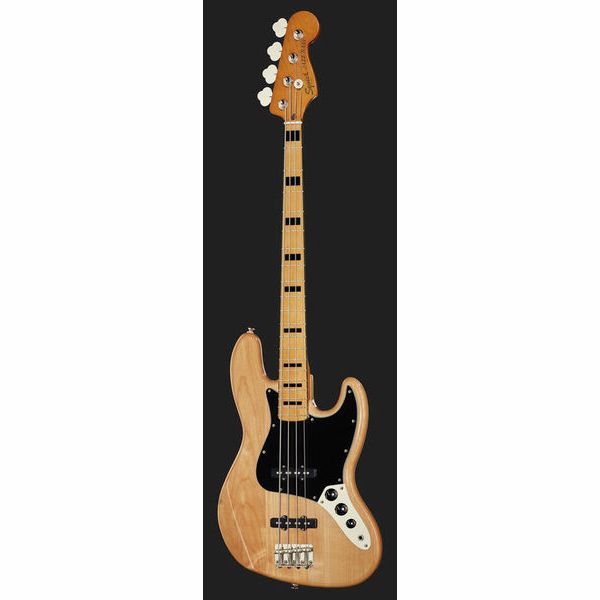
- Body: Maple
- Neck: Maple, bolt-on, C profile
- Fretboard: Maple, 20 narrow/tall frets
- Scale: Long scale (34″)
- Nut width: 38.1mm, bone nut
- Pickups: 2x Fender Designed Alnico single coils
- Controls: 2 volume, 1 master tone
- Hardware: Nickel-plated, vintage-style bridge
- Colour: Natural
How It Sounds
Both pickups wide open gives you that classic wide, scooped Jazz Bass growl — bright top end, present mids, and a low end that’s tight rather than boomy. Roll off the bridge pickup and you get into warmer, rounder Motown-adjacent territory. Roll off the neck pickup instead and it gets nasal and aggressive, closer to a modern slap tone.
It’s genuinely versatile despite looking like a one-trick vintage throwback. Funk, disco, indie, even lighter rock all sit comfortably in its wheelhouse. Compared to a Classic Vibe 60s Precision Bass, the Jazz has noticeably more top-end sparkle and a slimmer neck, while the P-Bass digs in harder in the low mids.
If you’ve played a 50s Precision Bass too, you’ll notice how much brighter and more scooped this Jazz voicing is by comparison — it’s a genuinely different tonal personality, not just a cosmetic difference.
How It Plays
Weight is one of the first things you notice picking this up — it’s a substantial instrument thanks to the maple body, more so than a lot of modern basses designed to be gig-friendly and light. Some players love that extra heft for the sustain it brings, others find it a bit much for a four-hour set.
The neck feels noticeably chunkier than a 60s-spec Jazz Bass neck, closer to a Precision Bass in the hand. If you’ve got smaller hands or you’re coming from a slim modern neck, it’s worth trying one out in person before committing, though most players adjust within a session or two.
Fingerstyle playing feels natural thanks to the string spacing, and slap technique works well too, if a touch less snappy than a bass with a more modern, thinner string gauge from the factory. Swap to lighter strings and that changes quickly if slap is your main thing.
The Niggles
Nothing’s perfect, even at this level of quality:
- No case or gigbag included at this price point
- Stock strings are decent but many players swap to flatwounds for a more authentic 70s vibe
- Passive electronics mean you’re relying on your amp’s EQ for shaping beyond the basic tone control
- Narrow/tall frets look vintage-correct but some players used to jumbo frets may need an adjustment period
Honestly, for a bass at this price, that’s a short list. None of these are really complaints so much as things to budget for or get used to — this is a vintage-spec instrument, and it plays like one on purpose.
Setup and Build Quality
Fit and finish on the Classic Vibe series has improved a lot over the last several years, and this bass reflects that clearly compared to older budget Squier lines I’ve played. Fretwork was clean out of the box on mine, no sharp edges, no high frets causing buzz.
Tuning stability is solid thanks to decent-quality vintage-style tuners, and the bone nut helps keep things stable compared to the plastic nuts you’ll find on cheaper basses. It’s the kind of instrument that feels like it belongs a price bracket higher than it actually sits in.
For amplification, something like the Markbass Little Mark IV or a lightweight combo like the Markbass Mini CMD 121P will let this bass’s brighter voicing really shine without adding unwanted harshness.
Who It’s For
This bass is for players who want that specific vintage Jazz Bass attitude — bright, growly, versatile — without paying USA Fender prices. Funk and disco players will love the tonal range; singer-songwriters and session players will appreciate how easily it sits in a mix.
If you gig regularly, pair it with a reliable combo like the Hartke HD25 for a lightweight, dependable rig that won’t fight the bass’s natural brightness.
Final Verdict
The Squier Classic Vibe 70s Jazz Bass earns its reputation. Authentic vintage spec, genuinely good build quality, and a tone that nails the classic Jazz Bass growl without needing an expensive American original.
Add a set of flatwounds if you want the full disco-era experience, and this bass will cover funk, rock, and everything in between for years. Easily one of the best value basses Squier makes right now.