Watch It First
The Precision Bass basically invented the electric bass guitar as we know it. Before 1951, bass players were lugging upright double basses to gigs.
Squier’s Classic Vibe 50s P Bass takes that original blueprint and reproduces it faithfully, minus the collector price tag.
No active EQ, no fancy pickup configuration, just one single-coil and a whole lot of thump. Let’s see if simple still works in 2026.
Build and Materials
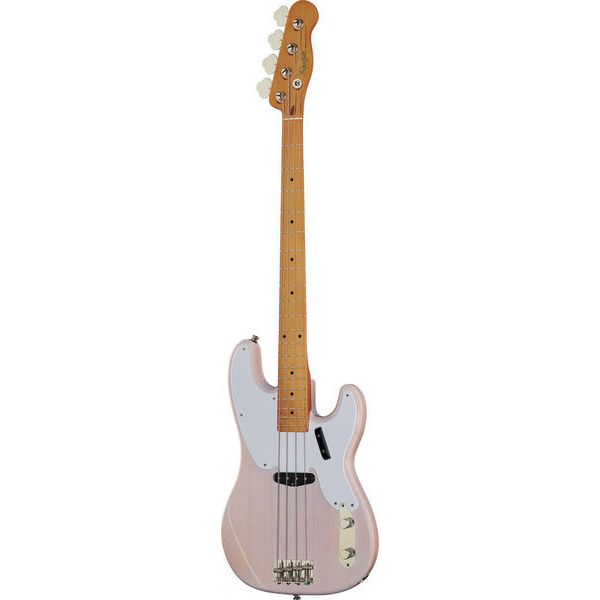
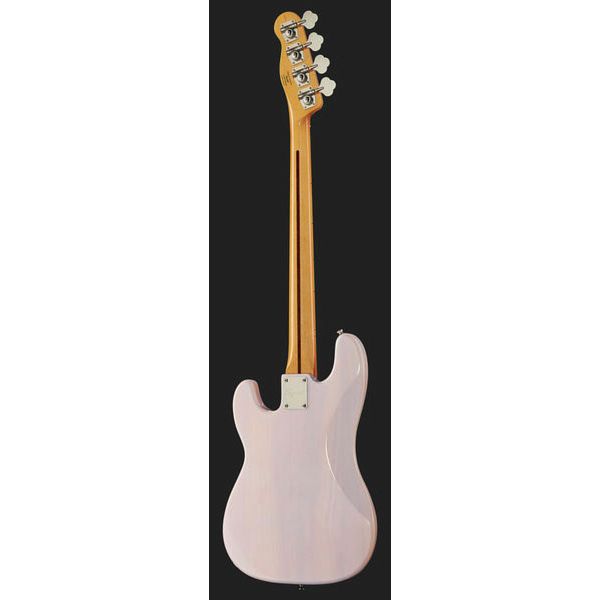
Pine body, one-piece maple neck, maple fretboard. That’s basically the exact recipe Leo Fender used back in the 50s.
The neck has a comfortably rounded „C” profile and measures 43mm at the nut — noticeably wider than a Jazz Bass neck, which is exactly the point.
A nice surprise at this price: a genuine bone nut instead of the usual synthetic material. Small detail, but it says something about where Squier decided to spend the budget.
The nitro-style satin finish on the neck is a nice touch at this price point — it ages and feels more like a real vintage neck than the thick gloss you get on a lot of budget basses.
The poplar body keeps weight reasonable for long sets, and the alder-adjacent tone it produces is warmer than you’d expect from a budget tonewood choice.
Hardware
Nickel hardware throughout, with a vintage-style four-saddle bridge and matching open-gear tuners.
Nothing modern or fancy, but that’s the whole appeal here — this bass is chasing an era, not chasing spec sheets.
The chunky 50s-style neck profile is polarizing on paper, but in practice it fills your hand in a way that a lot of players end up preferring once they adjust.
Playability
The chunkier neck profile takes a minute to adjust to if you’re coming from a modern slim-neck bass.
Once your hand settles in though, it’s genuinely comfortable — this shape has worked for 70+ years for a reason.
20 narrow-tall frets keep things simple. You won’t be shredding solos up top, but that was never the assignment for a P-Bass anyway.
Tone
One split-coil-style single pickup, positioned centrally. Passive electronics, just volume and tone.
The sound is that unmistakable P-Bass growl — thick low mids, punchy attack, and enough character to sit perfectly in a rock or blues mix without any EQ tricks.
Flip to flatwound strings and you get an even more authentic vintage thump, closer to what session players used on countless 50s and 60s recordings. FYI, that’s not included — you’ll want to budget for a string swap if full authenticity matters to you.
Studio engineers tend to love recording a P-Bass like this one precisely because it sits in a mix without a fight — less EQ carving needed compared to a hotter, more modern pickup.
Where This Bass Shines
Classic rock, country, and old-school punk are the obvious lanes — that single split-coil P pickup is basically the sound of half of recorded bass history.
It also does surprisingly well in modern indie and lo-fi styles, where a simpler, thumpier tone actually suits the mix better than something more hi-fi.
It’s less suited to genres that lean on slap or a scooped modern tone — a single P pickup just doesn’t have that voicing built in, no matter how you EQ it.
Who Should Buy This
Rock, blues, country, classic soul players will feel right at home immediately.
It’s also a great choice if you’re a guitarist doubling on bass for a session or a covers gig — the simplicity means zero learning curve on controls.
If you want pickup-switching flexibility or a more modern, scooped voicing out of the box, this isn’t the bass for that — look at a jazz-style or active bass instead.
First-time bass buyers get a lot of value here too — one pickup, one tone knob, one volume knob means less to overthink while you’re still learning.
Slap bassists and modern funk players should look elsewhere though. There’s no bridge pickup, no active preamp, none of the tonal flexibility that style demands.
How It Stacks Up
Against a genuine Fender Player Precision, the Squier gives up a bit of fit-and-finish polish but keeps the tone remarkably close — most owners say the gap has narrowed a lot in recent years.
Compared to other Squier tiers, the Classic Vibe series sits above the Affinity line in wood quality and pickup output, which is exactly why it keeps getting recommended as the sweet spot.
If you want P-Bass tone with a bit more tonal range, the Sire Marcus Miller P5 adds a second pickup and active electronics for not much more outlay.
Prefer German engineering over American vintage vibes? The Warwick RockBass Streamer 4 is worth a look too. And if boutique construction is more your thing, the Cort A4 Plus punches well above its price bracket.
Honest Niggles
One pickup means one tone. If you like tweaking and blending, this bass will bore you fast.
The wider neck also won’t suit everyone — if you’ve got smaller hands or you’re coming from a Jazz Bass, expect an adjustment period.
The single volume/tone control setup means zero tonal flexibility beyond rolling off treble — fine if you know what you’re getting, frustrating if you expected more range.
Some units also benefit from a proper setup out of the box, per user reports online. Worth getting checked by a tech if you’re not confident doing it yourself.
Specs at a Glance
- Body: Pine
- Neck: Maple, bolt-on, „C” profile
- Fretboard: Maple, 9.5″ radius
- Scale: 34″ (long scale)
- Frets: 20 narrow-tall
- Pickup: 1x Fender-designed alnico single coil
- Electronics: Passive, volume + tone
- Hardware: Nickel, vintage-style bridge and tuners
Final Verdict
Why do I love this bass? Because it doesn’t try to be anything other than what it is.
The Squier Classic Vibe 50s P Bass nails the original formula with real materials, a proper bone nut, and a tone that’s instantly recognizable to anyone who’s ever heard a bass guitar.
If your playing calls for that vintage thump rather than modern versatility, this is one of the smartest budget buys out there. Also check out the Epiphone EB-3 and the Schecter Stiletto Stealth-4 if you want to compare a couple of very different alternatives before deciding.
It’s not trying to be everything. It’s trying to be a great, honest P-Bass, and on that front it delivers.