Watch It First
Is the Fender CD-60SCE worth it? Short answer: yes, if you know what you’re actually buying.
This is a cutaway dreadnought acoustic-electric with a solid spruce top, mahogany body, and a built-in Fishman pickup – and it’s one of the most consistently recommended beginner-to-intermediate acoustics out there.
Let’s dig into whether the hype holds up.
Build and Materials
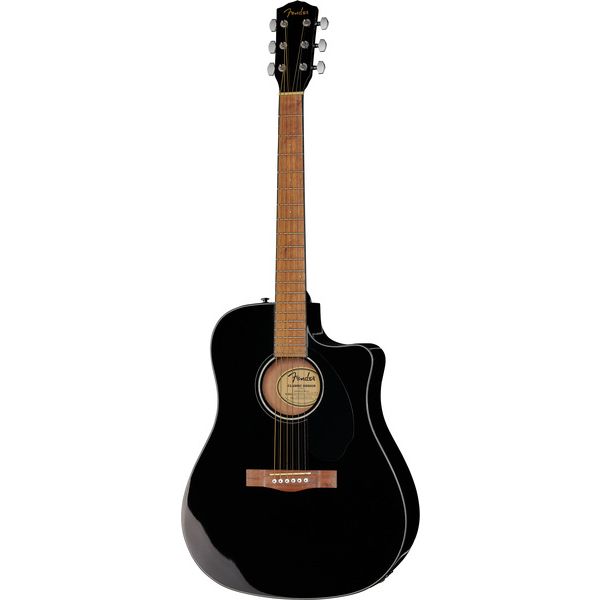
Classic dreadnought body with a cutaway, solid spruce top, and mahogany back and sides. Fender calls it a „Western” body shape, which is just their name for the standard dread silhouette.
Bracing is scalloped X-bracing, which usually means a slightly more resonant top than non-scalloped budget guitars. It’s a nice touch this far down the price range.
The neck is mahogany with a walnut fretboard, 20 frets, and a 643mm scale. Hardware is straightforward chrome, nothing fancy, but it does the job.
Fender’s been making the CD series for well over a decade now, and the SCE variant specifically has become something of a default recommendation in beginner guitar forums – for good reason, it turns out.
Electronics
The built-in system is Fishman’s CD preamp with an onboard tuner. That tuner is genuinely useful – you don’t need to carry a separate clip-on for quick checks before a set.
It’s a simple 3-band EQ setup with volume control, nothing you’d call boutique, but perfectly serviceable for open mics, jam sessions, and small gigs.
Playability and Feel
At 43mm nut width, this is a fairly standard, beginner-friendly neck profile. Nothing here will feel alien if you’ve played any other steel-string dreadnought.
The cutaway genuinely helps for upper-fret access, which is more than you can say for a lot of sub-budget dreadnoughts that bolt one on as an afterthought.
Factory setup is generally decent out of the box, though as always with mass-produced guitars, a proper setup from a local tech will make it noticeably better.
If you’re coming from a smaller-bodied guitar or a classical like the Yamaha C40, the dreadnought size and steel strings will take a bit of adjusting to at first.
Setup Out of the Box
Most units arrive with reasonably low action and no major fret issues, which isn’t something you can take for granted at this price point.
That said, humidity and shipping conditions vary, so a quick check-over from a tech after purchase – even just a truss rod glance – is never a bad idea with any factory-line guitar.
Spend the extra bit on a proper setup once, and this guitar will reward you with years of reliable playability. It’s a small investment relative to what you already saved buying budget.
Sound and Tone
Unplugged, it’s got that classic dreadnought boom – strong low end, decent projection, good for strumming singer-songwriter material and full-band acoustic sets.
The solid spruce top here is actually a genuine step up from Fender’s fully-laminate CD-60 (non-S) line – same family name, noticeably better resonance.
Plugged in through the Fishman system, it’s clean and gig-ready without excessive quack. It won’t fool anyone into thinking it’s a $3000 boutique acoustic, but for the price bracket it’s honestly above average.
Strumming pattern songs, campfire sets, small acoustic open mics – this thing was basically built for exactly that use case, and it delivers on it reliably every time.
Who It’s For
This is squarely aimed at beginners who want to gig eventually and intermediate players who need a reliable backup or travel guitar that won’t break the bank.
It’s also a sensible pick if you’re not sure yet whether you’ll stick with acoustic long-term – the built-in electronics mean you’re not locked out of gigging while you decide.
If your budget stretches further and tone is the priority over electronics, something like the Martin D-X2E is worth comparing against.
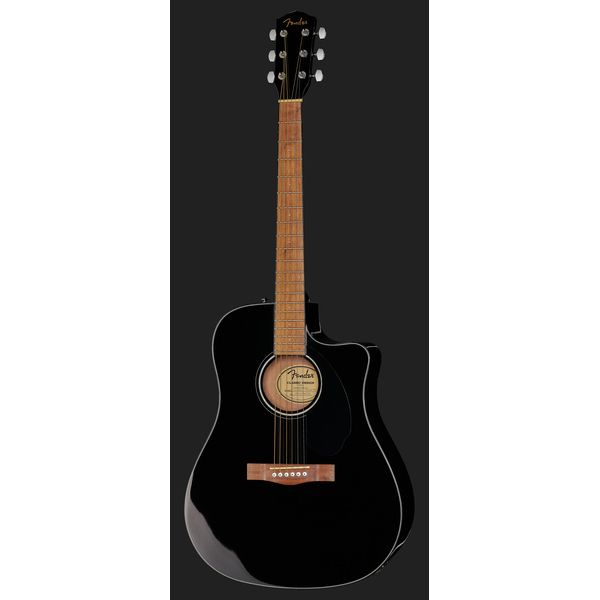
Colour options extend beyond the black finish reviewed here too – natural and mahogany-toned versions exist if black’s not your thing, all with the same build and electronics.
How It Compares
Against the Fender CC-60S, its smaller concert-bodied sibling, the CD-60SCE trades comfort and lap-friendliness for volume and low-end punch. Pick based on body size preference more than anything else.
Compared to the Taylor GS Mini, the Fender is a full-size instrument with a fuller low end, while the Taylor wins on portability and that snappy, articulate voice.
Neither comparison is really fair on price, honestly – the CD-60SCE is doing a lot at its level, and that’s the whole point.
Resale value on these tends to hold up decently too, since demand from other beginners looking for exactly this guitar stays fairly constant on the used market.
Honest Cons and Niggles
Stock strings are nothing special – budget for a fresh set of phosphor bronze strings soon after you buy, it’s a cheap upgrade that makes a real difference.
The tuners are functional but not premium – some players report needing more frequent tuning touch-ups than pricier guitars.
No case included. If you’re gigging with this regularly, add a hard case or solid gig bag to your budget.
And if you want a genuine nylon-string alternative with a similarly gentle learning curve, the Cordoba C5 CE is worth a look before you commit to steel strings.
Specs at a Glance
- Body: Dreadnought with cutaway
- Top: Solid spruce
- Back and sides: Mahogany
- Bracing: Scalloped X-bracing
- Neck: Mahogany, walnut fretboard
- Frets: 20
- Scale length: 643mm
- Electronics: Fishman CD preamp with onboard tuner
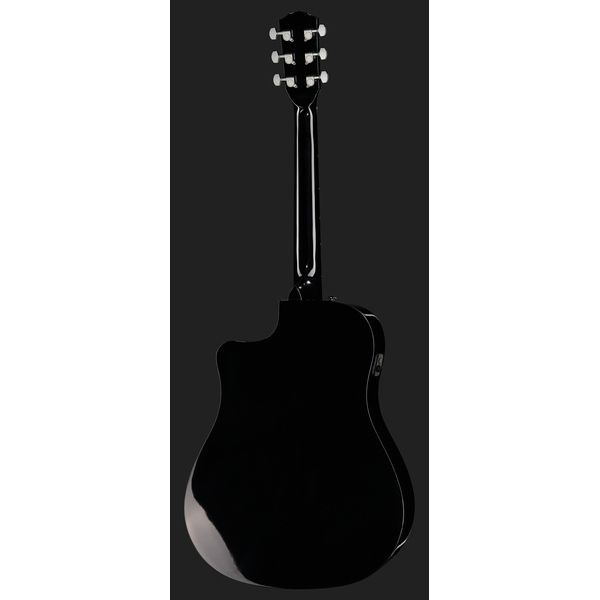
Bottom line: it’s not a boutique instrument and it doesn’t pretend to be. It’s a dependable workhorse that a lot of people’s guitar journeys genuinely started on, and plenty never felt the need to replace it.
Final Verdict
Is the Fender CD-60SCE worth it? For the price, yes – it’s a genuinely gig-ready dreadnought with real solid wood on top and a usable onboard system.
It’s not going to make you forget higher-end acoustics exist, but as a first „real” guitar or dependable backup, it earns its reputation. Solid choice, easy recommend, no drama.