Watch It First
Fender doesn’t exactly scream „acoustic guitar” to most players. Strat, Tele, sure. But the CC-60S has quietly become one of the more likeable budget acoustics I’ve picked up in a while.
This particular one is the All Mahogany version — solid mahogany top instead of the usual spruce — and that swap changes the voice more than you’d expect for the money.
I spent a good chunk of time with one to figure out if it’s actually worth it, or whether you’re better off with the cheaper spruce-top version instead.
A Concert Body That Actually Fits
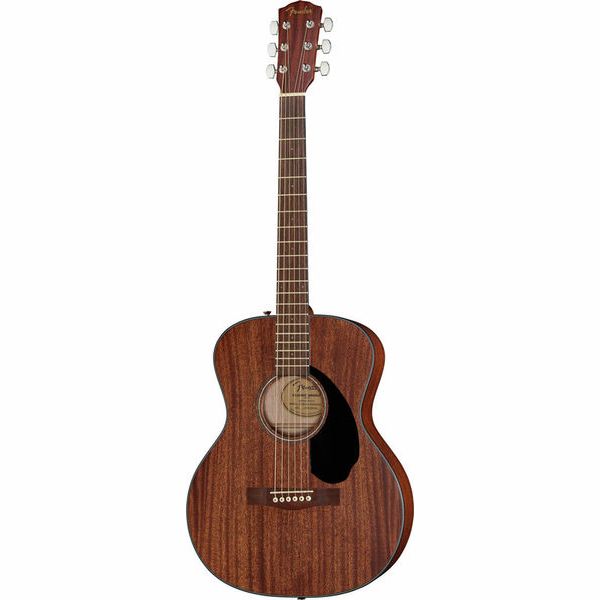
Fender calls this a „new, modified concert body,” and honestly it’s one of the best things about the guitar. It’s smaller than a dreadnought, which makes a real difference if you’re not built like a linebacker, or you just want something that doesn’t dig into your ribs on the couch.
The scale length sits at 643mm with a 43mm nut, so it’s not a shrunk-down toy — it plays like a proper full-scale guitar, just packaged into a friendlier shape. If you’ve tried something like the Little Martin LX1E and found it a bit too small for serious practice, the CC-60S is the size-up you’re looking for.
Build Quality
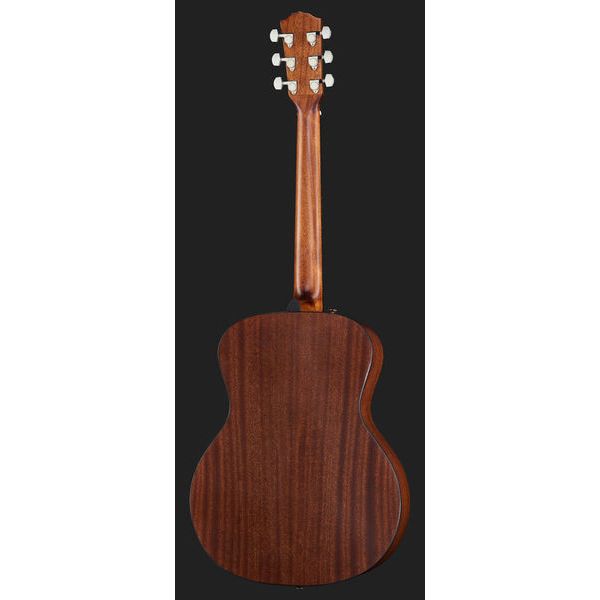
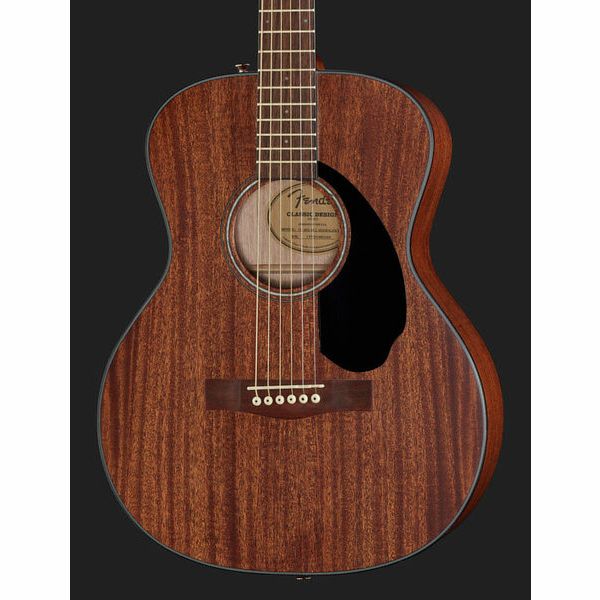
Solid mahogany top, mahogany back and sides, mahogany neck, walnut fretboard and bridge, chrome hardware. That’s a genuinely coherent spec sheet for the price — most guitars this cheap cut corners with laminate tops, but Fender didn’t here.
The gloss natural finish looks properly premium in photos, and in hand it doesn’t feel like a toy. Fender’s wider acoustic lineup gets a fair shake in our rundown of the best Fender acoustics, if you want to see where this one sits relative to its siblings.
How It Sounds and Plays
All-mahogany construction means you lose some of the sparkly top-end you’d get from a spruce top, and gain a warmer, more midrange-forward voice instead. It’s not a loud, chest-thumping strummer’s guitar — it’s more of a „sit on the edge of the bed and fingerpick” instrument.
That articulate, slightly compressed voice actually suits fingerstyle playing really well. Chords ring clean without getting boomy, and single notes don’t get lost in the mix. If you’re coming from something brighter like the Yamaha FG800 — still the benchmark beginner acoustic for a reason — the CC-60S will feel noticeably darker and more intimate.
The neck is comfortable, nothing surprising or awkward about the profile, and the 20 frets are plenty for anything a beginner or intermediate player is realistically going to need. Action out of the box was reasonable, not buzzy, though I’d still budget for a proper setup on any guitar in this range.
Fender CC-60S vs the Rivals
The obvious comparison is the Yamaha FG800 — brighter, louder, more of an all-rounder strummer. The CC-60S trades some of that volume and sparkle for warmth and a smaller, comfier body. Neither is objectively better, it’s just a different flavour.
If you want the same all-mahogany idea but with a bit more heritage and polish, the Guild M-20 is worth a look, though you’ll pay more for it. And if pure budget is the only thing that matters, the Harley Benton CLP-15ME is the guitar people usually bring up.
Setup, Strings, and Living With It
It ships with a fairly standard light-gauge set, which is the right call for beginners — easier on the fingertips while your calluses build up. If yours ever feels stiff to fret, a lighter set or a proper setup at a local shop will usually fix it faster than blaming your technique.
Since there’s no case included, a decent gigbag is basically a mandatory add-on — Thomann’s own house-brand ones are cheap and do the job fine. A clip-on tuner and a capo round out the essentials if this is going to be your only guitar for a while.
Worth noting too: this is the plain acoustic, not the CC-60SCE cutaway/electric version. There’s no built-in pickup here, so if you’re planning on plugging into an amp or a PA regularly, you’ll want to budget for a soundhole pickup or look at the CE model instead.
Who It’s For
This is a great pick if you want a guitar that’s easy to live with — on the couch, in a small bedroom, or as a travel-ish companion that isn’t quite as tiny as a true travel guitar. Fingerstyle players and singer-songwriters will get along with it especially well.
If you’re chasing that big, bright, campfire-strumming dreadnought sound, this isn’t really it. Go look at a spruce-top instead.
The Honest Niggles
A few owner reviews mention frets that could use a touch more attention out of the box — nothing a basic setup at your local shop won’t sort, but worth knowing going in. It also doesn’t come with a case or gigbag, so budget for one separately.
It’s also not the loudest unplugged acoustic around, and if resale value matters to you, Fender doesn’t carry quite the same acoustic-guitar cachet as Martin or Taylor. For a straight beginner buy though, none of that is a dealbreaker. Our roundup of cheap beginner acoustics has a few alternatives if you want to compare before buying.
Specs at a Glance
- New, modified concert body
- Top: solid mahogany
- Back & sides: mahogany
- Neck: mahogany
- Fretboard & bridge: walnut
- Scale length: 643mm
- Nut width: 43mm
- Frets: 20
- Hardware: chrome
- Finish: natural, gloss
Final Verdict
The Fender CC-60S All Mahogany isn’t trying to be the loudest or flashiest acoustic in its price bracket — it’s going for comfortable, warm, and easy to play, and it nails all three.
If you want something bright and strummy, look elsewhere — the FG800 or the Epiphone Hummingbird if you’ve got a bit more budget. But if a smaller-bodied, mahogany-voiced acoustic that’s genuinely nice to fingerpick sounds like your thing, this punches well above its money. IMO it’s one of the more underrated picks in Fender’s whole acoustic range.