Watch It First
Harley Benton – The Almost-Free First Acoustic (Review). That’s basically the entire pitch for the D-120NT, and somehow it still delivers.
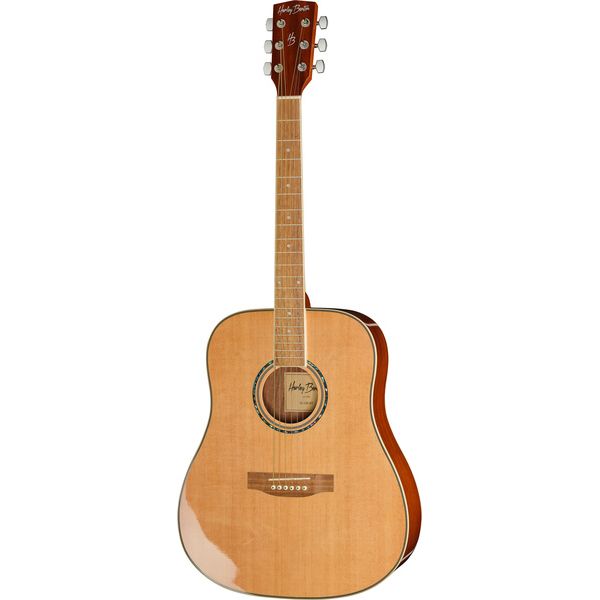
This is a full-size dreadnought, solid spruce top, sapele back and sides, no electronics, no frills – just a straightforward acoustic guitar at an almost silly price.
Let’s see if it’s actually any good, or just cheap for the sake of being cheap.
Build and Materials
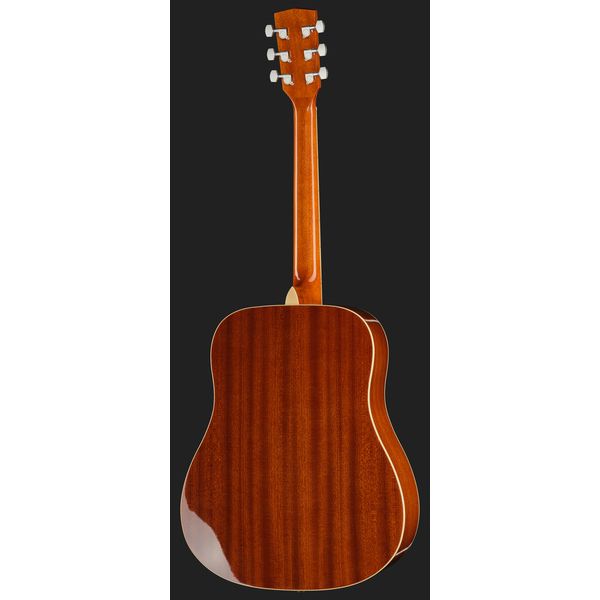
Standard dreadnought body, solid spruce top, and sapele back and sides. Sapele is a mahogany-family wood, commonly used as a budget-friendly stand-in with a similar warm tone profile.
Bracing is X-bracing, and the neck joint uses a proper dovetail construction rather than a cheaper bolt-on – a genuinely surprising detail at this price.
Neck wood is nyatoh, fretboard is jatoba with simple dot inlays, cream binding around the body and neck, and a „modern C” neck profile that most players will find instantly familiar.
Harley Benton is Thomann’s in-house brand, which means no middleman markup – you’re paying almost entirely for the guitar itself rather than distribution and retail margin stacked on top.
Hardware
Tuners are chrome die-cast, which hold tune reliably enough once the strings bed in. Nothing luxury here, but nothing that lets you down either.
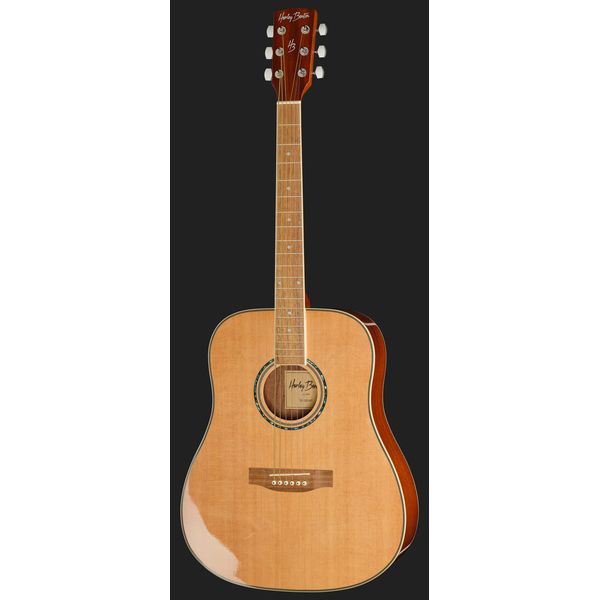
The high-gloss natural finish shows off the spruce grain nicely, and build consistency has a long track record – this exact model has been in Harley Benton’s lineup for over two decades.
Playability and Feel
At a 42.5mm nut width, this is on the narrower side, which actually makes it a bit friendlier for smaller hands or players coming from electric guitars.
No cutaway here, so upper fret access is limited – but that’s rarely why anyone buys a straightforward dreadnought like this one anyway.
Factory setups are inconsistent at this price point – some units arrive ready to play, others need a quick action adjustment. Budget a basic setup into your first-guitar plan either way.
Compared to something like the Yamaha C40, this has steel strings and a narrower neck, which suits players heading toward folk, pop, or rock rather than classical fingerstyle.
What About Durability?
A common worry with ultra-budget guitars is that they’ll fall apart within a year. In practice, this one tends to hold up fine as long as you keep it away from extreme humidity swings.
A humidifier in dry winter months and a decent gig bag for transport will do more for this guitar’s lifespan than almost any other single thing you could spend money on.
Treat it reasonably and there’s no real reason it won’t last for years of regular practice and casual gigging.
Sound and Tone
For the money, this genuinely surprises. It’s got a warm, present dreadnought tone with decent projection for strumming and basic fingerpicking alike.
It won’t compete with a solid mahogany guitar or anything in the price bracket of a Martin D-X2E, but that’s an unfair comparison to make anyway – judge it against its actual peers, and it holds up well.
Sustain is reasonable, and the solid spruce top means it should open up and improve slightly with age and playing time, same as any solid-top acoustic.
It’s genuinely one of the best-selling acoustics in its category for a reason – hundreds of customer reviews, and the overall consensus lands firmly on the positive side.
Who It’s For
Absolute beginners, parents buying a first guitar for a kid, or anyone who wants a genuinely low-risk way to find out if acoustic guitar is even for them. This is the guitar for that.
It’s also a solid backup or „leave at a friend’s house” guitar for more experienced players – low enough stakes that you won’t panic if it gets knocked around a bit.
How It Compares
Against the Fender CC-60S, the D-120NT is bigger-bodied and louder, while the Fender’s smaller concert shape suits younger or smaller players better.
Step up to the Taylor GS Mini and you’re paying a lot more, but you also get a noticeably more refined, articulate tone – a sensible upgrade path once you know you’re sticking with the instrument.
Harley Benton also makes budget basses in the same spirit, like the PB-Shorty – worth a look if anyone in the house is drawn to bass instead.
Left-handed and cutaway variants exist too if the plain NT model isn’t quite the fit you need – the Custom Line above it also adds solid back and sides for a step up later.
Honest Cons and Niggles
Stock strings are genuinely poor – budget for a fresh set immediately, it’s the single biggest upgrade you can make and it costs next to nothing.
No electronics, no cutaway, no case included. This is a bare-bones instrument, and you should go in expecting exactly that.
Quality control can vary unit to unit at this price – a small number of owner reviews mention finish smells or minor fret buzz on arrival, so it’s worth checking the guitar over when it lands.
If you want built-in electronics from day one, Harley Benton’s own D-120CE variant adds a pickup for not much more – or look at the JB-75FL if bass is more your thing.
None of that changes the core recommendation, honestly – this is still one of the easiest guitars to recommend to someone who just wants to start playing without overthinking it.
Specs at a Glance
- Body: Dreadnought, dovetail neck joint
- Top: Spruce
- Back and sides: Sapele
- Neck: Nyatoh, jatoba fretboard
- Frets: 20
- Scale length: 650mm
- Nut width: 42.5mm
- Finish: Natural, high gloss
- Electronics: None
Final Verdict
The D-120NT isn’t going to blow anyone away technically, and it doesn’t need to. It’s an honest, playable, decent-sounding dreadnought at a price that removes basically all the risk from buying your first acoustic.
If you’re not sure whether you or your kid will stick with guitar, this is the answer. Thousands of players started here – myself included, IMO it’s a rite of passage at this point.