Watch It First
Fretless bass has a reputation for being intimidating – and expensive. The Harley Benton JB-75FL quietly ignores both of those assumptions.
It’s built on the same Vintage Series platform as Harley Benton’s well-loved fretted JB-75, just with a laurel board and no fret wire in the way.
For the price of a decent pedal, you get a real entry point into fretless playing without gambling on a total unknown.
Build and Design
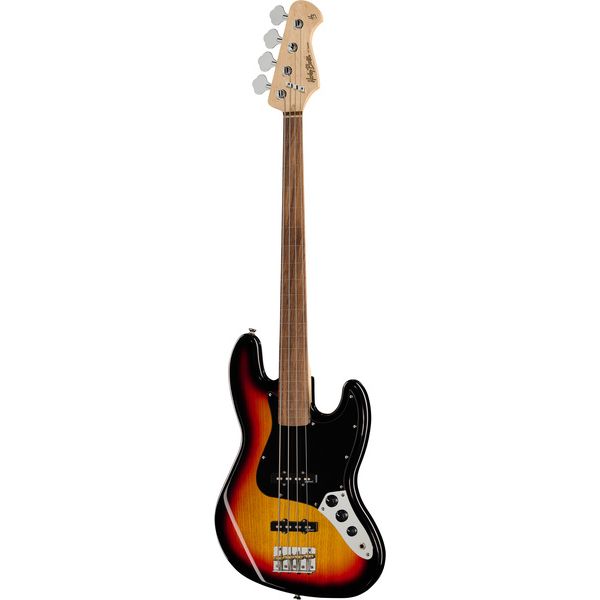
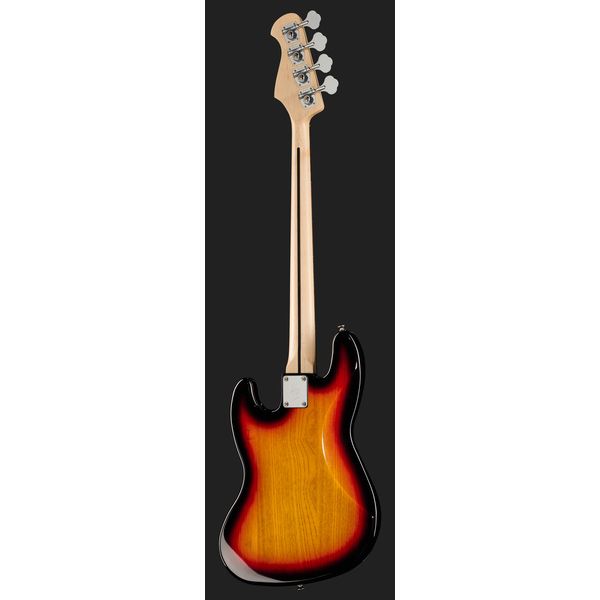
American ash body, Canadian Hard Rock maple neck with a skunk stripe down the back, and a laurel fingerboard instead of the usual rosewood. Laurel is a smart choice for fretless specifically – it’s dense and takes finger wear better than most budget-friendly woods.
Instead of frets, you get 20 fret line markers inlaid into the board, so intonation reference points are there without actual fret wire interrupting your slide. The nut is white graphite, sitting at a 38mm width with a D-profile neck that feels genuinely comfortable rather than a generic „budget bass” shape.
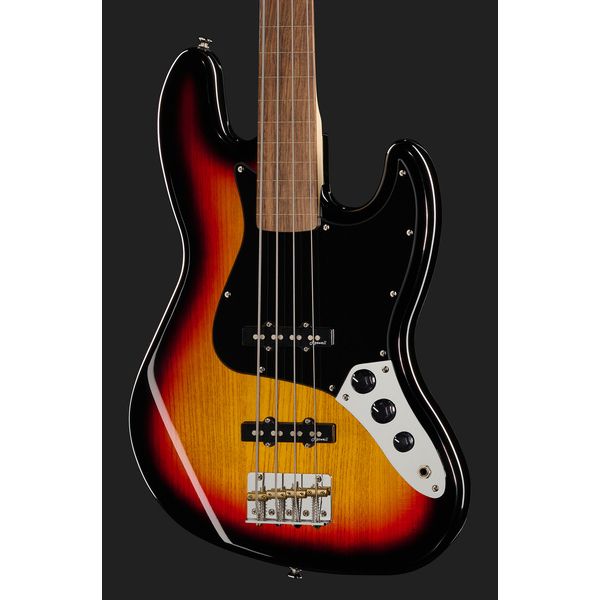
Hardware is straightforward but solid: a Sung Il bridge with brass saddles, HB-branded tuners, and chrome hardware throughout. Nothing boutique, but nothing that feels like it’s going to let you down either.
The Sunburst finish is genuinely attractive in person, and the black single-ply pickguard keeps the whole thing looking classic rather than trying too hard.
How It Plays and Sounds
Two Roswell JBA Alnico 5 single coils in the classic JJ layout, run through two volumes and a single tone control – completely passive, no battery to worry about.
What surprises most players coming from a fretted bass is how quickly the mwah – that vocal, singing sustain fretless basses are known for – shows up here. It’s not as pronounced as an ebony-board fretless costing four times as much, but it’s absolutely there, especially in the middle and upper register.
Blend both pickups and you get a warm, rounded tone that sits beautifully in a mix for jazz, soul, or ballad-style playing. Favor the bridge pickup and it gets more articulate, which helps a lot when you’re still learning to judge pitch by ear rather than by fret.
Intonation accuracy is obviously on you here more than with a fretted bass, but the fret line markers make it far less punishing than jumping straight onto an unmarked fretless board. It’s a genuinely sensible way to learn the instrument.
Who It’s For
This is exactly right for the fretted bassist who’s curious about fretless but doesn’t want to spend real money finding out if they’ll stick with it. If you already know and like Harley Benton’s fretted JB-75MN, this is the natural next purchase – same build quality, completely different playing discipline.
It also suits jazz and worship bassists specifically chasing that upright-adjacent tone without switching to an actual double bass, and session players who want one more sonic option in the collection without a huge outlay.
Less obviously, it’s a smart pickup for anyone who plays a headless or more modern bass like the Ibanez EHB600 day to day and wants something with a completely different feel for practice sessions.
The Honest Niggles
Fret line markers help, but they’re not a substitute for developing your ear. Expect a genuinely rough few weeks if you’ve never played fretless before – that’s true of any fretless bass, not a flaw specific to this one, but worth setting expectations.
The laurel board, while a sensible choice, doesn’t have quite the same glassy sustain as an ebony fretless fingerboard. You’re trading some top-end sustain for a much friendlier price.
Lead times can run 6-8 weeks depending on stock, longer than Harley Benton’s fretted models, so plan ahead if you want it for a specific gig or session.
And like most Harley Benton basses, the stock strings are fine but not remarkable – a set of proper flatwounds will unlock a noticeably smoother fretless tone once you’re ready to upgrade.
Where It Fits in a Rig
Fretless tone lives or dies by amp clarity, so pair this with something that won’t smear the mids. A combo like the Hartke HD50 or the punchier Fender Rumble 40 both give the mwah room to actually be heard instead of getting buried.
Skip heavy distortion or compression pedals at first – you want to hear pitch and tone clearly while you’re still learning the instrument. Save something like the Boss CS-3 for once your intonation is solid and you want to smooth out dynamics live.
If you eventually want to compare this budget fretless experience against a completely different design philosophy, it’s worth reading about the Harley Benton PJ-4 Deluxe – same brand, same value-first approach, totally different pickup layout and voicing.
Specs at a Glance
- Type: Fretless (20 fret line markers)
- Body: American Ash
- Neck: Canadian Hard Rock Maple, bolt-on, D profile
- Fingerboard: Laurel, 305mm radius
- Scale: 864mm (long scale)
- Nut width: 38mm
- Pickups: 2x Roswell JBA Alnico 5 single coils (JJ)
- Controls: 2x volume, 1x tone (passive)
- Bridge: Sung Il WB401CR, brass saddles
- Strings: D’Addario EXL165 .045-.100 (factory)
- Finish: Sunburst
Living the Fretless Life
Going fretless isn’t just a spec swap – it’s a different relationship with the instrument. Your ear does the work a fret used to do, and that takes a bit of getting used to.
The JB-75FL’s lined fingerboard helps a ton here. You get visual reference points without losing that smooth, glassy glide between notes. IMO it’s the smartest way for a first-timer to go fretless – unlined boards look cool but they’re brutal for intonation while you’re still finding your footing.
String choice matters more than usual too. Stock roundwounds will chew up the board faster than flats will, so if you’re planning to keep this bass long-term, budget for a set of flatwounds down the line. They’ll also push that mwah tone even further into vintage territory.
Practice Habits Worth Building
Slow practice is non-negotiable at first. Play scales at half speed with a tuner running until your ear locks in – it sounds tedious because it is, but it’s the fastest way to stop sounding seasick.
Once it clicks, though, fretless basslines have a vocal, singing quality that fretted just can’t match. That’s the whole appeal, and the JB-75FL makes it an affordable one to chase.
Final Verdict
The JB-75FL does something genuinely useful: it removes the financial excuse for not trying fretless bass. The build quality matches Harley Benton’s excellent fretted JB-75 line, the laurel board is a smart practical choice, and the mwah is real, not marketing copy.
You’ll need patience while your ear catches up with your fingers, and the longer lead times mean this isn’t an impulse buy for next weekend’s gig. But as a first fretless bass, or a genuinely capable second instrument for a working bassist, it’s hard to find a more sensible way in.