Watch It First
Compression is the pedal nobody understands until suddenly they do, and then they can’t live without it.
The Boss CS-3 Compression Sustainer has been the default answer to „which compressor should I buy” for decades now. Not because it’s flashy – it really isn’t – but because it just works.
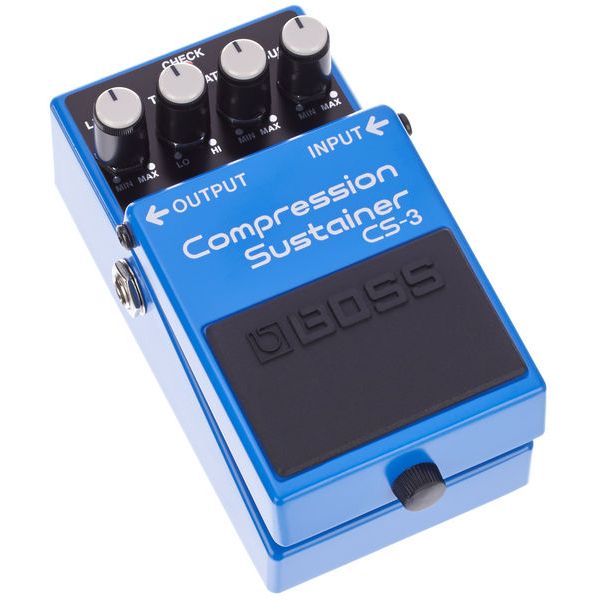
It’s chunky, orange, built like a tank, and does exactly what a compressor is supposed to do: even out your playing without you having to think about it.
Build and Design
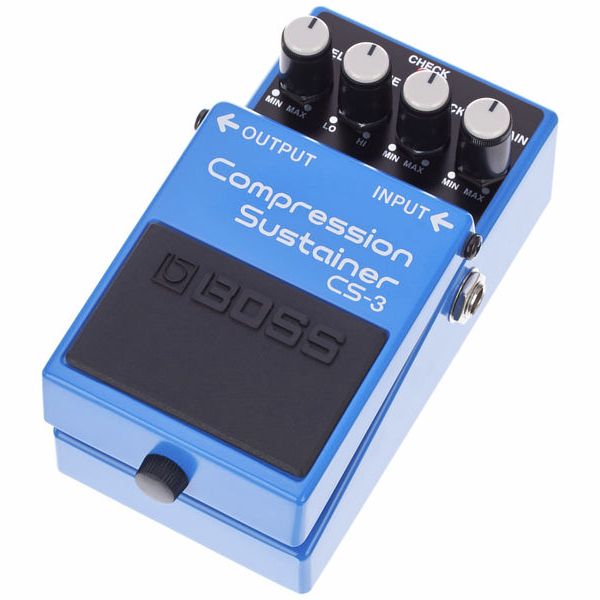
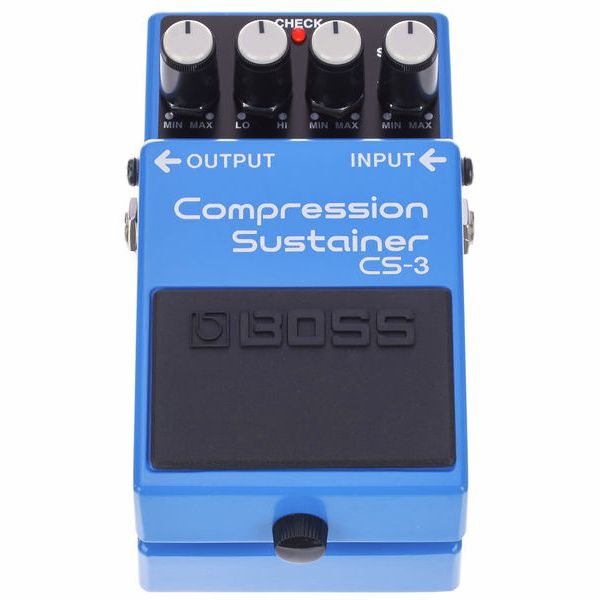
Standard Boss compact-pedal chassis. Metal case, one big footswitch, four knobs stacked up front: Level, Tone, Attack, Sustain.
It’s been basically unchanged since the mid-90s, which tells you something. When a pedal doesn’t need redesigning, Boss just… doesn’t redesign it.
Runs on a 9V battery or the standard Boss PSA adapter (not included). Current draw is tiny at 11mA, so battery life is genuinely decent if you’re the type who still runs pedals off batteries.
Four Knobs, No Nonsense
Attack controls how quickly the compression kicks in. Sustain controls how much compression you’re applying overall. Level is your output volume. Tone adds back some top end that compression tends to eat.
That’s it. No blend knob, no ratio control, no ms timing readout. If you want that kind of granular control, you’re shopping in a different price bracket entirely.
Tone and Sound
At low Sustain settings, it’s subtle. Your picking dynamics even out a touch, quiet notes get a little boost, and you probably won’t notice it’s even on.
Push the Sustain past halfway and it gets obvious fast – that classic squashed, sustained-forever compressor sound country and funk players chase. Chicken-pickin’ tones basically live inside this pedal.
Crank it all the way and yeah, it can get a bit hissy and noisy. That’s the CS-3’s one real weakness – it’s not the quietest compressor on the market at extreme settings.
Compare it to something like the Ibanez TS9 in terms of „everyone owns one eventually” status – except the CS-3 works before the gain stage, smoothing out your signal rather than adding grit to it.
Running It Always-On
A lot of session players just leave a light-touch compressor on all day, every gig, every session. It’s not a special-occasion effect like a phaser or a flanger.
Set the Sustain low, Attack in the middle, and you’ll forget it’s there – until you switch it off and suddenly your clean tone sounds thinner and less consistent. That’s usually the moment people actually understand what compression does.
Where It Sits On the Board
Compressors almost always go first in the chain, before your overdrive or distortion. Stick it before something like the Boss OD-3 or the Boss DS-1 and you’ll notice your dirt tones get noticeably more even and controlled.
Some players prefer it after drive pedals for a different kind of squash, but that’s more of an advanced experiment than a starting point. Start with compressor first, everything else after.
If you’re running something more all-in-one, like a Boss OD-200 Hybrid Drive, you might not need a separate compressor at all – some of these boxes have compression baked in. Worth checking before you buy.
Who’s This For
Country and funk players who want that quacky, squashed-clean sound will get the most obvious use out of it.
But honestly, this thing earns its keep on almost any pedalboard. Bedroom players who want their clean tone to sound a bit more „produced” benefit just as much as gigging players smoothing out an inconsistent picking hand.
If you record at home, it’s also a handy way to get a more even DI signal before it hits your interface, so you’re not riding the fader constantly in post.
Bass players use it too, for what it’s worth – taming a slappy attack or evening out fingerstyle dynamics works just as well on bass as it does on guitar.
Honest Niggles
- Gets noisy/hissy at extreme Sustain settings
- No blend or ratio control for finer shaping
- Tone knob can feel a bit crude compared to boutique compressors
- Not true bypass – though most players never notice in practice
- Looks basically identical to Boss pedals from 30 years ago (some see this as a pro, tbh)
None of these are dealbreakers. They’re the reasons boutique compressors like the EHX lineup or Keeley’s stuff exist at 2-3x the price – you’re paying for quieter, more refined versions of the same basic idea.
How It Compares
The MXR Dyna Comp is the CS-3’s oldest rival – simpler, two knobs only, a bit more „vintage squash” in character. The CS-3 is more flexible thanks to the extra Attack and Tone controls.
Keeley and Wampler both make quieter, more transparent compressors, but you’re paying roughly double or triple for that extra headroom and lower noise floor.
If you’ve never owned a compressor before and want to learn what one actually does to your tone without spending big, honestly, just start here. You can always upgrade later once you know what you’re missing – if anything.
Boss CS-3 Specs
- Controls: Level, Tone, Attack, Sustain
- Current draw: 11mA
- Power: 9V battery or 9V DC adapter (sold separately)
- Dimensions: 73 x 129 x 59mm
- Weight: 400g
- Bypass: Buffered
Final Verdict
The Boss CS-3 isn’t exciting to talk about, and that’s kind of the whole point.
It’s reliable, it’s affordable, and it does the compressor job without asking you to learn a new vocabulary of ratios and knee settings.
Yes, it gets a bit noisy if you push it hard, and yes, boutique options sound more polished at extreme settings. But for 90% of players, 90% of the time, this covers it.
If you’ve been putting off buying a compressor because you don’t know where to start, IMO this is still the sensible starting point in 2026, same as it was 20 years ago.
Plenty of players buy this as their „first compressor,” decide they don’t actually need anything fancier, and just… keep it forever. There’s no shame in that. Some gear categories genuinely got solved decades ago.
It’s not going to be the most interesting box on your pedalboard. It’s going to be the one quietly doing the most work.