Watch It First
Every guitarist’s pedal journey seems to pass through Boss overdrive territory eventually. It’s basically a rite of passage.
The Boss OD-3 is the one that quietly gets skipped for its flashier siblings, the SD-1 and the Blues Driver. That’s a shame, honestly.
I’ve had one on my board on and off for years, and I keep coming back to it. Here’s why it deserves more attention than it gets.
What Makes the OD-3 Different
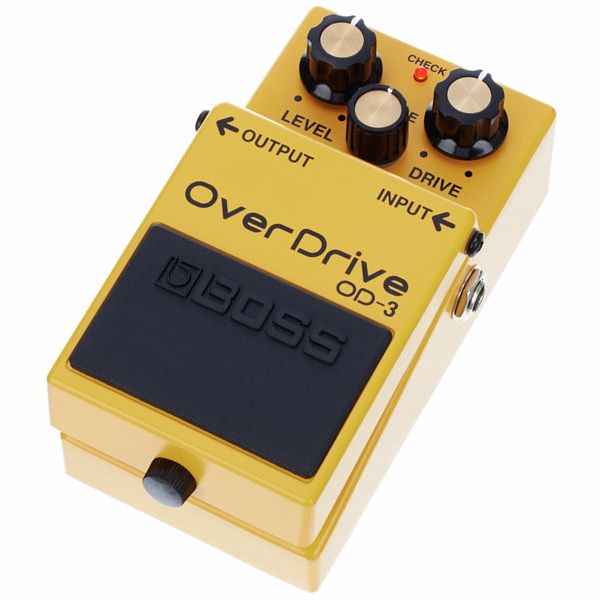
Most Boss overdrives chase a specific vibe. The SD-1 is mid-forward and a bit thin on its own. The Blues Driver leans into amp-like breakup. The OD-3 sits in between, with a smoother, rounder core tone that Boss themselves describe as their warmest overdrive yet.
Three knobs: Level, Tone, Drive. Nothing complicated. But the way the Tone knob interacts with the Drive is more musical than the simple layout suggests.
Crank the Drive and it doesn’t get fizzy or brittle the way a lot of budget overdrives do. It stays thick and rounded, which is exactly why it works so well on „ugly” cheap cabs that need some help sounding expensive.
Low Gain: The Secret Use Case
Here’s the thing most players miss: the OD-3 is arguably better as an always-on boost than as your main „drive” sound.
Dial the Drive down low, push the Level up, and you get a fatter, slightly warmer version of your clean or crunch tone that shoves a tube amp into breakup territory without sounding like a „pedal” is doing the work.
A lot of jazz and blues players run it exactly this way – it’s one of the pedals we mention in our guide to guitar pedals for jazz for that reason.
How It Compares to the Competition
The obvious comparison is the Ibanez TS9. Where the Tube Screamer scoops your bass and mids hard, the OD-3 stays flatter and fuller across the frequency range.
That makes the OD-3 the better pick if your amp is already a bit thin, and the TS9 the better pick if you want that classic mid-hump lead tone. Neither is „better” – they’re solving different problems.
Build Quality and Reliability
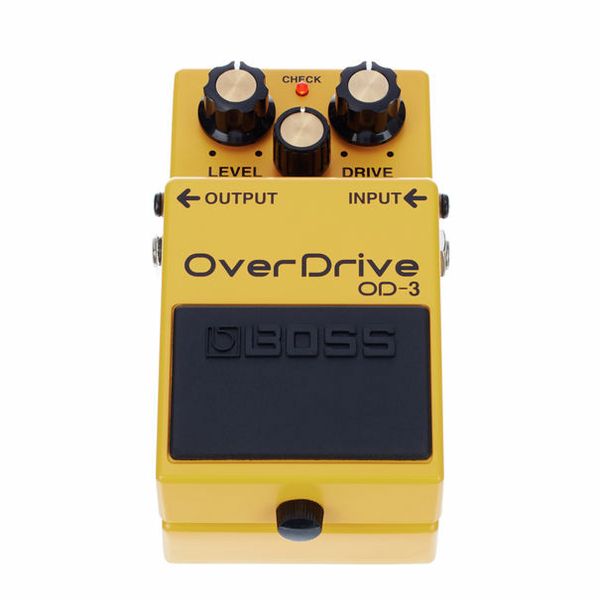
It’s a Boss compact pedal, so you already know what you’re getting: a tank-like metal enclosure that will survive being dropped, kicked, and left in a hot van for a decade of tours.
Battery operation is supported alongside the standard 9V DC adapter, which is a nice touch if you’re keeping things simple rather than running a full power supply setup.
If you’re building out a board and need to think about power budgets, that’s worth planning for early – similar to what we cover in our MXR Analog Chorus review when talking about current draw on a shared supply.
Where the OD-3 Doesn’t Fit
If you play modern metal or need serious high-gain distortion, this isn’t your pedal – it’s an overdrive, not a distortion unit, and it won’t get anywhere near that territory even maxed out.
For that you’d want something built for the job, like the Electro-Harmonix Nano Metal Muff, which is a completely different animal aimed at heavier styles.
It’s also a one-trick pedal by design – no built-in EQ shaping beyond the single Tone knob, no gain stacking modes, no digital cleverness. If you want a Swiss-army-knife pedal instead, look at something like the NUX MG-30 for way more flexibility in one box.
Who Should Buy the OD-3
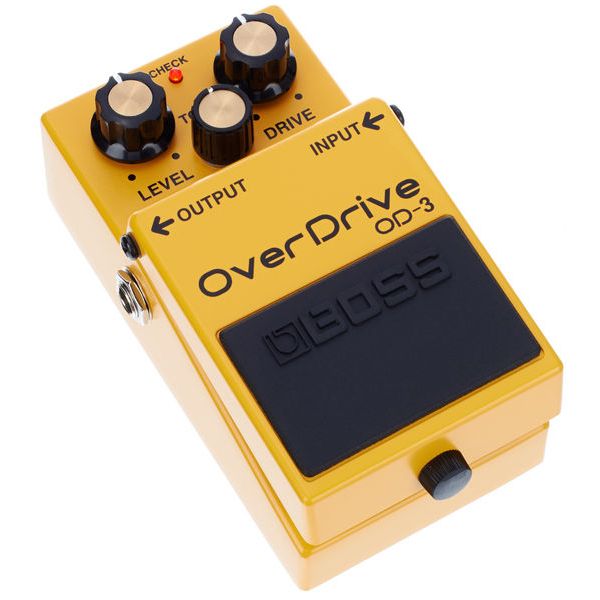
Blues, rock, country, and jazz players wanting an always-on tone thickener will get the most mileage here. Bassists too, surprisingly – plenty of players run it for a grittier, present bass tone without losing low end.
If you play a bright single-coil guitar like an Ibanez AZ2402, the OD-3’s smoother top end can round off some of that glassy edge without killing clarity.
Skip it if you already own a similar mid-focused overdrive and want variety instead of another flavor of the same thing.
Stacking the OD-3 With Other Pedals
One thing that doesn’t get mentioned enough: the OD-3 is a fantastic pedal to stack in front of other gain stages rather than use alone.
Put it in front of a fuzz or a higher-gain distortion with the Drive rolled back and Level pushed, and it acts as a smoothing agent – rounding off harsh top-end and adding low-mid weight before the signal hits the next pedal in the chain.
This is a classic trick for taming a fizzy high-gain amp channel too. Run the OD-3 into the front of the amp with low gain and high level, and you’re essentially using it as a clean boost with a tonal sweetener baked in, rather than a traditional „drive” sound.
It’s also a solid partner for ambient or shoegaze-leaning boards – stack it before a big reverb and you get thicker, more saturated trails without the mud that a straight distortion pedal would add.
A Quick Note on Tone Knob Settings
Most players set the Tone knob way too high out of habit from brighter pedals. Try backing it off to 9 or 10 o’clock first.
At lower Tone settings the OD-3 sounds noticeably closer to a cranked tube amp than a pedal. Push it past noon and it starts sounding more like a „pedal doing a thing” – useful sometimes, but not the pedal’s best look.
Boss OD-3 Specs
- Type: Overdrive pedal
- Controls: Level, Tone, Drive
- Battery operation supported (9V)
- Requires 9V DC power supply (sold separately)
- Standard Boss compact metal enclosure
- True analogue overdrive circuit
- Mono input and output, standard 6.3mm jacks
Final Verdict
The Boss OD-3 doesn’t get talked about as much as its Boss siblings, and I genuinely don’t get why. It’s a budget-friendly, no-nonsense overdrive that does one job extremely well.
It won’t wow you with features. There’s no app, no presets, no LED screen. What it has is a warm, thick, musical drive tone that works across genres and amps.
If your board is missing a reliable, always-usable overdrive and you’re tired of chasing the „next big thing,” just get one of these. Chances are you’ll keep it for the next twenty years, same as everyone else who owns one.