Watch It First
Ibanez’s AZ series was built to answer one question: what if a superstrat was actually designed for session players instead of just shredders?
The AZ2402 is the flagship-ish result – a Made-in-Japan Prestige model with genuinely premium hardware and a build quality that punches at PRS and Suhr territory.
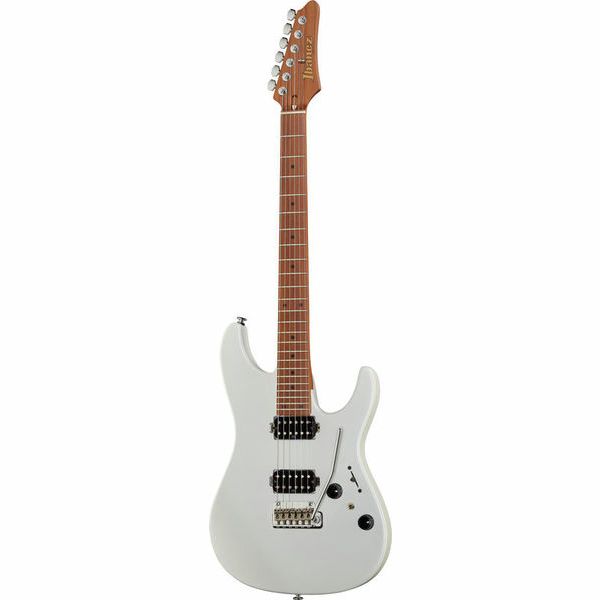
I checked out the Pearl White Flat version currently in stock on Thomann. Here’s whether it earns its price tag.
Build Quality and Specs
Ibanez has built its reputation on RG-series shred machines, so it’s worth pointing out how different the AZ line feels in the hand. Less „pointy metal guitar,” more „serious tool for serious playing.”
Alder body, bolt-on maple neck, roasted maple fretboard using Ibanez’s S-Tech Wood treatment. This is Prestige-tier construction, made in Japan, not the Indonesian Standard line.
24 jumbo stainless steel frets means smoother bends and way less fret wear over the years compared to standard nickel frets.
Bone nut, Gotoh Magnum Lock tuners, chrome hardware throughout. Nothing here feels like a cost-cutting compromise.
Neck Feel
It reminds me more of a well-carved Fender C-shape than anything from Ibanez’s usual RG playbook, and that’s clearly intentional.
Ibanez calls the profile „Oval C” – genuinely different from the thin, fast RG necks the brand is famous for. This is built for chord work and expressive playing, not just shred runs.
Scale length is 648mm (25.5″), radius 305mm (12″) – flatter than a vintage Fender radius, which helps with low action and bending without fretting out.
Nut width sits at 42mm (1.65″) – on the narrower side, worth knowing if you’re coming from a wider-nut guitar.
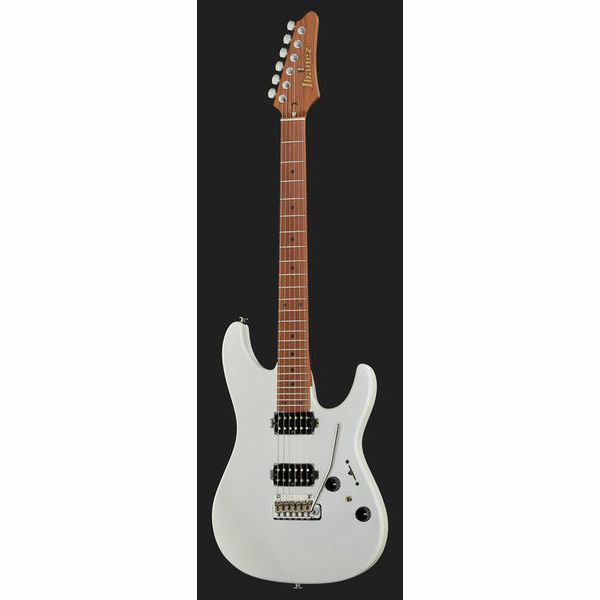
Also worth noting: Ibanez actually developed the AZ series with input from session and touring guitarists, not just their in-house shred artists. It shows in the ergonomics – contoured heel, comfortable body carve, nothing about it screams „look at me.”
Pickups and Tone
Seymour Duncan Hyperion humbuckers here – a pickup designed specifically for the AZ series, voiced to be clear and articulate rather than compressed and hot.
Combined with the 5-way switch, you get genuine single-coil-adjacent quack in the middle positions alongside full humbucker output at the bridge and neck.
It’s a genuinely versatile pickup set – clean jazz chords sound articulate, and it still holds up fine for rock and metal rhythm tones when you dig in.
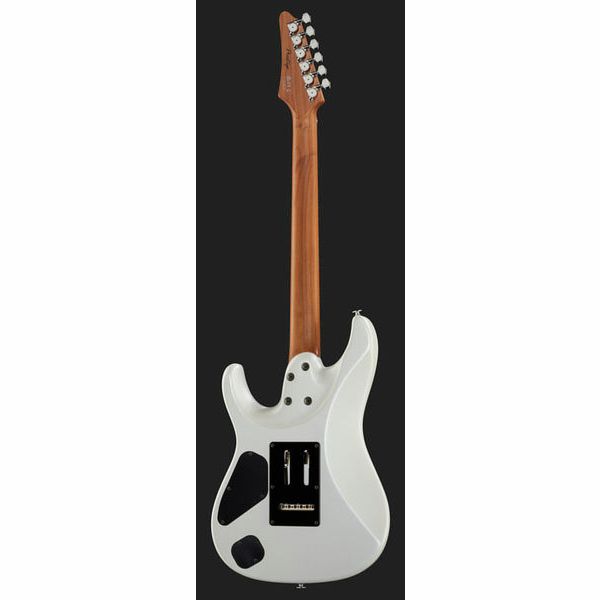
The Gotoh T1802 tremolo stays remarkably stable through dive bombs and returns to pitch reliably, which matters a lot once you start using it live.
Who’s This For?
It’s also a strong pick for anyone who’s outgrown a beginner or mid-tier superstrat and wants to feel a genuine step up in fit, finish, and consistency – the kind of guitar you stop thinking about and just play.
Studio musicians in particular tend to gravitate toward this exact niche: one guitar, endless tonal options, zero surprises on a session where you can’t afford surprises.
- Session and gigging players who need one guitar that covers clean, rock, and everything in between
- Anyone who wants Prestige-tier Japanese build quality without full custom-shop pricing
- Players who like superstrat ergonomics but want a chunkier, more traditional-feeling neck than a typical RG
Owner reviews consistently mention the factory setup arriving nearly perfect – correct relief, low action, properly seated frets. That’s not a given even at this price point, so it’s worth calling out.
Honest Niggles
This is a genuinely premium-priced guitar. It’s not cheap, and it’s competing directly with PRS SE and higher-tier Yamaha and Suhr Standard territory.
The narrower 42mm nut won’t suit everyone, especially fingerstyle players used to wider spacing.
It’s also a fairly „quiet” looking guitar overall – no flashy binding, no exotic tops. If you want visual drama, this isn’t really the guitar for that. It’s about the playing experience, not the looks.
And at nearly 8,500 zł, this genuinely competes with guitars from PRS’s core USA lineup and boutique Suhr models. That’s the real comparison set here, not budget superstrats – keep that context in mind when judging the price.
How It Compares
Against the Yamaha Pacifica Standard Plus, the AZ2402 is a significant step up in price but also in build tier – the Yamaha is the smarter buy if budget is the priority.
The Cort G290 Modern covers similar superstrat territory at a fraction of the price, if Prestige-level hardware isn’t a must-have for you.
Metal-leaning players chasing a neck-thru alternative should also look at the ESP LTD M-1000HT – completely different genre focus but a similarly serious build tier.
If you want a locking tremolo with a more aggressive metal pedigree, our ESP LTD H3-1000FR review is worth a read too.
Prefer an HSS layout instead of dual humbuckers? The Sterling by Music Man Cutlass CT20HSS is a solid budget-friendly comparison point.
And if you need an overdrive to push that clean tone into rock territory, the Ibanez TS9 Tube Screamer is the obvious, tried-and-true pairing.
Specs at a Glance
- Body: Alder
- Neck: Bolt-on maple
- Fretboard: Roasted maple, S-Tech Wood
- Neck profile: Oval C
- Frets: 24 jumbo stainless steel
- Scale length: 648mm (25.5″)
- Fretboard radius: 305mm (12″)
- Nut width: 42mm (1.65″), bone nut
- Pickups: 2x Seymour Duncan Hyperion humbuckers
- Switching: 5-way
- Bridge: Gotoh T1802 tremolo
- Tuners: Gotoh Magnum Lock
- Made in: Japan
- Includes: Hardshell case
Final Verdict
The Ibanez AZ2402 is what happens when a company known for shred machines decides to build a genuinely all-purpose working guitar instead.
It’s not cheap, and it’s not trying to be. But the Made-in-Japan build quality, the Hyperion pickups, and that rock-solid Gotoh tremolo all justify the price if you actually need this level of versatility.
If you’re a gigging or session player who wants one guitar to cover everything convincingly, this deserves to be on your shortlist.
It’s not the guitar for someone who just wants to shred in their bedroom on a budget – there are cheaper, flashier options for that. It’s for players who’ll actually feel the difference in build quality and tonal range every single time they plug in.