Watch It First
Chorus pedals go in and out of fashion, but the good analog ones never really go anywhere. They just wait.
MXR’s M234 Analog Chorus is a shrunk-down, refined take on the classic M134 Stereo Chorus, and it’s become a go-to for players chasing that thick, watery Nirvana-era shimmer without a digital edge to it.
I spent time with it to figure out why it’s still selling well over a decade after release, and whether it deserves the hype.
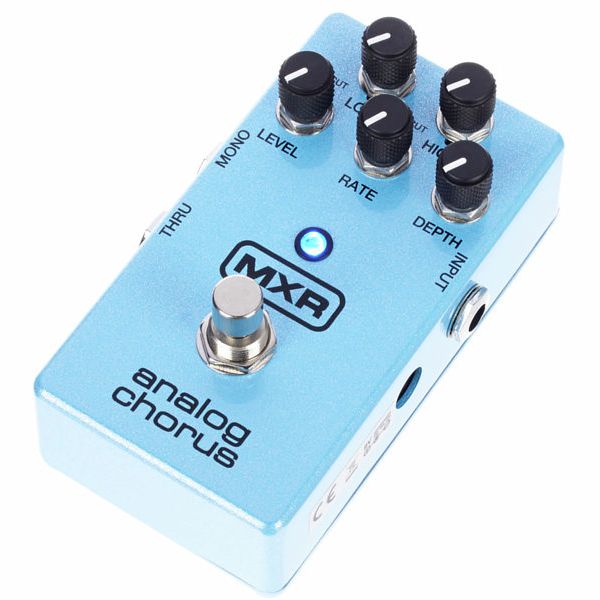
In Use — More Controls Than You’d Expect
Most chorus pedals give you rate and depth and call it a day. The M234 adds Level, plus a Bass and Treble EQ pair specifically for the wet chorus signal, separate from your dry tone.
That EQ pair is the real trick here. It lets you dial the chorus effect itself brighter or darker without touching your actual guitar tone, which means you can push the effect hard without it turning shrill or drowning your low end in mush.
Five knobs total can feel like a lot at first if you’re used to a basic two-knob chorus, but you settle into it fast. Within ten minutes you’ll have a preset you actually like dialed in.
The Smaller Footprint
Compared to the older M134 it’s based on, the M234 comes in a noticeably smaller enclosure — a genuinely welcome change for anyone who’s ever tried to Tetris a pedalboard into a gig bag pocket.
Tone — Thick, Warm, and Genuinely Analog
This is the part where the pedal earns its reputation. The chorus effect here doesn’t sit „on top” of your tone the way a lot of digital chorus pedals do — it blends into it, thickening the signal rather than layering an obviously separate modulated voice over it.
At subtle settings it adds width and shimmer without anyone in the room necessarily clocking that there’s a chorus pedal involved at all — it just sounds like a bigger, more three-dimensional guitar tone. Push the Level and Depth toward max and you get that full, wobbly 80s chorus sound, thick enough for clean arpeggios to sound massive.
Where it differs from something like a Boss CE-series chorus: it doesn’t have a dedicated vibrato mode, and it won’t get quite as extreme or „warbly” even maxed out. What you get instead is one really well-executed core chorus sound rather than several different modes of varying quality.
It pairs beautifully with reverb-heavy clean tones — try it ahead of something like the Mooer R7 X2 Reverb for ambient clean passages, or stack it with an octave pedal like the TC Electronic SubNUp Octaver for genuinely huge, synth-adjacent tones.
Build Quality
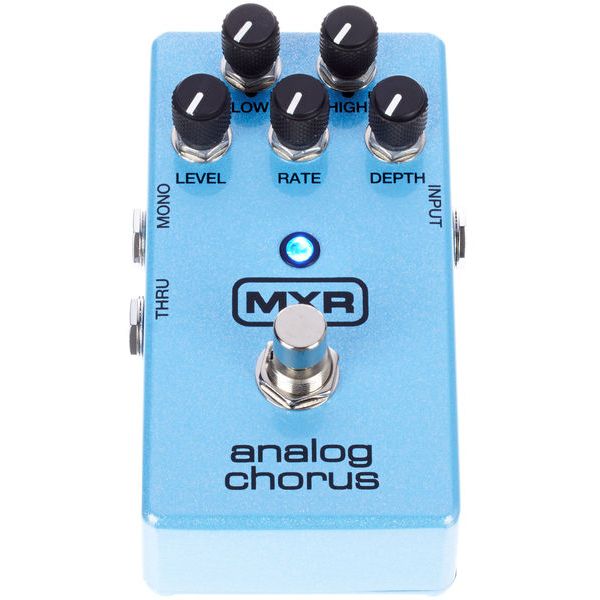
Standard MXR toughness — a stable metal enclosure that shrugs off years of touring, plus a clear status LED so you’re never guessing whether it’s engaged mid-song.
It’s not true bypass, which occasionally gets brought up in forum debates, but in practice the buffered bypass here is well-implemented and doesn’t noticeably dull your tone when the pedal’s off. If you’re already running a buffered pedalboard, it’s a non-issue either way.
Power
9V battery or standard 9V DC adapter, sold separately. Nothing unusual here, and it plays nicely with standard daisy-chain power supplies.
Who’s This Pedal For
Players who want a chorus that sounds like an instrument upgrade rather than an obvious effect. If you play a lot of clean or lightly-driven parts — indie, shoegaze-adjacent, funk, even some country twang — this earns a permanent spot on the board fast.
It’s less suited to players who want a super versatile multi-mode modulation pedal with vibrato and flanger-adjacent settings baked in — for that, something like the Ibanez CS Mini Chorus or a multi-mode modulation pedal might suit better.
Honest Niggles
- Not true bypass — a non-issue for most, but worth knowing if you’re a purist.
- No dedicated vibrato mode, so it’s a one-trick pony compared to multi-mode units.
- Five knobs take a little longer to dial in than a simple two-knob chorus.
- Power supply not included, same as most boutique-adjacent pedals at this price.
None of these are serious complaints — they’re the kind of trade-offs you accept for a pedal that does one thing this well. Pair it with a light compressor like the Keeley Compressor Plus ahead of it to keep your dynamics consistent going into the chorus.
Specs at a Glance
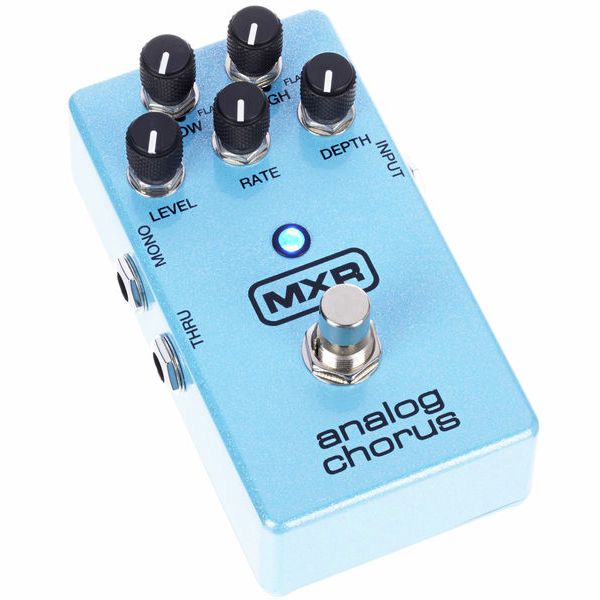
- Type: Analog chorus pedal
- Controls: Level, Rate, Depth, Bass, Treble
- Bypass: Buffered (not true bypass)
- Indicator: Status LED
- Housing: Metal
- Power: 9V battery or 9V DC adapter (not included)
- Available since: July 2011
Studio vs Live Use
In the studio, this pedal is a genuinely handy tool for doubling parts without literally recording two takes — a subtle chorus setting can fake that „two guitars panned wide” trick convincingly enough that engineers reach for it constantly.
Live, it holds up just as well, and the buffered bypass means it’s not going to suck tone out of a long cable run the way a poorly-implemented true bypass pedal sometimes can further down a chain. If your board already has three or four pedals before it, that buffering is doing quiet, unglamorous work in your favor.
Compared to a lot of modern digital multi-mode chorus units, you lose preset storage and tap tempo, sure. But you gain a knob-per-function layout you can tweak by feel mid-song without ever glancing down at a screen, which matters more than people expect once you’re actually gigging.
Final Verdict
The MXR Analog Chorus earns its long shelf life honestly. It’s not the flashiest pedal, and it’s not trying to do fifteen different modulation flavors — it does one warm, watery, analog chorus sound extremely well, with just enough EQ shaping to keep it from ever sounding generic.
If you’ve been chasing that thick 80s shimmer without diving into digital multi-effects territory, this is one of the more reliable places to find it. IMO it’s one of those pedals you buy once and just never sell.
For clean-heavy setups, round it out with something like the Fender Acoustic SFX II if you’re doubling on acoustic-electric duties, and you’ve got a genuinely lush clean rig without much complexity.