Watch It First
Octave pedals have a reputation problem. Most of them track great on a single low E string and then completely fall apart the second you play a chord. The TC Electronic Sub’N’Up is one of the few budget-friendly octavers that actually holds it together across chords, bends, and fast runs.
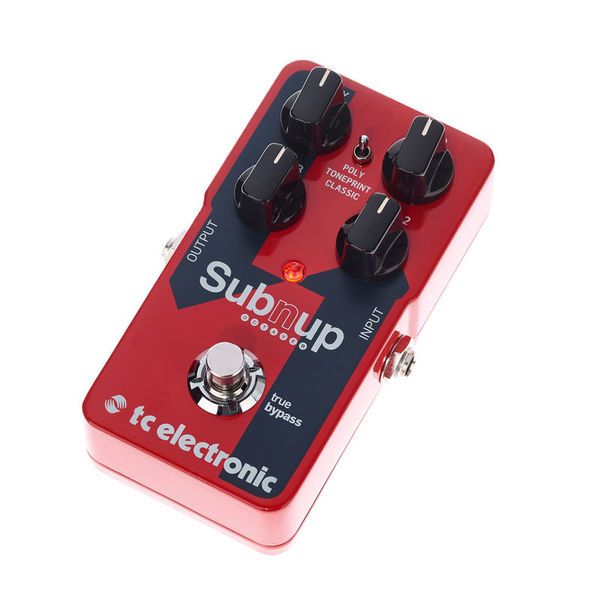
It gives you a polyphonic mode for chords, a classic monophonic mode for single-note tracking, and a TonePrint mode you can reprogram from your phone. That’s a lot of pedal packed into a box smaller than most tuners.
I ran it on guitar and bass over a couple of weeks, chasing everything from subtle 12-string shimmer to full-on synth-bass silliness. Here’s where it shines and where it doesn’t.
Tone and Tracking
Let’s talk tracking first because that’s the whole game with an octaver. Single notes come through fast and clean, no weird warble, no lag behind your pick attack. It’s genuinely one of the better trackers I’ve used at this price point.
Polyphonic Mode
The polyphonic setting handles full chords surprisingly well. Add the octave-up voice for a convincing 12-string illusion, or blend in the sub octaves for a fuller, almost synth-pad texture underneath your normal signal.
It’s not flawless. Push too much low-end octave into a dense chord and things get a little mushy, same problem every polyphonic octaver on the market has to some degree. Keep the Sub knob sensible and it behaves.
Compared to something like the Boss OC-5, which leans more toward rock-solid single-note tracking and a simpler control set, the Sub’N’Up trades a bit of that bulletproof simplicity for way more sonic range. If you mostly play single-note lines and want something foolproof, the Boss route might suit you better. If you want a pedal that can genuinely surprise you, the TC wins.
Classic and TonePrint Modes
Flip to classic mode for old-school, Hendrix-style single-note octave tricks, tighter and more immediate than the polyphonic mode. TonePrint mode is where things get creative: load a custom preset from TC’s free software and you’ve suddenly got a chorus-y organ patch or a modulated octave voice that no other pedal in this price range offers.
If you already run a DigiTech Whammy 5 for dramatic pitch effects, think of the Sub’N’Up as its quieter, more textural cousin. Less „dive bomb,” more „add a second instrument to your rig.”
Build and Features
TC builds these things tough. The chassis feels like it’ll survive being kicked around a stage for years, and the battery door is a single screw you can open with a coin or a pick, which is a small detail that matters more than you’d think at 11pm before a gig.
- Modes: Polyphonic, Classic monophonic, TonePrint
- Controls: Dry, Up, Sub, Sub 2
- True bypass switching
- Power: 9V battery or 9V DC adapter (not included)
- Current draw: 100mA
- Free TonePrint editor for custom presets
One real niggle: the 9V battery drains fast under regular use, so don’t rely on it for anything longer than a quick rehearsal. Budget for a proper power supply from day one.
Playability and Usability
On guitar, this thing is a genuine creative tool rather than just a novelty. Add a subtle upper octave to clean arpeggios and it starts sounding like two guitars. Dial in the sub octaves under a crunchy riff and you get an almost bass-synth low end that fills a mix nicely.
It also works surprisingly well on acoustic-electric setups, adding fullness without turning your unplugged tone into mush. And on bass, the up-octave voice can mimic an organ-ish texture, though the effect leans a bit synthetic if you push it too hard, the kind of low-end texture that reminds me of testing the Reverend Basshouser Fatfish 32 for its own tonal quirks.
Rhythm players will get the most mileage out of subtle settings, just a touch of Up or Sub blended under the dry signal, so the effect thickens the tone without announcing itself. Crank any of the knobs past halfway and it very quickly stops sounding like „your guitar” and starts sounding like an effect, which is great for solos and awful for anything you want to sit quietly in a mix.
Who Is This For
- Guitarists who want convincing 12-string or organ-style textures
- Bassists chasing sub-octave synth tones without buying a synth pedal
- Anyone building an ambient or shoegaze-leaning board (it plays great with reverb and delay)
- Players who want a TonePrint-customizable creative tool, not just a gimmick
- Budget-conscious buyers who want most of what a pricier octaver offers
If you’re already deep into the ambient rabbit hole, this thing pairs beautifully with swells and shimmer, similar territory to the sounds people chase with the EHX Mel9, just approached from a totally different angle. It’s also a natural fit if you’ve been building out a board from our best pedals for shoegaze list.
Who Should Skip It
If you need studio-grade, ultra-tight polyphonic tracking with zero compromise, the pricier EHX POG-style pedals still edge it out. And if you’re not into tinkering with software for TonePrints, you’ll only ever use two of its three modes, which is fine, but worth knowing upfront.
A Few Honest Niggles
The low sub-octave voice can sound a bit undefined in dense polyphonic passages, too much low end, not enough clarity. It’s a known trait of this circuit and not unique to TC, but worth knowing before you dive in expecting studio-perfect low end.
Live TonePrint transfer (via your phone’s speaker into the pickups) is clunky and basically unusable on a noisy stage, so treat it as a studio/bedroom feature, not a live one. Honestly, that’s a minor gripe for a pedal this capable at this price. If you’re building a board with other textural pieces, it’s also worth browsing our roundup of best cheap bass pedals for complementary gear.
Specs at a Glance
- Type: Polyphonic and monophonic octaver
- Controls: Dry, Up, Sub, Sub 2
- Modes: Polyphonic, Classic, TonePrint
- Bypass: True bypass
- Power: 9V battery or 9V DC adapter (adapter sold separately)
- Current draw: 100mA
- Available since: May 2016
Final Verdict
The Sub’N’Up earns its reputation honestly. It tracks fast, offers three genuinely different flavors of octave effect, and lets you get properly creative with the TonePrint software if you’re willing to put the time in.
It’s not going to replace a top-shelf studio octaver for pros chasing zero-compromise polyphony. But for the price, this is one of the smartest, most flexible octave pedals you can put on a board, and it punches well above what it costs. Easy recommendation if octaves are on your wishlist.