Watch It First
Semi-hollow basses barely get talked about compared to semi-hollow guitars, which is a shame, because the Reverend Basshouser Fatfish 32 is one of the more interesting basses I have plugged in this year.
This is a signature model built with Brad Houser (Edie Brickell and New Bohemians), and it is not a subtle instrument. Korina body, solid maple back, raised center section for extra resonance, and a genuinely unusual 32 inch medium scale.
It looks like nothing else on a pedalboard demo channel, and it sounds like even less of anything else. In a good way.
First Impressions
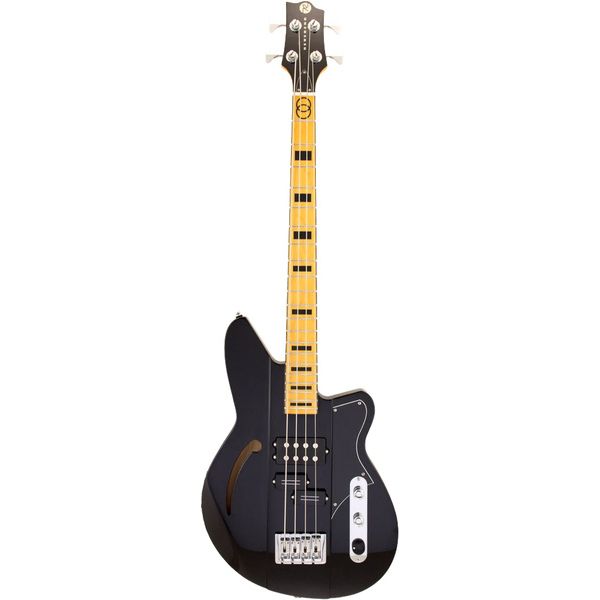
The Midnight Black finish over korina looks properly premium in person, and the raised center panel gives the top a sculpted, almost archtop-guitar look rather than a flat slab body.
At 32 inches, the scale sits between a standard 34 inch bass and short-scale basses like a Fender Mustang. It is an unusual middle ground, and Reverend clearly designed it to be a genuinely comfortable all-day instrument rather than a novelty.
Hipshot Ultralight tuners keep the headstock light, which matters more than you would think on a bass with this much body wood.
How It Plays
The Medium Oval neck profile is friendly for players coming from guitar as much as from bass, and the 12 inch fingerboard radius makes chordal playing and fast runs both feel natural.
Twenty-one frets is on the low side for a modern bass, but this is not an instrument built for tapping up at the dusty end. It is built for tone, feel, and low-end character.
If you are coming from a more traditional bolt-on like the Fender Vintera II Road Worn 60s Precision Bass, the semi-hollow resonance here is the first thing you will notice – there is an acoustic bloom to notes even before you plug in.
The Pickups
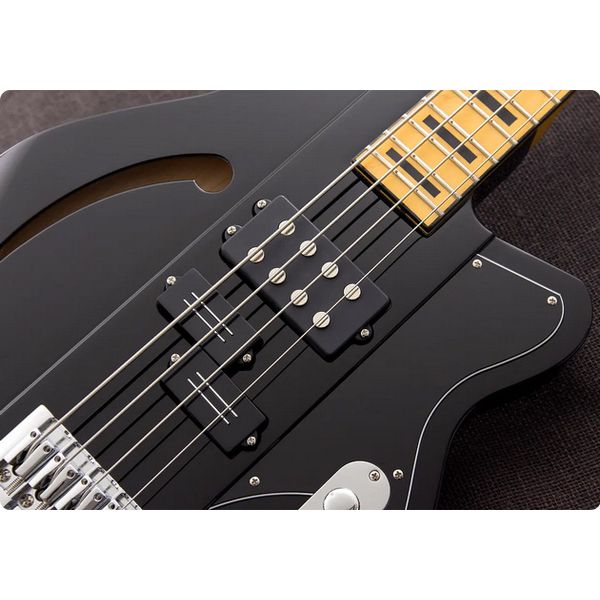
The pairing of a Reverend P-Blade split coil at the bridge and a Thick Brick humbucker at the neck is genuinely clever. The P-Blade gives you a bright, percussive Precision-adjacent tone, while the Thick Brick adds huge, warm low mids.
Blended together, you get something that sits between vintage P-Bass thump and a modern humbucker growl – closer in spirit to the Warwick RockBass Star Bass than a straightforward Fender clone.
Passive electronics keep things simple: volume, tone, and a pickup balance knob. No active EQ to fuss with, which suits an instrument this tonally distinctive already.
Where It Falls Short
Twenty-one frets will bother some players who like a full two-octave-plus range on the G string. This is not that bass.
Semi-hollow construction also means a slightly higher feedback risk at loud stage volumes, standard for the format, but worth knowing if you play in front of a wall of guitar amps.
And this is not the cheapest way into a semi-hollow bass. If budget is the main concern, something like the Sire Marcus Miller M2 will get you gigging for a lot less, just without the semi-hollow tone.
Who It Is For
Session players and songwriters who want a bass with real character rather than a blank-canvas workhorse will get the most out of this. It has a voice of its own from the first note.
If you already own something more conventional, like an Ibanez BTB605 or an Epiphone Embassy Bass, this is the kind of instrument that earns its place as a second bass rather than replacing your main workhorse.
It also pairs nicely with texture pedals – the EHX Mel9 tracks bass signal well, and layering a subtle string or choir patch under this bass’s natural resonance is a genuinely lovely combination for recording.
Recording and Live Use
In the studio, this bass is a gift. The natural resonance means you can back off compression a little and still get a full, three-dimensional low end without it sounding flat or overly processed.
Live, keep an eye on stage volume near your bass amp if feedback is a concern, but for most club and theater-sized rooms it behaves like any other well-built bass.
The factory .045-.105 string set is a sensible, versatile choice out of the box and did not need changing for me to get a usable tone across styles.
Specs at a Glance
- Body: Korina with solid maple back, semi-hollow
- Neck: 5-piece glued maple/walnut, Medium Oval profile
- Fingerboard: Maple, 305mm (12″) radius
- Frets: 21
- Scale: 813mm (32″, medium scale)
- Pickups: Reverend P-Blade (bridge) + Thick Brick humbucker (neck)
- Electronics: Passive, volume/tone/balance
- Hardware: Chrome, Hipshot Ultralight tuners
The Verdict
The Reverend Basshouser Fatfish 32 is not trying to be your everyday bass, and that is exactly its appeal. It has genuine character, a distinctive semi-hollow voice, and a scale length that splits the difference between comfort and low-end authority.
It will not be for players who want a blank, do-anything workhorse, and the fret count and price mean it is a considered purchase rather than an impulse buy.
But for songwriters, session players, and anyone bored of the usual bass shapes, this is one of the more genuinely inspiring basses I have played this year.
Quick FAQ
Is 32 inch scale hard to adjust to? Not really. Most bass players adapt within a session or two, and the tension feels closer to a 34 inch bass than a short-scale, since it sits right in between.
Is this bass good for metal or heavy rock? It can do it, but the Thick Brick humbucker leans warmer and rounder than a typical active metal bass pickup. It excels more at vintage-leaning rock, indie, and Americana tones.
Does the semi-hollow body cause feedback problems? At sensible stage volumes, no. It only becomes a concern at very high volumes standing directly in front of a loud amp stack, which is true of most semi-hollow instruments.
Is this a good first bass? Not really the ideal starting point. This is a specialist, characterful instrument best appreciated once you already know what a more conventional bass sounds and feels like.