Watch It First
Nylon-string guitars get a weirdly bad rap on gear forums. Too „beginner.” Too „classical.” Not „real” enough for people busy chasing tube amps and pedalboards. The Ortega R121 exists specifically to make that attitude look silly.
This is a full 4/4 classical guitar built the traditional way — solid-feeling spruce top, mahogany back and sides, walnut fretboard and bridge — and it costs roughly what you’d pay for a mid-tier overdrive pedal. That’s not nothing.
I spent real time with the R121 (specifically the WR variant, wine-red gloss finish) to figure out if it’s actually worth your money, or just another budget nylon-string that photographs better than it plays. Short answer: it’s worth it. Longer answer below.
Build and Specs — What You’re Actually Getting
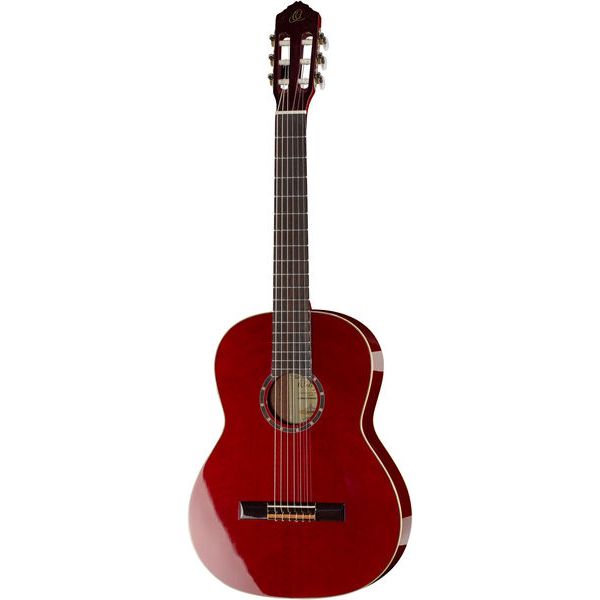
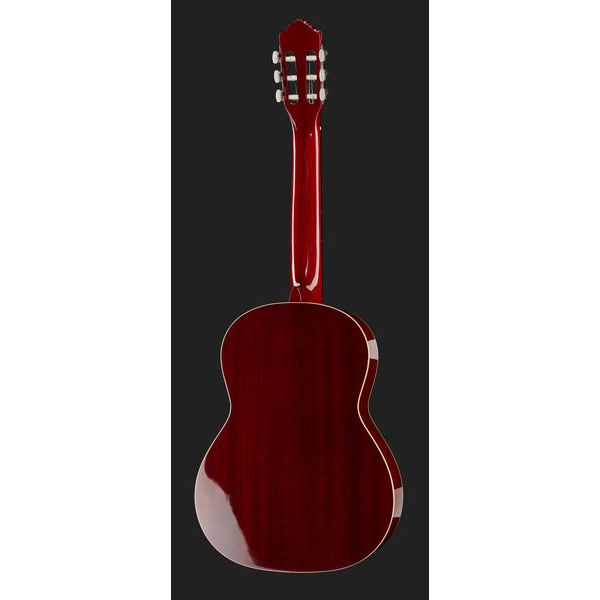
The R121 is a proper 4/4 size classical, so no scale-length compromises if you’re an adult player. Top is solid-feeling spruce, back and sides are mahogany, and the neck is mahogany too, capped with a walnut fretboard and matching walnut bridge.
Nut width sits at a generous 52mm, which matters a lot on a classical guitar — it’s what gives your fingers room to land cleanly on those wider-spaced nylon strings instead of muting the neighbor string every time you reach for a chord.
Scale length is a standard 650mm, body depth is 102mm, and the machine heads are chromed rather than the cheap unplated stuff you sometimes find at this price. It even ships with a deluxe gig bag, which is a nice touch — no scrambling for a case before your first lesson.
Fit and Finish
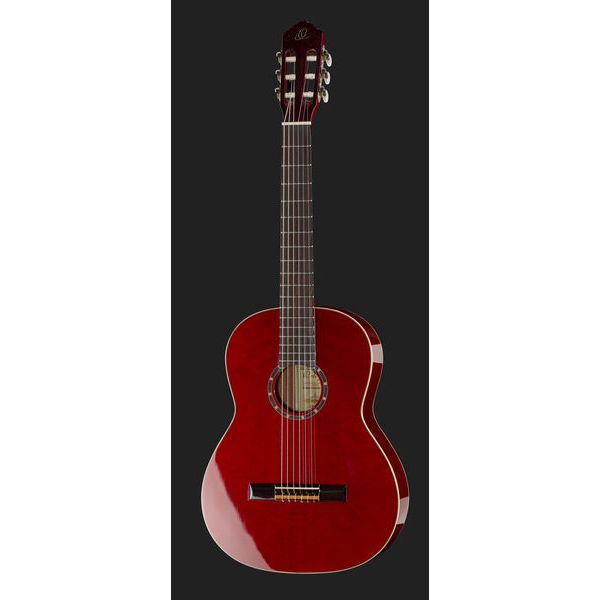
Ortega has a reputation for punching above its price bracket on build quality, and the R121 backs that up. Fretwork is clean, the finish is even, and there’s no weird overspray or sharp fret ends waiting to snag your palm.
Is it hand-built by a luthier in a small workshop somewhere? No. But for the price, it doesn’t need to be. Compare it against similarly priced options like the Cort Earth 100 and the build quality holds up just fine.
Playability and Sound
Out of the box, action is set reasonably low for a classical guitar — not shredder-low, this is still a nylon-string with a wider neck, but you won’t be fighting the thing just to fret a G chord.
Tonally, it’s warm and a bit dark, which is exactly what you want from a mahogany body. Trebles don’t jump out and bite you, basses have some body without turning to mud. It’s not going to out-project a solid-cedar concert guitar twice its price, but for bedroom playing, lessons, or recording direct with a pickup added later, it’s more than capable.
If you’re coming from steel strings and wondering whether the transition is jarring: yes, a little, at first. Your fretting hand has to relearn spacing. Give it two weeks and it clicks.
Who It’s For
This is squarely a first classical guitar. Beginners, parents buying for a kid starting lessons, or an electric player who wants a nylon-string around for writing and doesn’t want to spend big to find out if they’ll actually use it.
It’s also a sneaky-good option if you want that acoustic vibe without giving up your electric rig entirely — though if that’s really your goal, a Boss AC-3 acoustic simulator pedal on your existing electric might get you there cheaper. But nothing fully replaces real nylon strings under real fingers, IMO.
If you’d rather have steel strings in this price range, our review of the Seagull S6 covers a comparable budget acoustic that plays completely differently.
The Niggles
Nothing’s perfect, so let’s be honest. The stock strings are fine, not great — most players swap them within the first month for something like a Savarez or D’Addario Pro-Arte set, and the tone opens up noticeably.
There’s also no pickup or electronics on this base model, so if you want to plug into an amp or PA, you’re looking at an aftermarket soundhole pickup or a different Ortega model entirely. And projection, while decent, isn’t going to fill a room the way a full solid-wood concert classical would.
If budget allows a step up later, something like the Martin D-X2E shows what a jump in tier actually buys you — though that’s a steel-string dreadnought, so it’s a different animal entirely, just useful context for where the ladder goes.
How It Compares to Other Budget Classicals
Stack the R121 up against other sub-$300 classical guitars and the story is pretty consistent: Ortega’s fit and finish tends to edge out the cheapest no-name options, while the tone sits a notch below guitars using solid cedar tops instead of laminate-adjacent budget spruce. That’s a fair trade for the price.
Where the R121 really wins is consistency. Buy one online sight unseen and you’re very unlikely to get a dud — warped neck, buzzing frets, that sort of thing that plagues cheaper unbranded classicals. Ortega’s quality control at this price point is honestly one of the better stories in budget acoustic guitars right now, and it’s a big part of why this model keeps showing up as a default recommendation for first-time nylon-string buyers.
Full Specs
- Size: 4/4 classical guitar
- Top: Spruce
- Back & sides: Mahogany
- Neck: Mahogany
- Fretboard & bridge: Walnut
- Nut width: 52mm
- Scale length: 650mm
- Body depth: 102mm
- Hardware: Chromed machine heads
- Finish: Wine red gloss
- Includes: Deluxe gig bag
Final Verdict
The Ortega R121 does exactly what a first classical guitar should do: it plays well enough that a beginner won’t blame the instrument for their own learning curve, and it sounds warm enough that more experienced players won’t wince picking it up either.
It’s not going to replace a proper concert classical for a serious student down the road, but for the price, that’s not really the point. If you want a no-fuss nylon-string that just works, this is an easy recommendation. A budget-friendly stepping stone gear pick like the Mooer GE200 proves this brand of „cheap doesn’t mean bad” thinking applies well beyond acoustics — and honestly, keeping a spare cheap classical around for writing sessions is one of those quality-of-life upgrades nobody tells you about until you have one. Grab a copy of the Harley Benton PJ-4 Deluxe review too if budget gear comparisons are your thing — it’s a similar „why does this cost so little” story on the bass side.