Watch It First
Multi-effects units used to mean picking between „cheap and thin” or „expensive and amazing.” The Mooer GE200 quietly wrecked that assumption.
It packs 55 amp models, 26 cab IRs, and 70 effects into a floorboard that costs a fraction of the big names.
I ran it as my only rig for a stretch of weeks, through a tube power amp and direct into an interface. Here is the real verdict, warts and all.
Build and Interface
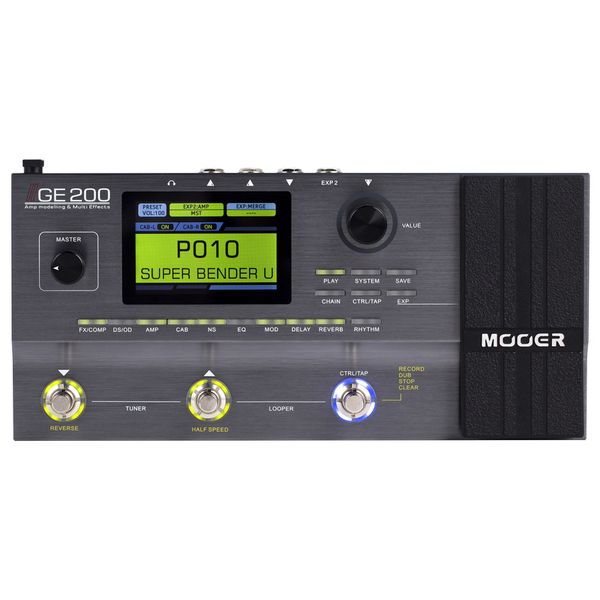
Aluminium housing, colour LCD screen, and a built-in expression pedal – at 1.4kg it feels sturdier than the price suggests.
The footswitches have a satisfying click and the screen is genuinely readable on a dark stage, which is not something you can say about every budget multi-fx unit.
Editing on the unit itself is a bit menu-diving heavy, though. You will want to spend an evening just learning the navigation before your first rehearsal with it.
Sound and Tone
55 Amp Models and Real IRs
This is where the GE200 punches well above its price. The amp models cover the usual suspects – British stacks, American cleans, boutique high-gain – and most of them are genuinely usable, not just „technically present.”
26 built-in cab IRs are a nice baseline, but the real depth comes from Mooer Studio software support for third-party IRs. Load a couple of premium free IRs and the whole unit levels up.
Straight out of the box with stock IRs, some presets can sound a bit thin through headphones. Swap in a decent third-party IR and that problem mostly disappears.
70 Effects and a Flexible Signal Chain
The effect count is almost overkill in a good way. Modulation, pitch, dynamics, and time-based effects are all here, and the signal chain is fully reorderable.
200 preset storage slots mean you genuinely never run out of room, which matters if you like building a different patch per song rather than a handful of general-purpose tones.
Running It Direct vs. Through an Amp
Direct into an interface or PA, the GE200 sounds full and studio-ready, especially with the cab sim engaged and a decent set of headphones or monitors.
Run it into the front of a clean guitar amp instead, and you will want to disable the cab simulation entirely – otherwise you get a slightly phasey, doubled-up cab sound fighting the real speaker.
Most players will get the best results treating this as a direct-to-FOH or interface unit rather than a traditional pedalboard sitting in front of an amp.
Playability and Everyday Use
The built-in expression pedal is a real highlight – wah and volume swells feel natural, not bolted-on like some competitors in this price range.
The phrase looper gives you 52 seconds with half-speed and reverse tricks, which is plenty for building ideas or just soloing over a rhythm part at a rehearsal.
USB connectivity for recording and a drum machine with 40 rhythms plus 10 metronome patterns round out the package – genuinely useful for solo practice sessions.
Who Should Buy This
Players on a tight budget who want the full multi-effects experience – amp modeling, cab sims, effects, and a looper – without paying flagship prices.
It is also a solid pick for anyone who wants to tinker. If you enjoy digging through menus to build the perfect patch rather than grabbing a preset and going, this rewards that instinct.
Honest Niggles
No dedicated line out is a real miss for a unit this feature-packed – you are running everything through the main outputs.
The drum machine and looper, while nice bonuses, are noticeably weaker than the amp modeling side. Do not buy this expecting a serious backing-track tool.
Presets from the community are mostly paid, which stings a bit given how many players expect free preset sharing to be the norm these days.
How It Compares
Against the Line 6 HX Effects, the GE200 is a fraction of the price but nowhere near the same tonal refinement – a fair trade if budget is the deciding factor.
Compared to the Boss GT-1000CORE, you are trading top-tier amp modeling accuracy for a much lower price and a genuinely more beginner-friendly feature set.
If you just want a single all-in-one overdrive-and-amp box rather than a full multi-fx floorboard, the Boss OD-200 Hybrid Drive is worth a look too.
And if looping is your main draw, a dedicated unit like the Boss RC-500 will out-loop the GE200’s built-in feature by a wide margin.
Setting Up Third-Party IRs
This is genuinely the single biggest upgrade you can make to this pedal, and it costs nothing but time.
Mooer Studio software lets you load custom impulse responses onto the unit, replacing the stock cab sims with ones captured from real studio cabinets and mics.
There are solid free IR packs floating around online specifically tuned for the GE-series units. Spend twenty minutes loading a few in before you judge the amp tones – the difference is bigger than any onboard EQ tweak.
Firmware and Long-Term Support
The GE200 has been around long enough that Mooer has kept shipping firmware updates and expanding the IR and preset ecosystem around it.
That matters more than it sounds. A lot of budget multi-fx units get abandoned by their manufacturer within a year or two, leaving early bugs unfixed.
The GE200 has had a genuinely long support tail, which is part of why it is still a sensible buy years after launch rather than feeling dated.
Specs at a Glance
- 55 amp models, 26 cab IRs, support for 3rd-party IRs
- 70 effects, fully reorderable signal chain
- Up to 200 presets, built-in expression pedal
- Phrase looper: 52 seconds, half-speed and reverse
- 40 drum rhythms, 10 metronome patterns
- USB port, colour LCD, aluminium housing
- Weight: 1.4kg
Final Verdict
The Mooer GE200 is one of the best value multi-effects units around, full stop. The amp modeling and effects depth genuinely compete with units costing several times more.
Load some third-party IRs, spend an evening learning the menus, and you have a legitimately gig-capable rig for not much money at all.