Watch It First
Five strings still scares off a lot of bass players. More real estate, more weight, more „am I actually going to use that low B?”
The Ibanez BTB605 answered that question for me pretty quickly. It’s from Ibanez’s neck-through BTB line, which usually means real money – at a price that very much doesn’t.
I’ve had one on the bench for a few weeks. Here’s the honest rundown.
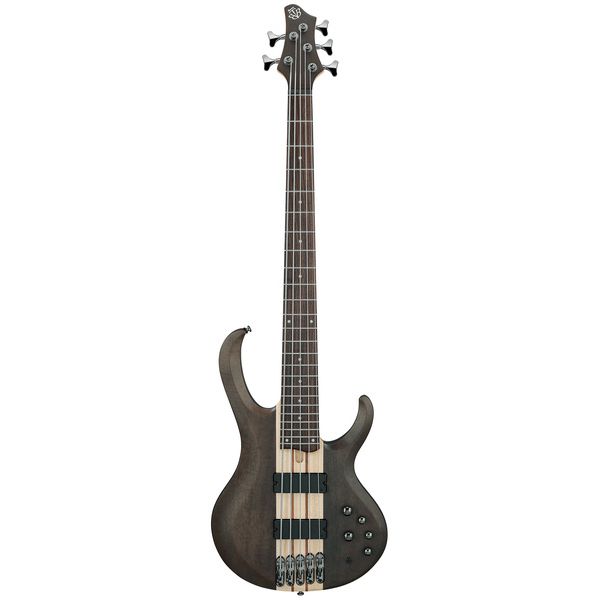
Neck-Through Construction Isn’t Just Marketing Speak
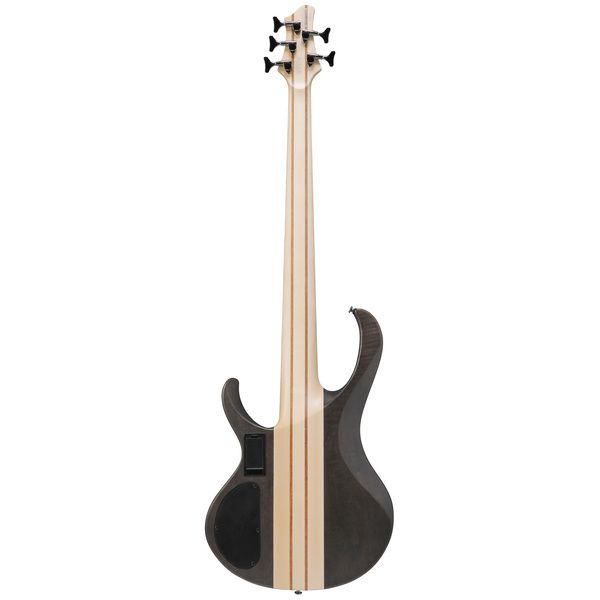
The five-piece maple/jatoba neck runs straight through the body. On paper that means sustain and resonance. In practice, notes bloom instead of dying immediately.
The okoume body with a poplar burl top keeps the weight sane too – this isn’t a back-breaker like some 5-strings can be.
Neck-Through vs Bolt-On – Does It Actually Matter?
Short answer: yes, but maybe not for the reason you’d think. It’s less about tone alone and more about consistency – bolt-on necks can shift slightly over years, neck-through tends to stay put.
The trade-off is repairability. Crack a neck-through neck and that’s a much bigger job than swapping a bolt-on. Realistically, that’s a rare worst-case, not a daily concern.
Playability on a 35″ Scale
Ibanez went with a 35″ scale for tighter low-B tension, which is the right call. The B string doesn’t flop around like it does on cheaper 34″ 5-strings.
The 24-fret rosewood board with a generous radius makes it fast. Feels more like a wide 4-string than a „careful, five strings” experience.
Nut width is 47mm, so your hand does need to adjust. Not scary, more of a „give it twenty minutes” thing.
The Electronics – 3-Band EQ With a Mid Sweep
Two humbuckers, Ibanez’s active 3-band EQ, plus a 3-way mid-frequency selector. That mid sweep is the fun part – it lets you go from scooped modern slap to a growlier, vintage mid-forward tone without touching a pedal.
There’s also an EQ bypass switch, so if the active electronics ever die mid-gig, you’re not stuck silent.
How It Actually Sounds
Slap tone is where this bass shows off – punchy and clear, not muddy in the low B like some budget 5-strings get.
Roll the mids off a touch and it does a convincing vintage-passive impression too, closer to what you’d get from something like the Warwick RockBass Streamer 4 than you’d expect at this price.
FYI – coming from a Squier CV Jazz or similar, expect noticeably more output and a tighter low end here.
Who Actually Needs This
If you’re a gigging player who needs a low B for modern worship, metal, or funk covers, this is a serious contender.
Coming from something like the Ibanez Mikro GSRM20 or a first bass in general? Maybe wait. This isn’t a beginner instrument – the neck width and five strings are a genuine step up in difficulty.
Already own a Schecter Stiletto Stealth-4 and just want the extra low string? This slots in nicely as your „serious” bass. It’s also just a genuinely comfortable long-gig instrument – I didn’t find myself needing to readjust every ten minutes the way I have with some cheaper 5-strings.
Finish & Hardware
The Transparent Gray Flat finish photographs better than most „budget bass in a boring colour” jobs – there’s real depth to it, not just flat grey paint.
Cosmo black hardware ties it together nicely. No cheap unlacquered look anywhere on this thing.
Ibanez’s own tuners and the MR5 bridge feel solid – no wobble, nothing that feels like it was cost-cut to hit a price point.
The Honest Niggles
The body edge where your forearm rests is sharper than it needs to be. A few owners mention it in reviews, and I noticed it too after longer sessions.
It runs on a 9V battery for the preamp, and it’s worth using a proper alkaline rather than whatever cheap carbon battery ships in some regions – swap it before you gig, not during soundcheck.
No case included. Budget for a gig bag if you don’t already have one lying around.
One more small thing worth flagging: the stock strings are perfectly decent, but if you plan to slap a lot, a fresh set of stainless steels will wake this bass up even more than it already is out of the box.
How It Stacks Up
Against the Squier Sonic Bronco Bass, there’s no contest – different leagues entirely, the BTB605 is a proper step up.
Against the Epiphone EB-3, it’s a totally different animal – vintage hollow-body tone versus modern neck-through punch. Pick your lane.
Already Ibanez-loyal from something like the Ibanez GRG131DX on guitar? The BTB605 feels like a natural pickup on the bass side.
String Spacing and Ergonomics
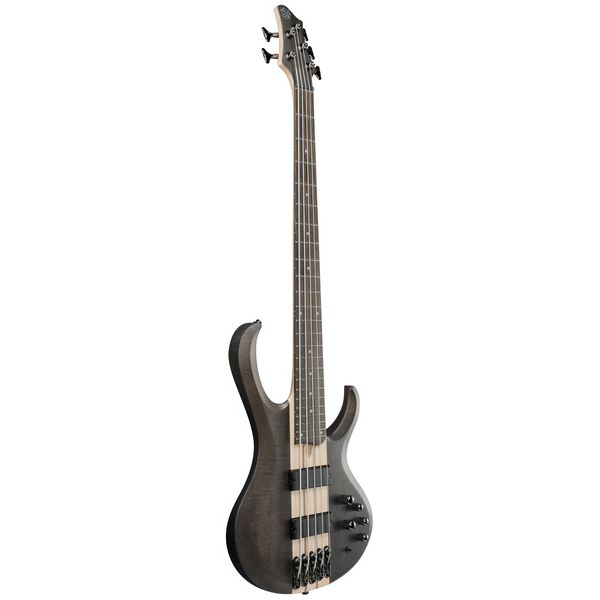
String spacing at the bridge is tighter than some 5-strings, which actually helps a lot for players coming from a 4-string background – your right-hand technique doesn’t need a total rebuild.
Balance on a strap is good too. Neck-through basses can sometimes get neck-heavy, but the BTB605 sits level whether you’re standing or seated.
Fret access up top is excellent thanks to the deep cutaway – you’re not fighting the body to get to the 20th fret and beyond.
Specs at a Glance
- Body: Okoume with poplar burl top
- Neck: 5-piece maple/jatoba, neck-through construction
- Fingerboard: Rosewood, 24 medium frets
- Scale: 35″ (889mm), extra long scale
- Nut width: 47mm
- Pickups: 2x Ibanez Custom α1 humbuckers
- Electronics: Active 3-band EQ, mid sweep, EQ bypass switch
- Hardware: Cosmo black, MR5 bridge
- Colour: Transparent Gray Flat
Resale value on the BTB line also tends to hold up well – Ibanez neck-through basses have a loyal following, so if you ever decide five strings aren’t for you, it won’t be hard to move on.
Final Verdict
The BTB605 is one of those rare cases where neck-through construction actually justifies itself instead of just being a spec-sheet flex.
It plays fast, sounds bigger than its price bracket suggests, and that mid-sweep EQ genuinely changes what the bass is capable of live.
If a low B is on your wishlist, put this on the shortlist before you look anywhere else at this end of the market.