Watch It First
Compressor pedals have a reputation problem. A lot of players either ignore them completely or buy one, can’t hear what it’s doing, and quietly stop using it.
The Keeley Compressor Plus is one of the pedals that regularly gets credited with fixing that problem. It’s the four-knob evolution of Keeley’s long-running compressor line, and it shows up on „best compressor” lists so often it’s basically become the reference point everyone else gets compared to.
Is that reputation earned? Let’s find out.
Four Knobs, and Every One of Them Matters
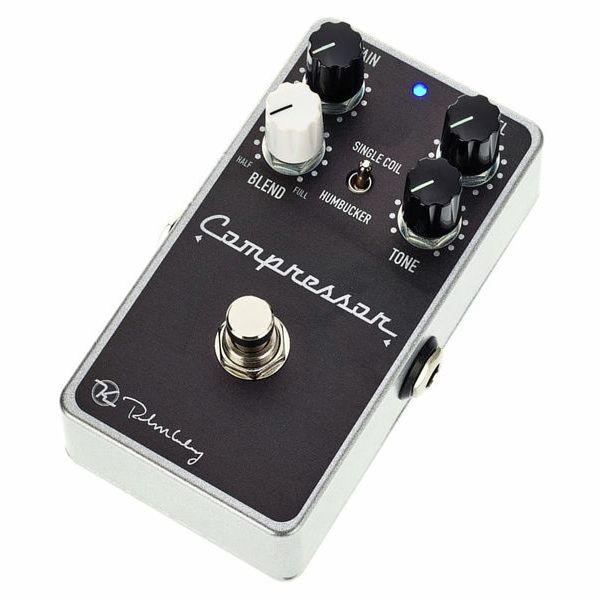
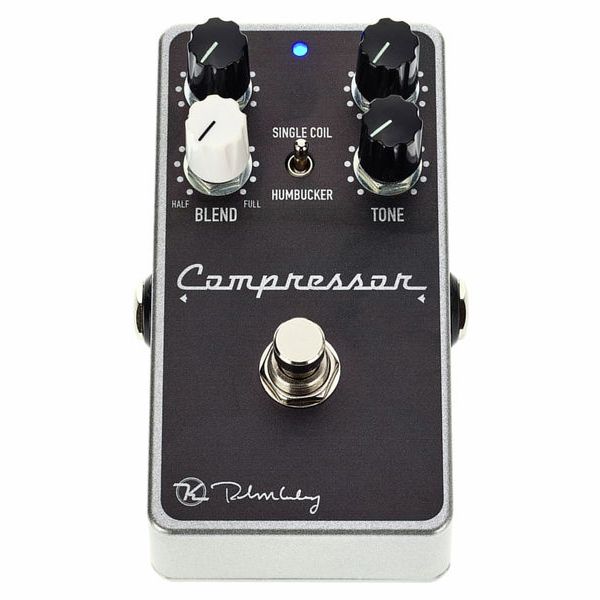
Sustain controls how hard the compression squeezes. Level makes up for volume lost in the process. Those two alone would make this a decent compressor.
The other two are what separate this from a basic stomp box. Blend mixes your compressed signal with a bit of your original dry tone — parallel compression, essentially — which keeps pick attack and transients intact instead of squashing them into mush. Tone sits after the compression circuit, letting you brighten or darken the result without touching your amp’s EQ.
The Pickup Switch Nobody Else Bothers With
There’s a small toggle for Single Coil or Humbucker, and it’s a genuinely smart addition. It changes the attack and release characteristics internally, since single coils and humbuckers naturally compress differently and respond to squeeze in different ways.
Running a bright single-coil guitar like a Stratocaster-style instrument? Flip it to Single Coil and the compression tracks your pick attack more naturally. Running a Tele-style bridge pickup, like on something such as the Harley Benton TE-52? Same idea — the setting exists specifically because one-size-fits-all compression settings don’t actually fit all pickups.
Who Actually Benefits From a Compressor
Funk and country players are the classic use case — that snappy, even, chicken-pickin’ consistency that makes every note pop at the same volume regardless of how hard you dig in.
But it’s not limited to those genres. Worship and clean-tone players get a lot out of it too, evening out dynamics across a whole set without constantly riding the volume knob — it’s a big part of why compressors show up so often in best pedals for worship style roundups.
Jazz players chasing extra sustain on clean single-note lines benefit too, which is why compression sits comfortably alongside the picks in our best guitar pedals for jazz guide. Metal and rock lead players use it for the opposite reason — squeezing extra sustain out of long bends and solos.
Where It Sits on Your Board
Compressors almost always work best early in the chain, before your drive and overdrive pedals — compressing an already-distorted signal tends to just amplify noise and mud rather than cleaning anything up.
If you’re running something like a boost or overdrive from our best overdrives for VOX amps list, put the compressor before it. Same logic applies if you’re stacking it with something more experimental later in the chain, like an EHX Mel9 — compression first, weird textures after.
Parallel Compression, Explained Simply
A lot of cheaper compressors squash your entire signal evenly, which can strip away the natural attack of your pick hitting the string — the result often sounds flat and lifeless, even if it’s technically „more even.”
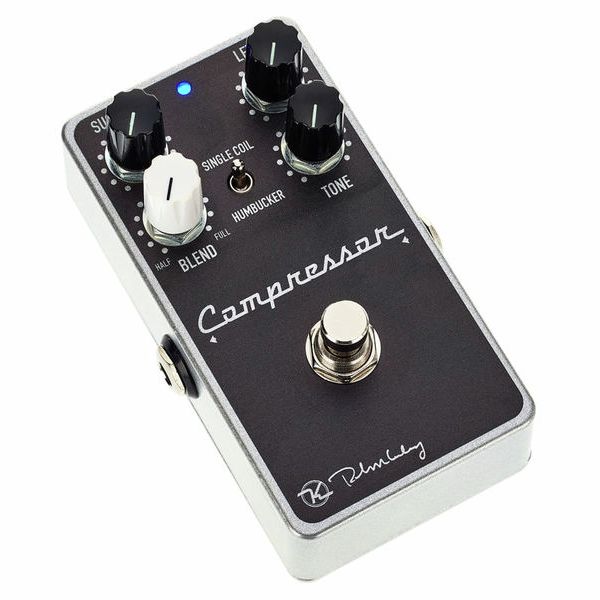
Parallel compression, via the Blend knob here, blends that squashed signal back in with your original uncompressed tone. You get the evenness and sustain benefits without losing the snap of your pick attack. It’s the same technique studio engineers use on drums and vocals, just built into a stompbox.
Once you’ve used a compressor with a Blend control, going back to an old-school squash-everything compressor is rough — you’ll notice exactly what you’re missing.
How It Compares to Keeley’s Own Lineup
Keeley makes several compressors, and it’s easy to end up confused about which one you actually need — the Mini, the Compressor Plus, and the Compressor Pro all share DNA but target slightly different players.
The Mini strips things down to fewer controls in a smaller footprint, aimed at players who want the Keeley compression sound without dedicating as much board space. It’s a fine choice if pedalboard real estate is tight, but you give up the Blend control that makes the Plus so versatile.
The Compressor Pro sits above the Plus and adds even more tone-shaping options for players who want studio-level control over every aspect of the compression curve. For most gigging and practicing guitarists, though, that’s more knobs than you’ll realistically use night to night.
The Compressor Plus lands right in the middle, and that’s exactly why it’s the one that keeps showing up as the recommended default. It has enough control to shape the sound properly without turning setup into a research project every time you plug in.
Build and Power
Made in the USA, true bypass, and powered by either a 9V battery or a standard 9V DC supply (not included). Nothing exotic here — it’s a straightforward, road-ready metal enclosure that’s been on pedalboards since 2017 without a reputation for reliability issues.
At 280g it’s not the lightest compressor around, but it’s not a burden either — a normal, solid stompbox that isn’t trying to win any weight-class awards.
Specs at a Glance
- Type: Parallel compressor with protected transients
- Controls: Sustain, Level, Blend, Tone
- Toggle: Single Coil / Humbucker attack-release voicing switch
- Bypass: True bypass
- Power: 9V battery or 9V DC supply (not included)
- Weight: 280 g
- Build: Made in USA
Final Verdict
The Keeley Compressor Plus earns its reputation as one of the reference-point compressors in this price range, and it does it without gimmicks.
Blend and Tone turn it from „a compressor” into a genuinely flexible tool that adapts to funk, country, rock, jazz, or metal without ever sounding sterile. The pickup-voicing toggle is a small touch that shows real attention to how guitarists actually use these things.
FYI, if you’ve never used a compressor before, this is a genuinely solid place to start — it’s forgiving enough for beginners to dial in a subtle setting, but flexible enough that pros keep it on their boards for years. IMO it’s one of those rare pedals that lives up to the hype it gets in gear forums.