Watch It First
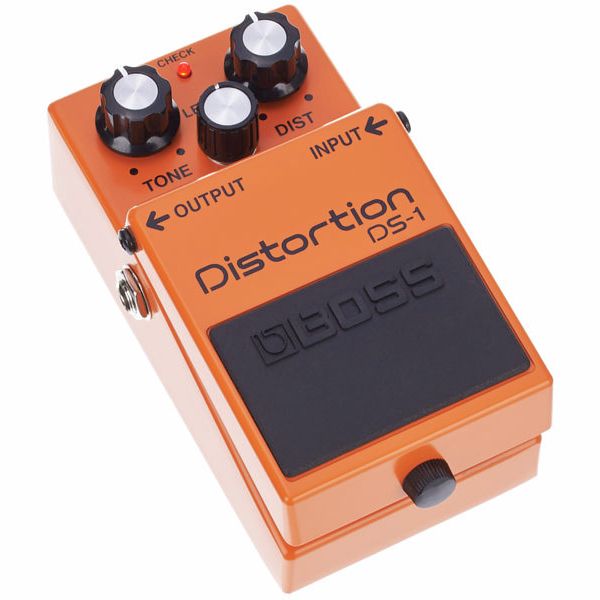
Orange box, three knobs, been in production since 1978. The Boss DS-1 Distortion is probably the single most-owned distortion pedal on the planet, and there’s a reason it’s never gone out of production.
It’s not subtle. It’s not boutique. It’s the pedal that taught an entire generation of grunge and alt-rock guitarists what „distortion” even means, and it’s still dirt cheap.
I went through the specs, the demos, and hundreds of owner reviews (987 ratings on Thomann alone, averaging 4.5 stars) to see if it’s still worth buying in 2026 or just nostalgia. Here’s what I found.
What It Actually Does
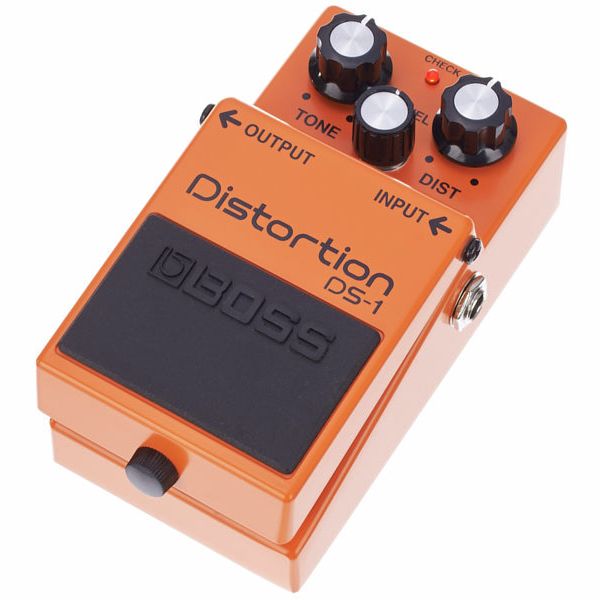
Three knobs: Level, Distortion, Tone. That’s it. No presets, no digital menus, no app. Just a straightforward analog circuit that’s been tweaked and refined for nearly five decades.
The distortion character is aggressive and a bit fizzy at high gain – that’s the DS-1’s signature, and it’s exactly why Kurt Cobain used one on Nevermind. It’s not trying to sound like a cranked tube amp; it’s its own thing.
At lower Distortion settings it works surprisingly well as a boost too, according to Boss and echoed by a ton of owner reviews. Versatile for a „one trick pony” pedal, tbh.
Tone in the Real World
Clean amp plus DS-1 gives you a hard-edged crunch that cuts through a mix without getting muddy – great for rhythm work in rock, punk, grunge, even some thrash-adjacent riffing.
It doesn’t clean up with your guitar’s volume knob as gracefully as a tube screamer or a pedal like the MXR Custom Shop Timmy, but that’s not really its job. It’s meant to be a switch between clean and dirty, not a dynamic gain-riding tool.
Compared to a transparent overdrive like the Wampler Tumnus Deluxe, the DS-1 has way more personality and way less „amp-like” nuance. Different tools for different jobs.
Build Quality
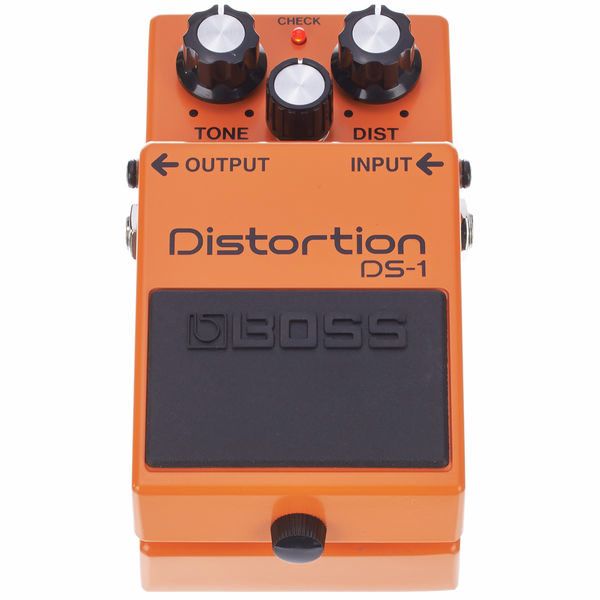
Boss’s compact pedal chassis is basically indestructible at this point – metal enclosure, standard footswitch, been the same basic design since the 80s. You could probably use this as a doorstop and it would still work.
Runs on a 9V battery or a standard Boss PSA adapter (sold separately). Current draw is tiny at 4mA, so battery life is solid if you go that route, though most gigging players will just run it off a pedalboard power supply anyway.
Where It Sits in a Pedal Chain
Standard advice is to run the DS-1 after any wah or compression pedal but before modulation and time-based effects like chorus, delay, or reverb – keeps the distortion tight instead of smeared.
It also plays reasonably well stacked with an overdrive in front for extra push into the front end, a classic trick from the grunge era for thicker, more saturated tones.
If you’re building your first board and wondering what order things go in, the UAFX Starlight Echo Station is a good example of something you’d want AFTER this pedal in the signal chain, not before.
Who This Is For
Beginners who want ONE affordable distortion that just works, and players who want a grunge/90s-alt tone specifically. If you grew up on Nirvana, Green Day, or early Weezer, this pedal basically IS that sound.
It also makes total sense as a first pedal on a budget board – pair it with a Dunlop Cry Baby for a classic rock rig, or run it into a practice amp like the Marshall MG50GFX for instant crunch.
If you want more effects flexibility instead of a single dedicated box, something like the Zoom MS-50G+ MultiStomp gives you way more options in one unit – worth considering if you’re still building your sound.
The Honest Niggles
It IS a one-trick pony. If you want subtlety, low-to-mid gain versatility, or amp-like dynamics, look at an overdrive instead – true bypass tube screamer clones handle that job better.
The stock tone can feel a bit thin and fizzy at max Distortion for some ears, especially through brighter amps. A lot of owners recommend keeping the Distortion knob under 12 o’clock and using amp gain to fill in the rest.
No true bypass on the standard DS-1 (it’s buffered), which purists sometimes complain about, though most players never notice in practice.
DS-1 vs the Newer DS-1X
Boss also sells a „DS-1X” with a more refined, amp-like distortion circuit. It’s a genuinely different pedal under the hood, not just a reissue. If straight-up classic grunge/rock crunch at a rock-bottom price is what you want though, the original DS-1 reviewed here is still the one to get.
Why It Never Got Discontinued
Boss has redesigned, replaced, and retired dozens of pedals over the decades. The DS-1 just… stayed. Partly nostalgia, sure, but mostly because it still does its one job better than most modern alternatives at the price.
It’s also become something of a modding platform – there’s a whole community of guitarists who swap the clipping diodes or op-amps to get different flavours out of the same enclosure. Not something you’ll need to do out of the box, but nice to know the option exists if you get deep into pedal tinkering later.
At 339 zł, it’s squarely a budget buy, not a splurge – which honestly makes it an easy first distortion pedal recommendation for anyone building a board from scratch.
Specs at a Glance
- Type: Distortion pedal
- Controls: Level, Distortion, Tone
- Bypass: Buffered
- Power: 9V battery or 9V DC adapter (not included)
- Current draw: 4mA
- Connections: 6.3mm jack in/out
- Dimensions: 73 x 129 x 59mm
- Weight: 360g
Final Verdict
The Boss DS-1 has survived nearly 50 years on the market for a reason – it’s cheap, tough, and delivers a genuinely iconic distortion tone that’s shaped decades of rock and alt music.
It won’t replace a boutique overdrive for touch-sensitive players, and it’s not the pedal for subtle blues crunch. But for straight-up rock/grunge/punk distortion on a tight budget, it’s basically the default recommendation, and for good reason.
If you want to sound like a specific decade of alternative rock without spending big, just buy this. It’s genuinely that simple.