Watch It First
Harley Benton basses get a lot of jokes thrown at them, mostly by people who haven’t actually played one recently. The PJ-4 SBK Deluxe Series is the model that keeps coming up whenever someone asks „what’s a genuinely good first bass that won’t embarrass me at rehearsal.”
PJ basses combine a P-style split-coil pickup with a J-style single coil, which gives you the thump of a Precision and the growl of a Jazz bass in one instrument. It’s a format that’s been copied by basically every manufacturer for a reason, and Harley Benton’s take on it is stupidly cheap for what you actually get.
I spent time with the matte black SBK version, gigging it and recording with it, to see if the hype is deserved or just internet forum groupthink.
Build and Design
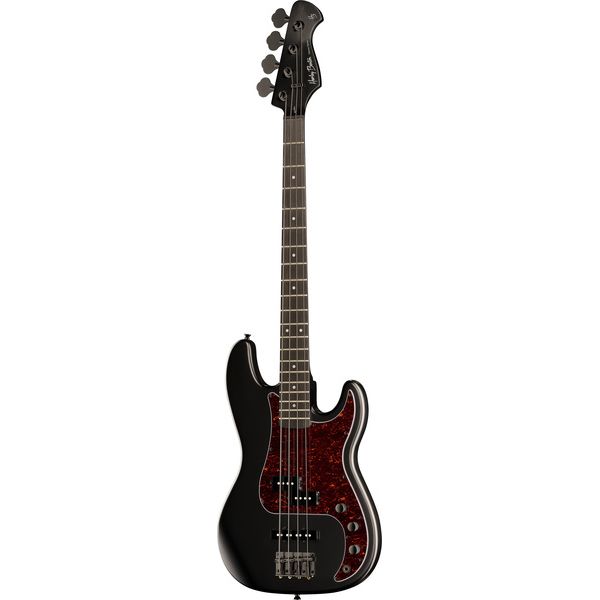
Poplar body, bolt-on maple neck, roseacer fingerboard (a stained maple that mimics rosewood), 20 frets, and a modern C neck profile. On paper this is a completely by-the-numbers budget bass spec sheet, and that’s actually the point: there’s nothing weird or cut-rate about the construction choices, it’s just the standard formula executed properly.
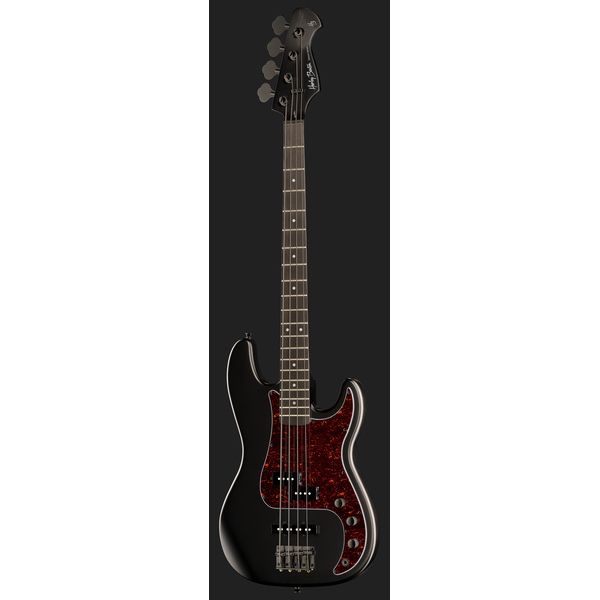
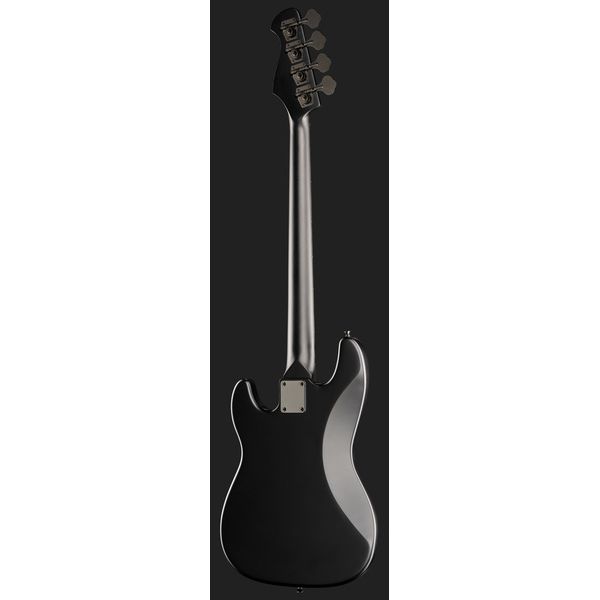
The matte black finish looks genuinely sharp in person, not the slightly cheap satin you sometimes get at this price. Black hardware throughout keeps it looking cohesive rather than mismatched, and the double-action truss rod means you’re not stuck if the neck ever needs correcting.
Fit and finish for the money is honestly a bit ridiculous. Fret ends are smooth, the neck pocket is tight, and nothing rattles or buzzes out of the box beyond what a five-minute setup would fix on any bass at any price.
Sound and Playability
The PJ pickup configuration is the whole story here. Roll off the J pickup and lean on the P, and you get that classic thumpy, rounded Precision tone that sits perfectly in a rock or punk mix. Blend in the J and you start getting more top-end snap and definition, good for funk, pop, and anything that needs the bass to cut through rather than just sit underneath.
It’s passive electronics, just two volumes and a single tone knob, which keeps things simple and reliable. No battery to die on you mid-gig, no active EQ to accidentally clip your signal. For a working bassist who just wants to plug in and go, that simplicity is a feature, not a limitation.
Neck feel is comfortable, closer to a Jazz bass profile than a chunky old-school Precision neck, which makes it approachable for players with smaller hands or anyone coming over from guitar. The stock D’Addario strings are a genuinely nice touch too, better than the generic strings a lot of budget basses ship with.
Who It’s For
This is the obvious pick for a first bass, but it’s also a legit option for a gigging backup or a beater you don’t stress about taking to sketchy venues. The PJ pickup layout gives it enough tonal range that you’re not going to outgrow it in six months the way you might with a single-pickup budget bass.
Home recorders will like it too. It’s quiet, well balanced between the P and J outputs, and takes EQ well if you’re shaping the tone after the fact rather than relying entirely on the amp.
The Honest Niggles
A few owners report a slight hum from the single-coil J pickup, which is just physics, not a defect, but worth knowing if you’re used to a fully humbucking bass. It’s mostly gone once you’re actually touching the strings.
Tuner action can be a touch stiff on some units, one of those „it’s a budget bass” quirks that’s annoying rather than dealbreaking. And while the finish looks great, matte black does show fingerprints and light scuffs more readily than a gloss finish would.
It’s also, obviously, not going to compete with a genuine Fender Precision or Jazz bass in terms of resonance and long-term reliability. For the price difference though, that’s not really a fair fight to begin with.
How It Stacks Up
The closest direct competitor is probably the Cort C4 Deluxe, another budget bass that punches well above its price, though the Cort leans more modern in its shaping. If you want the classic Fender-style Jazz bass tone specifically, the Squier Classic Vibe 70s Jazz Bass is a step up in price but gets you the real deal.
For something with a more aggressive, modern voice, the Sire Marcus Miller Z3-4 is worth a look, and if short-scale is more your thing, the Ibanez TMB30 is a fun, completely different way to approach a first bass.
On the amp side, pairing this with something like the Fender Rumble 40 or the Ampeg Rocket Bass RB-110 gives you a genuinely capable practice-to-small-gig rig for not much money at all.
Setup Tips Worth Knowing
Like most budget basses, this one benefits enormously from a proper setup right out of the box. Factory action tends to be set conservatively high to avoid buzz complaints across a huge range of playing styles, and lowering it slightly makes a bigger difference to playability than any pickup swap would.
If you’re new to bass, it’s worth having a local tech do the first setup so you can see what „properly adjusted” actually feels like. After that, most players can maintain it themselves with a basic tool kit and fifteen minutes of patience.
Specs
- Type: Electric bass guitar
- Body: Poplar
- Neck: Bolt-on maple
- Fingerboard: Roseacer, 20 frets
- Scale: 864mm (long scale)
- Nut width: 42mm
- Pickups: J-Style single coil (bridge), P-Style split coil (middle)
- Controls: 2x Volume, 1x Tone (passive)
- Hardware: Black
- Strings: D’Addario EXL .045-.105
- Colour: Matte black
Final Verdict
The Harley Benton PJ-4 SBK Deluxe Series is one of those instruments that makes you double-check the price tag. Solid build, versatile PJ pickup pairing, and none of the corner-cutting you’d expect at this end of the market.
It won’t replace a proper Fender for someone chasing a specific pedigree, but as a first bass, a backup, or a no-stress recording tool, it’s very hard to beat. Budget for a setup, maybe new strings down the line, and you’re set for years.