Watch It First
Ampeg’s name carries a lot of weight in bass world. The SVT stack basically defined what „big bass tone” sounds like.
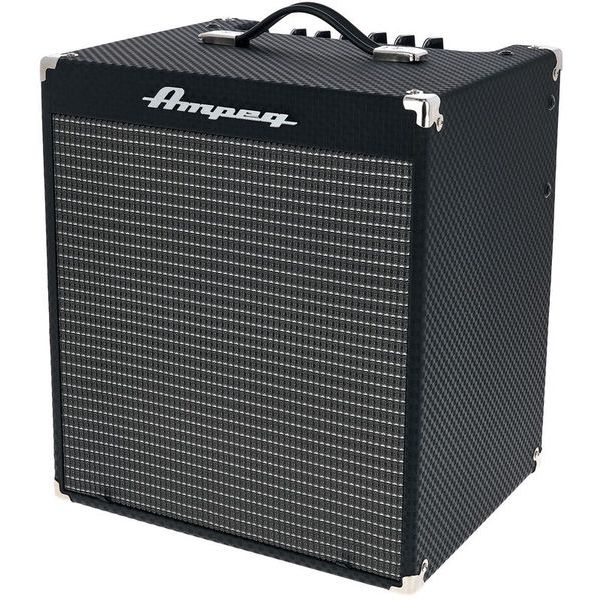
The Rocket Bass RB-110 is the tiny, budget-friendly end of that same family – a 50-watt combo built for bedrooms, small gigs, and rehearsal spaces, not stadiums.
So does slapping the Ampeg badge on a small combo actually mean anything, or is it just branding? Let’s find out.
Build Quality
At 10.2 kg, it’s genuinely one-hand-liftable, which matters more than it sounds like it should once you’ve hauled a 40kg SVT rig up two flights of stairs.
The cabinet feels solid rather than flimsy for its price point, and the control panel is simple enough that you won’t need the manual.
It’s not going to survive being thrown around a tour bus for a decade, but for home use and the occasional small gig, it holds up fine.
Tone and Sound
50 watts into a single 10″ speaker isn’t going to move a lot of air at a full-band volume, and it’s not meant to. This is a practice and small-room amp first.
Within that scope, though, it sounds surprisingly close to „real” Ampeg tone – warm low mids, a solid low end for a 10″ driver, and a top end that stays articulate rather than boxy.
The SGT Overdrive Switch
This is the feature that actually sets it apart from a generic bass practice amp. Flip it on and you get Ampeg’s Super Grit Technology overdrive, with its own Grit and Level knobs.
It’s genuinely usable, not a gimmick tacked on for the spec sheet. If you’ve read our thoughts on the Boss SD-1, think of this as a similar idea baked directly into the amp – a bit of grind you can dial in without buying a separate pedal.
Playability and Usability
Two inputs (0dB and -15dB) mean it plays nice with both passive and hot active basses without clipping.
The headphone output with auto-mute is a genuinely great feature for apartment living, and the aux input means you can practice along to a playlist without extra gear.
The XLR DI output is a nice touch too – handy for recording direct or running to a PA without a separate DI box.
Who It’s For
Bedroom players, students, and anyone who needs a first „real” bass amp without committing to a huge rig. It’s also a solid grab-and-go option for small acoustic-leaning gigs or rehearsal rooms.
If you’re just starting out and shopping for your first instrument too, our guide to the best first bass guitars pairs well with this amp – neither will break the bank.
Gigging drummers-and-a-loud-guitarist bands will outgrow it fast. That’s not a knock, it’s just not what a 1×10 combo is built for.
Honest Niggles
50 watts is 50 watts. Push it hard in a room with a drummer and you will run out of headroom before you run out of enthusiasm.
The single 10″ speaker also means the low end, while good for its size, isn’t going to rattle your ribcage. If that’s the goal, you need a bigger cab, full stop.
And the 3-band EQ is fine but basic – don’t expect the parametric mid control you’d get on a proper SVT preamp pedal.
How It Stacks Up Against Alternatives
Against something like the Warwick BC 20, the RB-110 has a warmer, more „vintage Ampeg” voice, while the Warwick leans a bit more hi-fi and modern.
If you’re weighing this against guitar combos in the same price bracket – say, something like a Vox AC10C1 – remember bass speakers and cabinet volume matter way more than wattage numbers alone suggest.
And if it’s the built-in grit you’re most curious about, it’s worth comparing to a standalone drive pedal like the one covered in our TC Electronic Spark Booster review – similar idea, different implementation.
Pairing It With a Bass
Passive basses with a P or J pickup configuration sound especially good through this amp – the SGT grit responds nicely to a P-bass style thump.
Something short-scale and mellow, like the Ibanez TMB30, actually pairs nicely too – the RB-110’s warmth complements a short-scale’s naturally rounder tone rather than fighting it.
Active basses with a lot of low end can get a bit muddy if you’re not careful with the bass knob – roll it back slightly and you’ll thank yourself later.
Setting It Up for Different Rooms
In a small bedroom, you’ll rarely need the volume past 10-11 o’clock, and honestly the amp sounds its cleanest and warmest right in that zone.
For rehearsal rooms with a drummer, you’ll want to push closer to unity on the input gain and rely on the SGT grit switch to add perceived loudness rather than just cranking the master volume, which is where a 1×10 combo starts to strain.
If you do end up gigging with it, running the DI out to the front-of-house PA is genuinely the smart move rather than trying to mic the tiny speaker or push it past its comfort zone.
Key Specs
- Type: Electric bass combo amplifier
- Power: 50W @ 4 ohm
- Speaker: One 10″ Ampeg speaker
- EQ: 3-band preamp EQ
- Special feature: SGT Overdrive (Grit and Level controls)
- Inputs: 6.3mm jack (0dB), 6.3mm jack (-15dB), Aux in
- Outputs: Headphone out, XLR DI out
- Dimensions: 481 x 411 x 330 mm, Weight: 10.2 kg
Final Verdict
The Ampeg Rocket Bass RB-110 does exactly what it promises: it gives you real Ampeg character in a small, affordable, apartment-friendly package.
It’s not a gigging amp for loud bands, and it was never trying to be. As a practice amp, home recording tool, or first „proper” bass combo, it’s a genuinely smart buy.
If you want the Ampeg name and Ampeg attitude without spending SVT money, this is worth it. Recommended, with realistic expectations about its size.