Watch It First
Practice amps for bass are a weirdly tricky category. Too small and they fart out the second you dig in. Too big and you’ve spent gig money on something that lives in a bedroom.
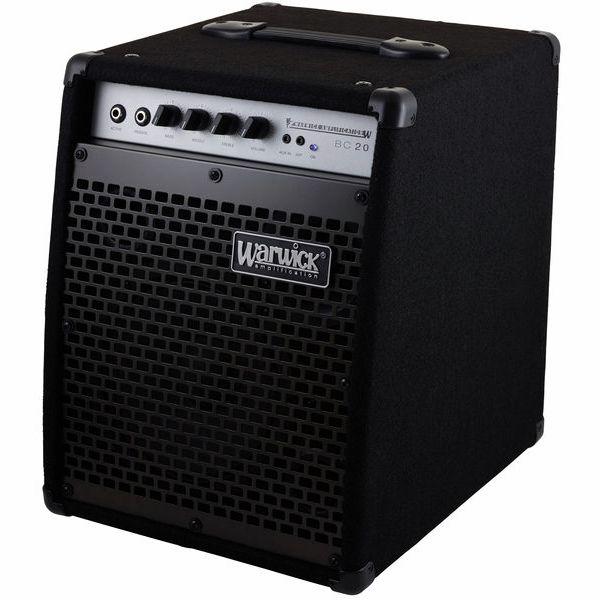
Warwick’s BC 20 sits right in the sweet spot – a proper German-built combo with an 8″ driver and a tweeter, small enough for a flat, loud enough to actually matter.
I spent time running basses through it to see if it holds up against the usual suspects in this price bracket.
What’s Actually Inside
20 watts doesn’t sound like much on paper, but the combination of an 8″ speaker and a 2″ tweeter gives it more clarity and headroom than the number suggests. The tweeter especially matters here – it’s what stops the top end from turning to mush once you start slapping or playing with a pick.
Dual Inputs, Which Actually Matters
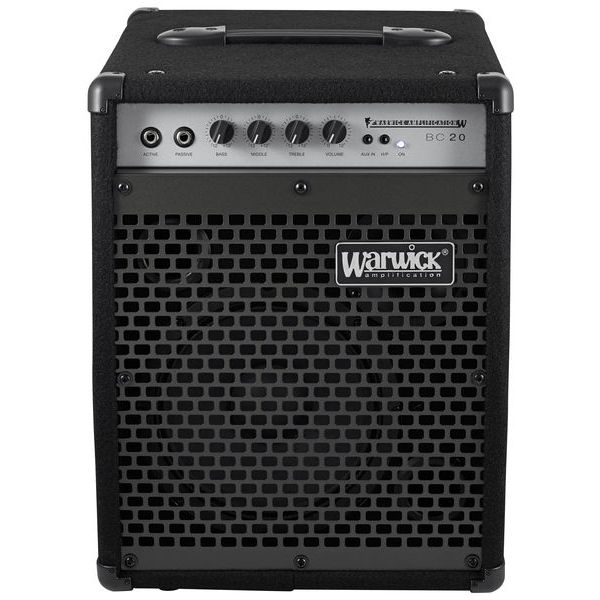
It has both a passive and an active input, and you can genuinely run two instruments through it at once – handy if you’re jamming with a friend or comparing two basses back to back without swapping cables constantly.
The Compressor Nobody Mentions
There’s a built-in automatic compressor, which is a small feature that punches above its weight. It evens out your dynamics automatically, so aggressive slap passages don’t suddenly jump out and clip while quieter fingerstyle parts stay audible. For a combo at this price, that’s not something you’d expect to find.
How It Actually Sounds
Low B on a 5-string comes through with surprisingly little flub for an 8″ driver. It’s not going to replace a rig at a real venue, but for bedroom or rehearsal-room volumes, it stays composed even when you dig in hard.
The 3-band EQ is simple but effective – enough range to go from a scooped, modern slap tone to a warmer, rounder fingerstyle voicing without needing anything more complicated. I ran a punchy modern bass like the Sterling SUB Ray4 HH through it and the mid-scoop character came through clearly, which says good things about how transparent the amp is.
With something warmer and more vintage-voiced, like the Epiphone Jack Casady Bass, the BC 20 leaned into a rounder, more hollow tone without needing much EQ tweaking – a good sign that it’s not baking in a harsh character of its own.
Build Quality and Portability
At 9kg, it’s light enough to carry in one hand up a flight of stairs without complaint, and the cabinet itself feels genuinely solid – no rattling grille, no flexing panels. Warwick has a reputation for over-building their gear relative to the price, and the BC 20 fits that pattern.
The bass reflex port design also helps low end escape more efficiently than a sealed cabinet would at this size, which is part of why it doesn’t sound as boxy as some other small combos in this category.
Headphone Practice Is Genuinely Good
If you live somewhere with thin walls, the headphone output matters as much as the speaker does. Plugged into headphones, the BC 20 keeps the same EQ character and compressor behavior as through the speaker, so what you practice with is close to what you’d hear live – not always true on cheaper combos where the headphone output feels like an afterthought.
The AUX input is also handy for practicing along with a playlist or backing tracks, and the volume balance between AUX and instrument input is sensible out of the box rather than needing constant readjustment.
Specs at a Glance
- Power: 20 Watts
- Speaker: 1x 8″ driver plus 2″ tweeter
- Inputs: Passive and active (simultaneous 2-instrument use supported)
- EQ: 3-band
- Automatic compressor built in
- AUX input and headphone output, both 3.5mm
- Bass reflex cabinet design
- Dimensions: 32 x 43 x 38cm
- Weight: 9kg
The Niggles
Nothing here is a dealbreaker, but a few things are worth flagging.
- The power/status LED is noticeably bright – fine on a rehearsal stage, mildly annoying in a dim bedroom setup.
- Some owners report a faint hum through the passive input depending on grounding, which usually clears up once connected properly.
- At 20 watts, it’s genuinely a practice and small-room tool, not something you take to an actual gig without mic’ing it up.
- No effects loop or built-in effects, so what you hear is what you get – fine for most, limiting if you wanted onboard chorus or overdrive.
Who Should Buy This
This is a smart pick if you want a genuinely well-built, small bass combo for home practice or quiet rehearsal sessions. It’s worth comparing directly against the Hartke HD25, which sits in almost exactly the same bracket – similar wattage, similar 8″ driver setup, different tonal character (Hartke leans a bit brighter and more aggressive, Warwick a touch warmer and more controlled thanks to that compressor).
If you want more headroom and don’t mind spending a bit more, the Hartke HD50 or the Fender Rumble 25 give you a bit more volume ceiling for the same general use case. And if you’re on an even tighter budget, the Ampeg BA-108 is worth a look too – it trades some of the Warwick’s finesse for an even lower price.
If you need genuine gigging volume, none of these small combos are the answer – you’d want to be looking at something with real wattage and a bigger cab instead.
Final Verdict
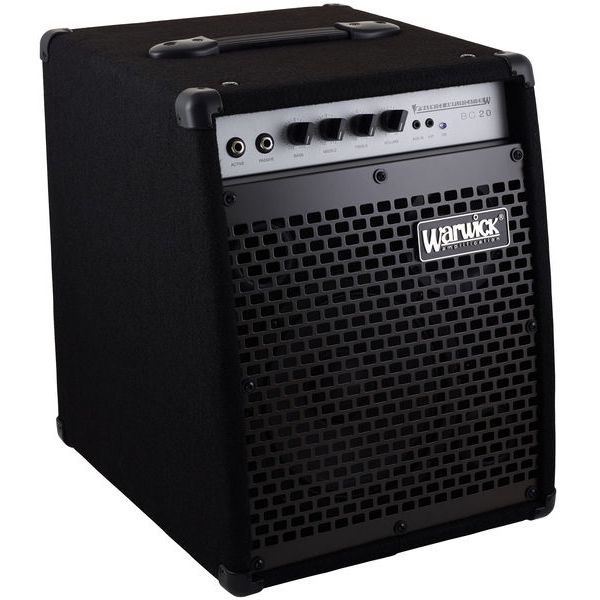
The Warwick BC 20 does the unglamorous job of a practice combo better than most. Solid build, a tweeter that actually earns its place, a compressor that quietly does its job, and a tone that stays honest whatever bass you plug into it.
It’s not going to replace a real backline, and it was never meant to. But as a bedroom or small rehearsal-room amp, it’s one of the more thoughtfully built options in its price bracket, and it deserves to be on the shortlist alongside the usual Fender and Hartke suggestions.