Watch It First
Ibanez’s EHB line basically kicked off the modern ergonomic-bass movement, and the newer EHB600 takes that whole idea and makes it dramatically cheaper. Headless, chambered-feeling body shape, and a spec sheet that used to only show up on basses twice the price.
No headstock means no dive to your strumming shoulder, better balance sitting or standing, and a shorter overall instrument that’s genuinely easier to travel with. It sounds like a gimmick until you actually play one for an hour and realize your fretting hand isn’t fighting neck-dive the whole time.
I spent real time gigging and practicing on the Walnut Flat finish to see whether the headless format is a genuine upgrade or just a look.
Build and Design
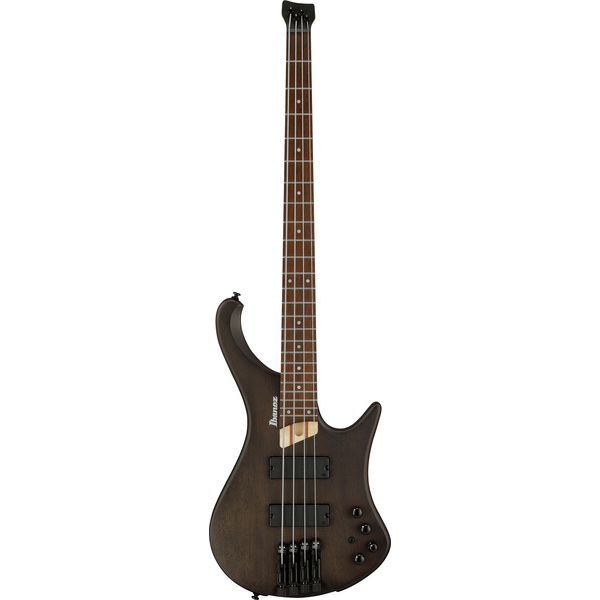
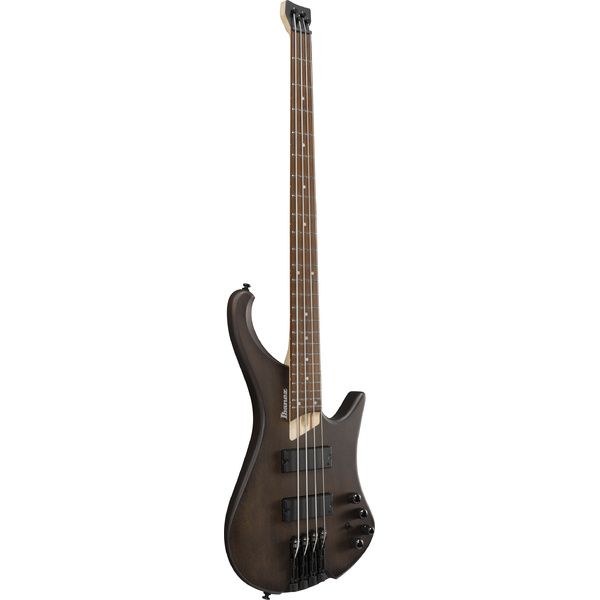
Okoume body, 5-piece maple/jatoba bolt-on neck, jatoba fretboard with a comfortable 500mm radius, and Ibanez’s own Custom headless tuning system. The ergonomic body shape is genuinely thought through, contoured in places a standard bass just isn’t, and it noticeably reduces the „digging into your ribs” feeling after long playing sessions.
The matte polyurethane Walnut Flat finish looks understated in the best way, more studio-professional than flashy. Black hardware throughout keeps the whole thing looking cohesive, and the tuning mechanism at the bridge, rather than a traditional headstock, takes a session or two to get used to but becomes second nature fast.
Fret work and overall fit and finish punch well above the price. This doesn’t feel like an entry point into the EHB range so much as a genuinely complete instrument that happens to be the more affordable option in the lineup.
Sound and Playability
Twin a1 humbuckers at neck and bridge give you a genuinely wide tonal palette, from thumping low-mid warmth to a more aggressive, modern growl depending on where you sit the balance control. The passive tone control alongside the active-ish EQ (with a bypass switch) means you can go from hi-fi and scooped to old-school and rounded without changing instruments.
The 34″ scale plays completely normal despite the headless design, no weird compensation needed. Balance on a strap is where this thing really sells itself: no headstock means no counterweight fighting you, and it sits dead flat whether you’re standing, sitting, or slouched over a mixing desk during a late session.
The EQ bypass switch is a genuinely useful feature too, letting you flip to a pure passive tone instantly if the active circuit ever feels too scooped or hi-fi for the song. It’s a small thing that a lot of active basses skip.
Who the EHB600 Is For
This is the bass for players who travel a lot, whether that’s gigging around town or flying with an instrument regularly. The compact headless footprint genuinely changes how practical it is to move around with, and it fits in overhead bins that a standard bass never will.
It’s also a great pick for anyone who’s curious about the ergonomic-bass trend but doesn’t want to spend EHB1000-series money to find out if they like it. And session players who need one bass that covers a lot of tonal ground will get real use out of the active/passive flexibility.
The Honest Niggles
Headless tuning systems take some relearning if you’ve spent years on traditional tuners, and restringing is a genuinely different process the first few times. It’s not harder exactly, just different, and worth watching a video on before your first string change.
The look is polarizing. Some players love the minimal, futuristic aesthetic, others find it looks unfinished without a headstock. That’s entirely subjective, but it’s worth handling one in person if you can before committing.
And while the okoume body and bolt-on neck are well executed, this is still the accessible end of the EHB range. Players who’ve spent serious time on the pricier neck-thru EHB1000-series models will notice the difference in resonance and sustain, even if casual players won’t.
How It Stacks Up
The most obvious rival in the ergonomic-headless space is the Cort Space 4, which chases a similar idea at a slightly different price point and is worth cross-shopping directly. If a traditional headstock and classic tone matter more to you than the ergonomic angle, the Ibanez SR300E is a fantastic conventional alternative from the same brand.
Fans of that classic thumpy growl should also check out the Sterling by Music Man StingRay Ray4, and if you want something even more unconventional in shape and voicing, the Sterling Bongo is worth a look purely for how differently it approaches the „weird but good” bass category.
For a more traditional Jazz-style budget option, the Harley Benton Enhanced MJ-4MN is a solid comparison point, and if you want to see how Ibanez scales this concept up in price, the Yamaha TRBX604FM shows a different brand’s take on a serious, more premium bass.
Getting Used to Headless Life
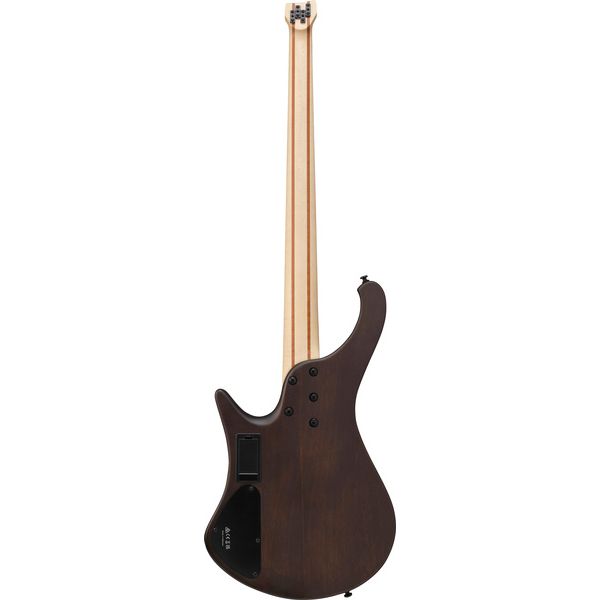
If this is your first headless instrument, give yourself a proper adjustment period. Restringing feels backwards at first since tuning happens at the bridge rather than a headstock, and you’ll want to keep a set of the correct strings on hand since some headless systems are picky about ball-end placement and gauge.
Once you’re past that learning curve, most players find they actually prefer it, especially for the balance and portability. It’s a small hurdle for a genuinely worthwhile long-term upgrade in comfort.
Specs
- Type: Electric bass guitar, headless
- Body: Okoume
- Neck: 5-piece bolt-on maple/jatoba
- Fretboard: Jatoba, 24 frets, 500mm radius
- Scale: 864mm (34″)
- Nut width: 41mm
- Pickups: a1 Humbucker (neck and bridge)
- Controls: Volume, balance, bass, mid, treble, EQ bypass switch
- Bridge: MR5HS headless
- Hardware: Black
- Colour: Walnut Flat
Final Verdict
The Ibanez EHB600 makes a genuinely compelling case for the ergonomic-headless format at a price that doesn’t require a huge leap of faith. Comfortable, well-balanced, and flexible enough tonally to cover a lot of musical ground.
Give yourself time to adjust to the headless tuning system, and this is one of the smarter buys in Ibanez’s current bass lineup, especially if you’re tired of neck-dive ruining an otherwise great instrument.