Watch It First
The Ibanez SR300E has been the go-to „first real bass” recommendation on forums for years now, and honestly, it earns that spot. It’s not flashy. It just quietly does everything right for the money.
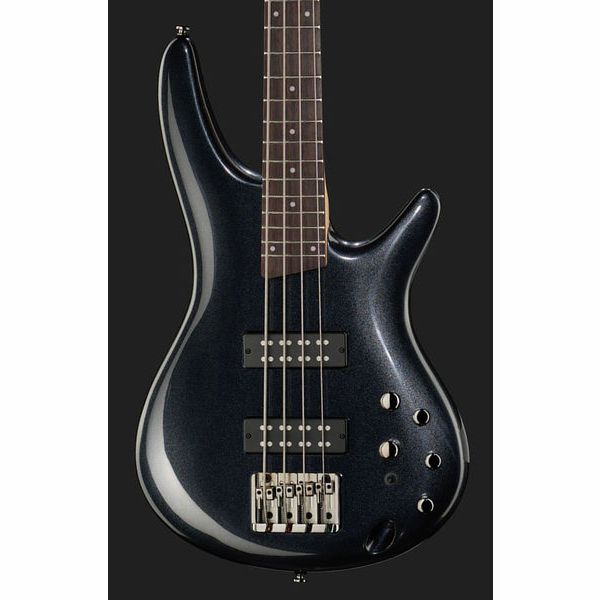
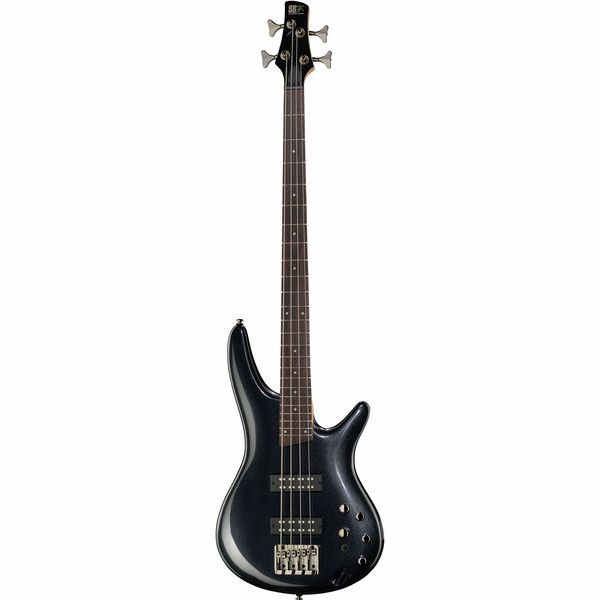
This is the SR300E-IPT – Iron Pewter finish, active electronics, 24 frets. Ibanez’s SR line built its whole reputation on slim, fast necks, and this is where that reputation started for a lot of players.
I went through the specs, the demo videos, and a pile of owner reviews (one guy literally compared unboxing it to a religious experience, no joke) to see whether the hype holds up. Let’s dig in.
Build and Materials
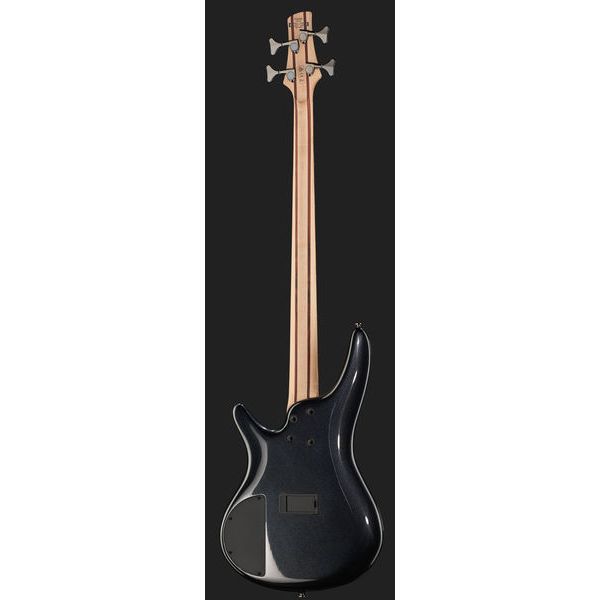
Nyatoh body, 5-piece walnut neck, jatoba fretboard with 24 medium frets. That’s a genuinely fancy-sounding spec sheet for a bass in this price range – most competitors are still using basswood and a plain maple bolt-on.
The 5-piece neck construction isn’t just for looks either – it adds stability and resists warping better than a single or 2-piece neck, especially useful if you’re not babying your gear in a climate-controlled room.
Hardware is all black – Accu-Cast B120 bridge, matching tuners. Simple, no-nonsense, does the job without drawing attention to itself.
Playability
This is the bit everyone talks about. The SR neck profile is thin and fast – genuinely one of the most comfortable necks at any price point, not just this one. Ibanez basically built its whole reputation on this shape.
38mm nut width keeps things compact for players with smaller hands, and the 24-fret jatoba board gives you real upper-register access if you ever need it – unlike a lot of budget P-Bass style instruments such as the Fender American Professional Classic Precision Bass, which tops out at 20-ish.
If you’re coming from a chunkier neck, the transition takes maybe a week of playing before it feels completely natural. After that, going back to anything thicker feels like wearing ski gloves.
Tone and Electronics
Two PowerSpan Dual Coil pickups plus Ibanez’s active 3-band EQ with a 3-position „Power Tap” switch. That switch is the secret weapon here – it reshapes the pickup’s character between single-coil-ish clarity and full humbucker punch.
Passive players might miss a passive/active bypass switch, but active electronics on a bass this price is still slightly unusual, and it gives you way more tonal range than a passive circuit ever could.
Compared to something like the Ibanez TMB420B, which leans into a punchier, more retro voice, the SR300E is more of a modern all-rounder – rock, funk, metal, it covers the bases (pun very much intended).
Who This Is For
Beginners who don’t want to feel like they’re playing a toy, and gigging players who want a reliable backup that doesn’t feel like a downgrade. This bass genuinely spans both ends of that spectrum.
Pair it with something like the Ampeg BA-108 for bedroom practice, or a proper combo like the Fender Rumble 100 once you start gigging, and you’ve got a setup that’ll last years, not months.
If you want something a bit more vintage-flavoured instead of the modern SR shape, the Fender Player II Jazz Bass is worth cross-shopping – different neck feel entirely, more old-school tone.
Ergonomics and Weight
Nyatoh is a lightweight tonewood, similar in weight class to mahogany but a bit brighter sounding. On the strap, this bass sits comfortably for long rehearsals without the neck-dive some lighter basses suffer from.
Balance is genuinely good – a lot of budget basses feel headstock-heavy the second you let go with your fretting hand, but the SR300E doesn’t do that thanks to the body contouring and weight distribution.
The satin-ish neck back (not glossy) helps your thumb glide during faster runs too – sweaty-hand players will appreciate not fighting a sticky gloss finish mid-set.
Setup Out of the Box
Owner reports are consistently positive here – low, buzz-free action straight from Thomann in most cases. That’s not something you can take for granted even at double this price.
If you do want to tweak it, the truss rod and bridge saddles are both easy to access without removing the pickguard or strings, which makes basic home setups genuinely approachable for a first-timer.
Factory strings are a reasonable roundwound set – not premium, but perfectly playable. Most players won’t feel a need to swap them for months.
The Honest Niggles
No case or gig bag included, so budget for one separately – not a huge deal, but worth knowing before checkout so you’re not caught out.
The active electronics need a 9V battery, obviously, so keep a spare in your gig bag. Dead battery mid-set is not a fun surprise.
And if you want something genuinely boutique-feeling with a semi-hollow twist, this isn’t that – check out the Reverend Basshouser Fatfish 32 if that’s more your vibe. The SR300E plays it straighter.
A Quick Word on Finish Options
The IPT (Iron Pewter) finish reviewed here is a metallic grey that hides fingerprints and light wear better than gloss black. Ibanez also sells this in several other colourways if pewter isn’t your thing, all with identical specs underneath.
Specs at a Glance
- Body: Nyatoh
- Neck: 5-piece walnut, bolt-on
- Fretboard: Jatoba, white dot inlays
- Frets: 24, medium
- Nut width: 38mm
- Scale: 864mm (34″)
- Pickups: 2x PowerSpan Dual Coil
- Electronics: Ibanez Custom active 3-band EQ w/ 3-way Power Tap switch
- Bridge: Accu-Cast B120
- Hardware: Black
- Finish: Iron Pewter
Final Verdict
The Ibanez SR300E is one of those rare budget instruments that doesn’t feel like a compromise. The neck alone justifies the price, and the active electronics give you way more range than you’d expect down here.
It’s not going to replace a boutique bass for a working pro, but as a first „real” bass, or a dependable backup, it punches well above where it sits. Hard to find a genuine weak point.
If you’re stuck between a dozen beginner-adjacent basses right now, just get this one and stop scrolling. Seriously.