Watch It First
Bass combos under two grand are usually a graveyard of compromises. Either the tone’s mushy, the build feels like a cardboard box on wheels, or the thing weighs more than the bass you’re plugging into it.
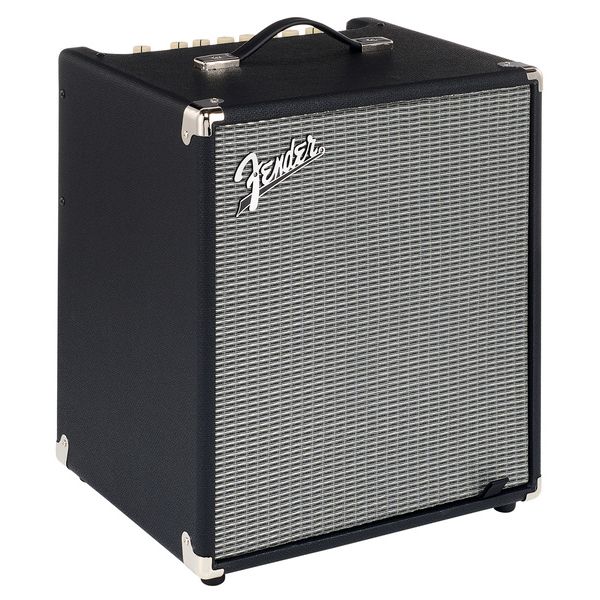
The Fender Rumble 100 dodges basically all of that. It’s been Fender’s quiet workhorse since 2014, and honestly, not much has needed to change since then.
This is the practice-room-to-small-gig combo a lot of bass players end up buying twice — once as a student, and once again a few years later after they sold it and immediately regretted it.
Who’s Actually Buying This Thing
Three types of bassist, mostly. The student who just got a Squier Affinity Jaguar Bass and needs something that isn’t a toy amp.
The weekend warrior doing pub gigs and church sets who doesn’t want to lug a full rig up two flights of stairs. And the guy who already owns a „proper” rig but wants a grab-and-go combo for rehearsals.
IMO that last group is underrated — even players running something serious like a Yamaha TRBX604FM at home end up grabbing a Rumble for quick practice because dragging out the full stack every time you want to noodle for twenty minutes gets old fast.
The Controls Are More Than You’d Expect at This Price
Fender didn’t just slap a volume knob and a 3-band EQ on this and call it done. There’s a genuinely useful control set here for a combo in this price bracket.
- Gain control with a switchable Bright boost
- Contour switch (Vintage voicing on/off)
- Built-in Overdrive with its own Drive and on/off switch
- 4-band EQ: Bass, Low-Mid, High-Mid, Treble
- Effects loop (Send/Return)
- DI output on XLR with Ground Lift
- Stereo aux input and headphone out for silent practice
The Overdrive Switch Is the Party Trick
Most budget bass combos treat „drive” as an afterthought — usually just a gain knob that turns into mud past 3 o’clock. Fender actually built a dedicated overdrive circuit into the Rumble 100, with its own level control separate from the clean channel.
Flip it on and you get a genuinely usable grit, not fizz. Rock and punk players will find it does the job without needing a separate bass overdrive pedal on the board — though obviously a dedicated pedal will always do it better if that’s your main tone.
100 Watts, One 12-Inch Speaker — Is That Enough?
Short answer: yes, for rehearsal rooms and small-to-medium venues with any kind of PA support. The Class D amp section is deceptively loud for its rated wattage, and the Eminence Special Design 12-inch speaker handles low end better than you’d guess from the spec sheet.
Will it keep up with a loud drummer in a big room with no mic on the amp? Probably not, and that’s true of basically any single-12 combo at this wattage. That’s what the DI out is for — run it to the PA and let the front-of-house engineer carry the weight.
Built Like It Actually Gets Loaded Into a Car Weekly
At 9.97 kg, this thing is stupidly light for a 100W 1×12 combo. One hand, one trip, done. Compare that to older tube-adjacent bass combos that needed a trolley and a friend.
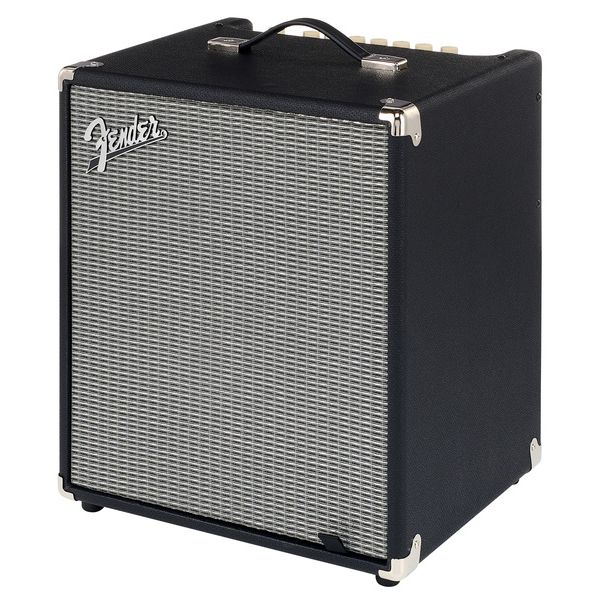
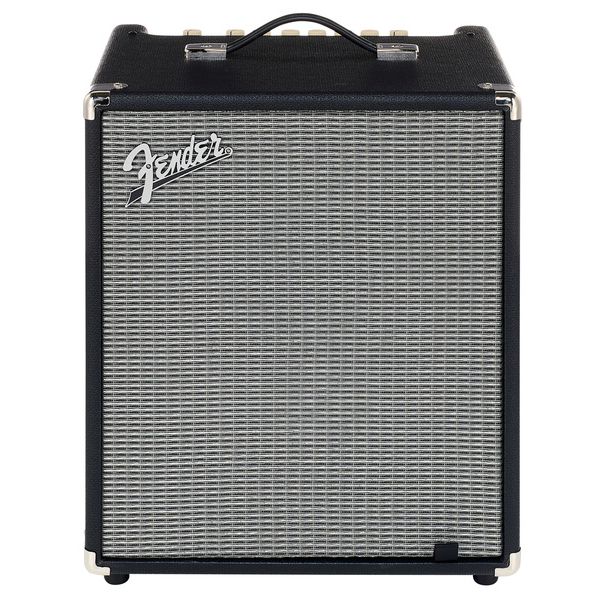
The black vinyl covering and silver grille cloth aren’t going to win design awards, but they’re tough — this is the classic Fender Rumble look that’s barely changed in a decade because it works and it survives being knocked around in a van.
Soft-touch „radio style” knobs are a nice touch too — they don’t feel like they’ll snap off after six months of gigging, unlike some cheaper combos where the pots feel like an afterthought.
How It Stacks Up Against the Competition
The obvious rivals here are the Markbass Micromark 801 and the Boss Katana-110 Bass. The Markbass is more compact and arguably more „hi-fi” sounding, but you’re paying extra for that Italian badge and it doesn’t have nearly as much character.
The Boss Katana Bass line brings digital amp modeling and effects into the mix, which is great if you want versatility, but some players find it a bit sterile compared to the Rumble’s simpler, more analog-feeling voicing.
Pair the Rumble with something like a Sire Marcus Miller U5 or an Ibanez TMB420B and you’ve got a rig that punches well above what you paid for it. Same story if you’re running a proper P-Bass — whether that’s a Fender American Professional Classic Precision or the more affordable Fender American Professional II P Bass, both play nicely with the Rumble’s voicing since it’s obviously tuned with Fender basses in mind.
Honest Cons
It’s not perfect, and it’d be dishonest to pretend otherwise. There’s no built-in tuner, which most digital combos in this price range now include as standard.
The footswitch for the overdrive channel is sold separately, which feels like a cheeky upsell on a combo that’s otherwise well specced. And if you want onboard effects or amp modeling, look elsewhere — this is a straight, honest, analog-flavored combo with zero digital trickery.
Single 12-inch speaker also means the low-end ceiling is real. Drop-tuned five-string players pushing serious low B territory will want to think about a 15-inch or a 2×10 setup instead.
Specs at a Glance
- Power: 100W, Class D amplifier
- Speaker: 1x 12″ Eminence Special Design
- Controls: Gain, Bright, Contour (Vintage), Drive/Overdrive, Level, 4-band EQ
- Effects loop: Send and Return
- DI output: XLR with Ground Lift
- Aux input: stereo mini-jack, plus headphone output
- Weight: 9.97 kg
- Dimensions: 46.9 x 41.9 x 35.6 cm
Final Verdict
The Fender Rumble 100 isn’t flashy, and it doesn’t try to be. What it does is nail the basics — decent tone, real portability, useful controls, and a build that survives actual gigging — at a price that doesn’t sting.
If you want digital modeling and a library of effects, go Katana. If you want a lightweight, honest combo that’ll outlast your first three bass guitars, this is genuinely hard to beat. It’s been a bestseller for over a decade for a reason.