Watch It First
Quick heads up before we dive in: the exact bass this backlog item was written for, the Fender American Performer Precision Bass, has been discontinued. Fender pulled the whole American Performer line.
So instead I’m covering its spiritual successor: the Fender American Professional Classic Precision Bass. Same job, same „affordable USA P-Bass” niche, arguably a better instrument. Let’s get into it.
If you’ve spent any time lurking bass forums you’ll know the eternal debate: do you really need a Made-in-USA Fender, or is a Mexican-made Player series P-Bass just as good for gigging? IMO this one changes the conversation a bit.
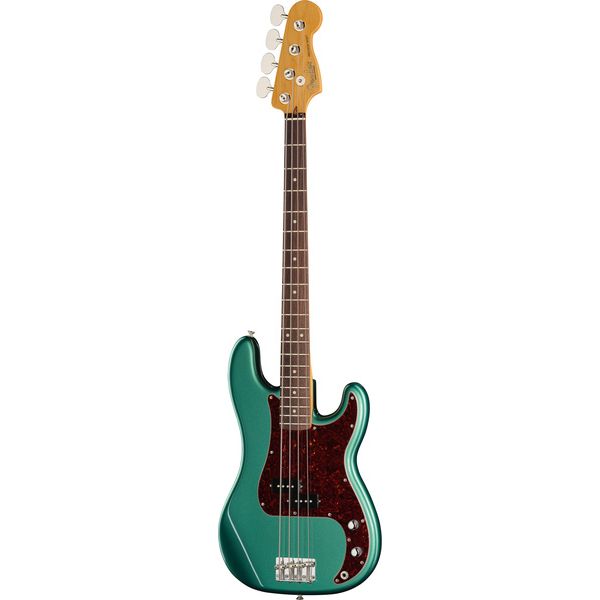
What Happened to the American Performer?
Fender killed off the American Performer series a while back. It sat between Player and American Professional in the lineup, and honestly it always felt a bit squeezed in there.
The American Professional Classic is Fender’s newer answer to „I want a real USA Fender bass without paying American Professional II money.” Lower price than the Pro II, made in Corona, and it leans harder into vintage vibes than either of its stablemates did.
Basically: same mission, different (arguably better) execution. Moving on.
Build Quality & Feel
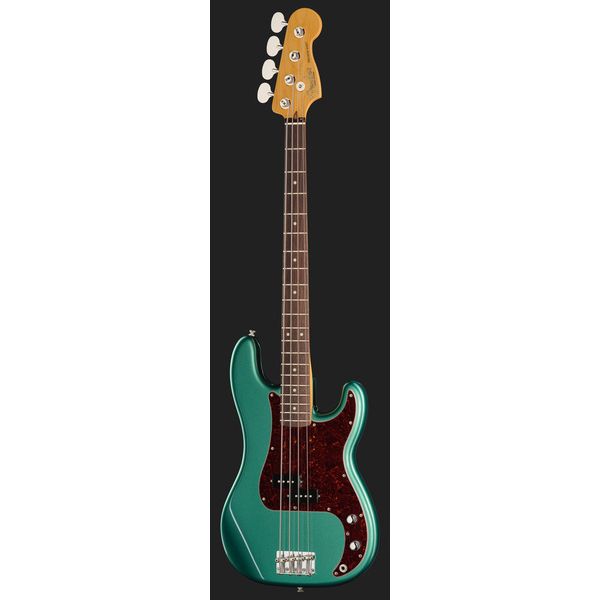
Alder body, bolt-on maple neck, Modern „C” profile. Nothing exotic, and that’s kind of the point — this is meant to feel like a P-Bass, not reinvent one.
The neck has a satin back which most players get on with instantly (no sticky gloss finish dragging on your palm during a sweaty set). Rolled fretboard edges too, which is a small thing until you play a bass without them and suddenly notice.
It comes with a synthetic bone nut rather than actual bone — fine, does the job, nobody’s going to notice in a mix. Hardware is nickel/chrome, vintage-style tuners, the works. It’s a well-built, no-nonsense instrument. Nothing rattles, nothing feels cheap.
Weight and Balance
P-Basses have a reputation for being a bit of a shoulder workout, but this one balances well on a strap. Nothing dive-bombs the headstock, which is more than I can say for some vintage-spec reissues I’ve played.
Tone: The Coastline ’60 Pickup
Here’s the actual news story on this bass: the new Coastline ’60 split single-coil pickup. It’s Fender’s attempt at a punchier, more dynamic P-Bass voice without losing that classic thump.
And it works. Dig in near the bridge and you get real growl and snap. Play with a lighter touch up near the neck and it goes warm and round almost instantly. It’s genuinely more responsive to how hard you dig in than a lot of standard P-Bass pickups.
The passive electronics are dead simple — one volume, one tone — but the tone control runs through Fender’s GreaseBucket circuit. That means rolling off treble doesn’t turn everything into mud, which happens on cheaper basses more than you’d think. You lose highs without the bass getting boomy and undefined.
Compared to something like a Vintera II ’60s Precision Bass, this pickup has more headroom and a slightly more modern edge, while still nailing the classic Fender „one knob does it all” simplicity.
Playability
20 medium-jumbo frets, 9.5″ radius board — Fender’s now-standard modern compromise between vintage feel and fast playability. If you’ve played any recent Fender bass this will feel instantly familiar.
Fretwork out of the box is clean. No sharp edges, no fret buzz on the review unit, action set sensibly low without choking out sustain. For slap players: it responds well, though this is still fundamentally a P-Bass, not a slap machine like a Stingray or an Ibanez SR.
Who’s This For?
This is squarely aimed at gigging bassists who want a genuine Made-in-USA Fender but don’t want (or need) to stretch to American Professional II money.
- Session players who need a reliable, classic P-Bass tone that sits in a mix without EQ surgery
- Players upgrading from a budget P-Bass and wanting the „real deal” step up
- Rock, blues, soul, punk, indie — anywhere a classic P-thump belongs
- Anyone who wants USA build quality without the premium price ceiling
If you’re mainly a modern metal or prog player who lives in extended range territory, this isn’t your bass — go look at something like a multi-scale or extended-range option instead.
Key Specs
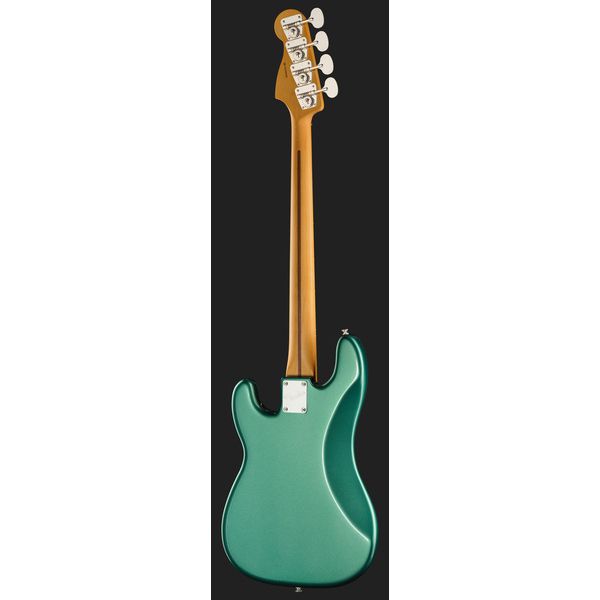
- Body: Alder
- Neck: Maple, bolt-on, Modern „C” profile, satin finish
- Fretboard: Pau ferro (rosewood-style), 9.5″ radius, 20 medium-jumbo frets
- Scale length: 34″ (864 mm)
- Pickup: Coastline ’60 Split Single Coil
- Electronics: Passive, 1 volume, 1 tone (GreaseBucket circuit)
- Hardware: Nickel/chrome, vintage-style tuners
- Includes: Deluxe gig bag
- Made in USA
Niggles
Nothing’s perfect, so let’s talk cons for a sec.
It only ships with a gig bag, not a hardshell case — a bit stingy for an instrument at this level, IMO. If you’re flying with it or touring, budget for a proper case separately.
Also, it’s a single passive pickup with one volume and one tone control. If you’re the type who wants active EQ, a blend knob, or a bridge pickup for extra tonal range, this isn’t that bass — you’d want to look at a PJ configuration instead.
And obviously, it’s still a premium price point compared to Player or Squier options. You’re paying for the USA build and that specific pickup — worth it if that matters to you, not worth it if it doesn’t.
Final Verdict
The American Professional Classic Precision Bass does exactly what it says: gives you a proper, made-in-America Fender P-Bass without the top-tier price tag.
The Coastline ’60 pickup is the real star here — more dynamic and responsive than you’d expect from „just another P-Bass pickup.” Combined with genuinely solid build quality and a comfortable neck, this earns its spot as one of the better mid-tier USA basses on the market right now.
Would I buy one over a Stingray-style alternative? Depends what you’re after tonally — but for classic P-Bass thump with real USA build quality, yeah. This one’s earned its place on the shortlist.