Watch It First
The SR line covers a huge range of prices, and things start getting genuinely interesting once you climb into the 600 series.
Ash body, Nordstrand pickups, and proper active electronics all show up here without crossing into Prestige-tier pricing.
Is this the sweet spot in the SR lineup? A lot of owners seem to think so. Let’s see why.
Build and Materials
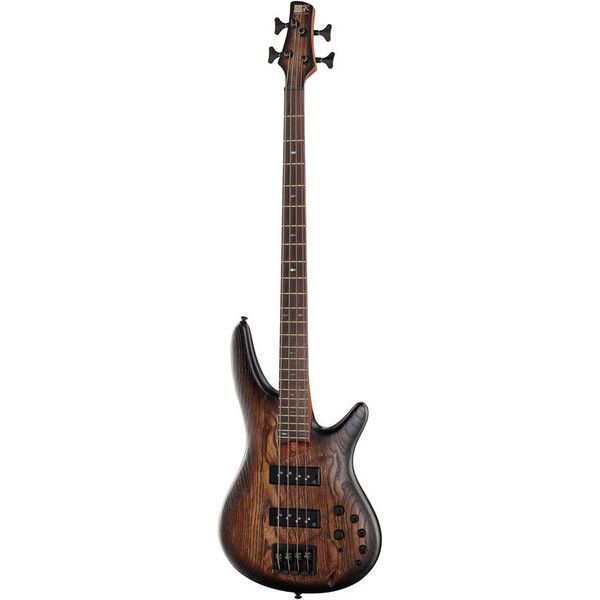
Ash body paired with a 5-piece jatoba and walnut neck — a combination that’s both visually striking and genuinely stable under string tension.
The rosewood fretboard carries abalone oval inlays, and 24 medium frets give you plenty of range.
One owner review specifically called out how thin and light the body construction is — a deliberate choice that keeps weight down but means you’ll want to handle it carefully to avoid splintering the edges.
Weight-wise, this sits noticeably lighter on a strap than older SR basses with denser tonewoods — your shoulder will thank you by the third set of the night.
Hardware
The Ibanez AccuCast B500 bridge makes intonation and action adjustments genuinely easy, according to multiple owner reviews.
Black hardware throughout, with solid metal potentiometer knobs rather than the plastic ones you’d expect at this price — a small but appreciated detail.
One small thing worth knowing: this is an active setup, so you’ll want a 9V battery on hand at all times. Most owners report solid battery life, but it’s the kind of detail that catches people off guard on their first gig.
The satin neck finish is worth mentioning too — it stays fast under a sweaty hand during long sets, unlike a few gloss-necked basses in this range that get tacky after twenty minutes.
Playability
Multiple long-time Ibanez owners specifically mention how much lighter this feels compared to older SR basses, which matters a lot over a long gig.
The narrower string spacing takes some adjustment if you’re coming from a wider-neck bass, but most players report adapting within a few sessions.
Fast runs up and down the neck feel noticeably easier thanks to the slim profile — this is a genuinely quick-playing instrument.
The neck profile leans slim for a 5-piece build, which makes fast runs and chord-style playing less of a stretch than you’d expect from a bass in this bracket.
Seated or standing, the balance stays even — no neck-dive, even with a strap on the higher button position, which matters more than people think once a set runs past 45 minutes.
Tone
Two Nordstrand Big Break humbuckers handle pickup duties here, paired with Ibanez’s custom active 3-band EQ and a 3-way mid-frequency switch.
Reviewers describe the tone as naturally mid-forward, covering everything from growling rock to old-school Motown-style warmth depending on how you dial in the EQ.
FYI, if you’re used to Bartolini pickups (common on other SR models), the Nordstrand voicing here is noticeably different — worth trying before assuming it’ll sound the same.
String choice makes a bigger difference here than on a lot of basses — swap to flatwounds and the mid-forward character mellows into something closer to vintage P-bass territory.
In the Mix
Rock and alt tones land naturally here — the mid-forward voicing cuts through a dense guitar mix without needing much EQ help.
Slap and funk players will need to scoop the mids a bit more than on a typical modern bass, but once you find that setting it snaps convincingly.
In a studio setting, the active preamp means you can shape the DI signal a lot before it even hits a compressor — useful if you’re recording direct and want to skip reamping.
Who Should Buy This
Gigging players who need a lighter bass without sacrificing tonal range or build quality are the obvious target here.
It’s also a great step-up choice if you’ve outgrown an entry-level SR and want genuinely better materials and electronics.
If you need maximum durability for rough handling, the thinner body walls mentioned by owners might give you pause — this isn’t the toughest bass in this price range.
Who should skip it? If you mostly play passive basses and don’t want to think about EQ settings or batteries, a simpler passive SR model will get out of your way faster.
Setup out of the box is generally solid, but like most instruments shipped internationally, a proper fret-level and intonation check from a local tech is never a bad idea before a big gig.
Worth Comparing
The Cort A4 Plus offers a similar boutique-adjacent feel from a different angle, and the Schecter Stiletto Stealth-4 is worth a look if you want a different pickup and electronics configuration.
Compared to a passive bass in the same range, the SR600E’s active EQ gives you a lot more flexibility live, though it does mean one more thing that can technically fail (the battery, the preamp) versus a simpler passive circuit.
Honest Niggles
Also worth flagging: the mid-frequency switch isn’t labeled super clearly on the control plate, so expect a little trial and error the first few times you reach for it mid-song.
The thin body walls mean you need to be a bit more careful in transport than with a chunkier, more traditional build.
Action can arrive a touch high out of the box according to a couple of reviews, though the AccuCast bridge makes fixing that straightforward.
The naturally mid-forward voicing won’t suit everyone — if you want a scooped, modern slap tone by default, expect to spend some time in the EQ first.
Specs at a Glance
- Body: Ash
- Neck: 5-piece jatoba/walnut
- Fretboard: Rosewood, abalone inlays
- Scale: 34″ (long scale)
- Frets: 24 medium
- Pickups: 2x Nordstrand Big Break humbuckers
- Electronics: Active/passive 3-band EQ, mid-frequency switch
- Hardware: Black, Ibanez AccuCast B500 bridge
Final Verdict
This is genuinely where the SR line starts feeling special. Real tonewood, quality pickups, and an active preamp that actually gets used rather than ignored.
Owner reviews are consistently glowing, and the lighter weight compared to older SR basses is a real selling point for anyone gigging regularly.
If you’ve been eyeing a step up from entry-level SR basses, this is exactly the kind of instrument that justifies the jump.
Bottom line: this is the point in the SR range where compromises start disappearing, and owner feedback backs that up consistently.