Watch It First
Yamaha’s TRBX line has always been the reliable, slightly boring workhorse of the bass world. The 604FM is where that changes.
This is the top of the TRBX range, and it comes with a flamed maple top, active/passive switchable electronics, and a build quality that genuinely competes above its price bracket.
Is it worth stepping up from the entry-level TRBX models? Let’s dig in.
Build and Materials
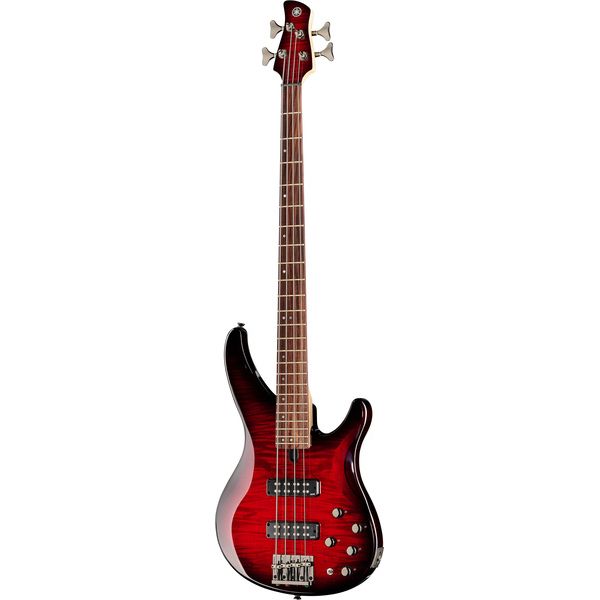
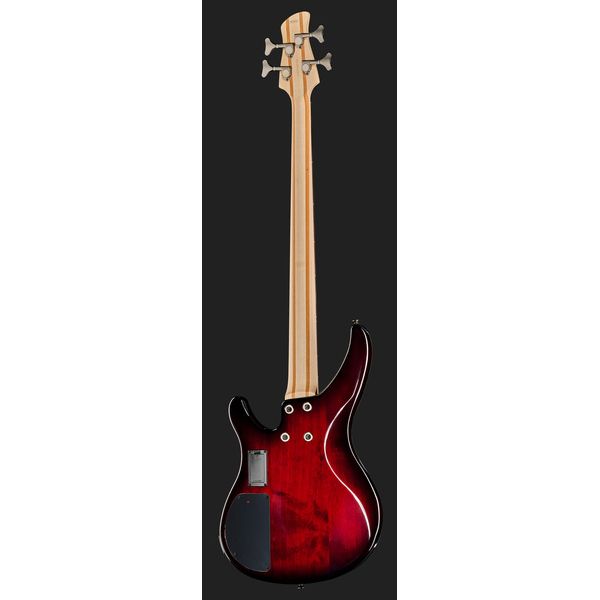
Alder body with a genuine flamed maple top â not a printed veneer, an actual figured cap that catches light beautifully under stage lighting.
The neck is a 5-piece maple/mahogany laminate, which is the kind of construction you’d expect on basses costing considerably more. It’s there for stability as much as looks â laminated necks resist warping better than single-piece necks.
Rosewood fretboard, 254mm radius, 24 medium frets. That’s a lot of real estate for a 34″ scale bass, giving you a couple extra frets most competitors don’t offer.
Standout Details
- Genuine flamed maple top, not a laminate print
- 5-piece maple/mahogany neck for extra stability
- 24 frets â two more than most 34″ scale basses
- Black and chrome hardware combo for a premium look
Owner reviews consistently use words like „impeccable” and „amazing value” when describing the finish and construction. That’s a high bar for a bass in this price tier, and it seems to genuinely earn it.
Playability and Feel
38mm nut width and a comfortably slim neck profile make this an easy bass to move around on. Reviewers specifically call out the narrow neck as a highlight for fast playing and comfortable positioning.
Balance on a strap is good â the flamed maple top doesn’t add much extra weight, and Yamaha clearly thought about ergonomics with the body contouring.
24 frets means more range up high than most basses in this class, useful if you like playing lead lines or reaching into higher register work.
FYI, one small thing worth flagging: with 24 frets and a standard 34″ scale, the neck pickup sits slightly differently than on 20-22 fret basses. Not a problem, just something to notice if you’re used to a different fret count.
Sound and Tone
Two Alnico double-coil pickups deliver punch, bite, and genuine sustain. This isn’t a subtle bass â it’s got real presence whether you’re fingerstyle or picking.
The switchable active/passive mode is the real party trick here. Passive mode gives you a more organic, vintage-leaning tone. Flip to active and the onboard preamp adds serious headroom and tonal shaping range.
Reviewers repeatedly mention how „fun” it is to switch between the two modes mid-session â it’s basically two basses in one body. Great for gigging musicians who need to cover multiple tonal territories without swapping instruments.
Electronics
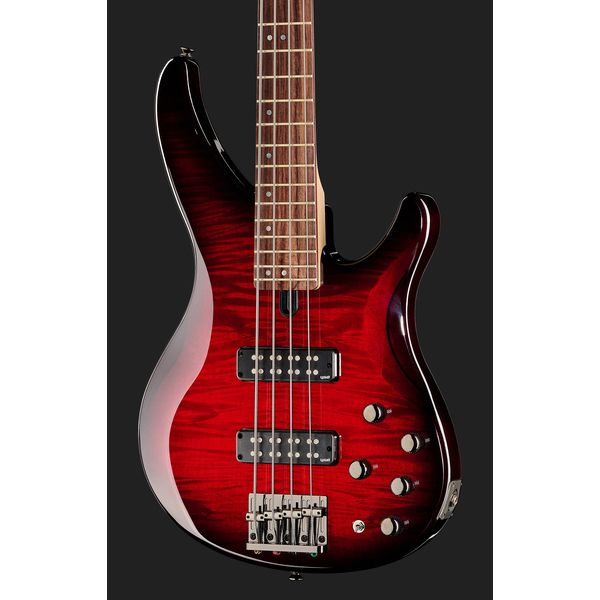
This is where the 604FM separates itself from cheaper TRBX models. You get a proper 3-band EQ â bass, mid, treble â plus volume and pickup balance controls.
The active/passive switch means you’re not locked into needing a battery to get usable tone. Battery dies mid-gig? Flip to passive and keep playing, no dead silence moment.
IMO this is one of the smartest electronics packages at this price point. Compare it to the more budget-focused Sire Marcus Miller M2 and you can really feel the extra flexibility here.
Who Is This For?
This is where Yamaha’s bass lineup stops being „reliable but boring” and starts being genuinely exciting. It’s for players who’ve outgrown an entry-level bass and want something that looks and sounds like a step up.
Gigging musicians who need tonal flexibility across genres will appreciate the active/passive switching most. One bass, two distinct voices.
It’s also a great „forever bass” for intermediate players â the build quality and electronics won’t feel limiting even as your skills improve.
If you want something similarly upscale but with a different tonal character, check out our Warwick RockBass Streamer 4 review or the Schecter Stiletto Stealth-4 for a more aggressive rock-oriented alternative.
Session players and studio musicians will especially appreciate having two distinct tonal characters in one instrument. Rather than bringing two basses to a session, you bring one and just flip a switch depending on what the track needs.
Cover bands playing across genres in a single night â funk one song, rock the next â genuinely benefit from this kind of flexibility. It’s the practical, unglamorous reason active/passive switching earns its keep on stage.
Honest Niggles
It’s not the cheapest bass in the TRBX family, obviously â you’re paying for the flamed top and active electronics, and that shows up in the price relative to the entry TRBX models.
24 frets is great for range but means the neck pickup placement is slightly different from typical 20-22 fret basses â some players used to a more traditional layout might need a session or two to adjust.
Active electronics mean you need a 9V battery on hand. Not a big deal, but always worth a spare in your gig bag.
And if you specifically want a passive-only, no-frills bass, this is overkill â the switching flexibility is wasted if you never touch the active side.
Specs at a Glance
- Body: Alder with flamed maple top
- Neck: 5-piece maple/mahogany
- Fretboard: Rosewood, 254mm radius
- Scale: 34″ long scale
- Nut: 38mm width
- Frets: 24 medium
- Pickups: 2x Alnico double-coil
- Controls: Volume, balance, bass, mid, treble (3-band EQ)
- Electronics: Switchable active/passive
- Hardware: Black/chrome combo
- Finish: Dark Red Burst
Final Verdict
The Yamaha TRBX604FM is where the TRBX line stops feeling like a „safe choice” and starts feeling like an actual upgrade worth chasing.
The flamed maple top isn’t just cosmetic flair â it comes paired with genuinely useful electronics and a build quality that punches into territory usually reserved for pricier basses.
If you’ve been eyeing an upgrade from an entry-level bass and want something that’ll grow with your playing rather than get outgrown in a year, this is a serious contender. It’s also worth cross-shopping against the Cort Space 4 if headless ergonomic designs interest you.
Bottom line: Yamaha finally made a TRBX that’s exciting, not just dependable. Both, actually â and that combination is rarer than it should be.
Owner reviews back this up almost unanimously â near-perfect ratings, words like „impeccable” thrown around freely, and multiple people specifically calling out the value relative to the build quality. That’s not hype, that’s a pattern.
If you’re on the fence between this and something like the Squier Sonic Precision Bass at the entry end of the spectrum, just remember: those are different tiers entirely. The TRBX604FM is for players ready to commit to an instrument they won’t outgrow.