Watch It First
Sterling by Music Man basses usually play it safe. Copy the StingRay shape, drop the price, sell a ton of them. Fair enough strategy, works great.
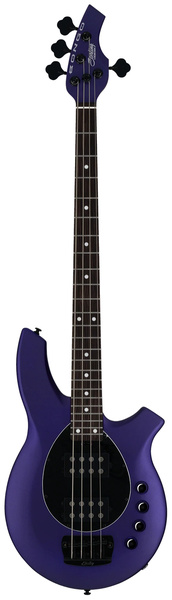
The Bongo does not do that. It’s the weird one in the catalogue, the one that looks like nothing else on a rack full of double-cutaway StingRay clones, and it’s been dividing bass players since the shape first appeared on the premium Ernie Ball Music Man line years ago.
Sterling’s version brings that oddball body, the active electronics, and the HH pickup layout down to a genuinely affordable price. Question is whether the Bongo’s quirks are actual features or just quirks. Let’s get into it.
Build and Materials
The body is mahogany, not the nyatoh or poplar you get on most of Sterling’s cheaper StingRay-shaped basses. That’s a meaningfully different tonewood and it’s part of why the Bongo doesn’t sound like a budget StingRay clone at all.
Shape-wise it’s genuinely unusual. Smaller lower horn, a rounder, almost sculpted lower bout, and contouring that puts the controls in slightly different spots than you’re used to reaching for. First time you pick one up you’ll fumble for the blend knob. Second time you won’t.
Neck and Hardware
Bolt-on maple neck, rosewood board, 24 frets and a 34″ scale — completely conventional here, no surprises. Open-gear tuners, black hardware throughout, Sterling’s own bridge design.
Fit and finish on the review-spec unit was solid. No sharp fret ends, no finish runs, nut slots cut properly out of the box. For the price bracket this thing sits in, that’s not nothing — plenty of basses at this level need a setup before they’re truly playable, and this one mostly didn’t.
Playability and Feel
Neck profile is a comfortable medium C, not chunky, not a speed neck either — just normal. If you’ve played a Warwick RockBass Streamer and found it a bit much in the hand, this will feel positively slim by comparison.
Balance is where the odd shape actually pays off. Slung on a strap, the Bongo doesn’t neck-dive even a little bit — the body mass sits exactly where it should. Sitting down playing it unplugged is a slightly different story since the smaller lower horn gives you less to rest against, but once it’s on a strap it’s genuinely one of the better-balanced basses I’ve had on the bench.
Upper Fret Access
The cutaway design gives properly unobstructed access up past the 20th fret. If you’re the kind of player who actually goes up there — slap runs, tapping, whatever — you’ll notice and appreciate it. If you live in first position like most of us, it’s a nice-to-have you’ll rarely use.
Tone and Sound
Two ceramic humbuckers, active 2-band EQ, plus a blend knob instead of a simple pickup selector. That blend control is the whole story here — it lets you dial continuously between neck and bridge rather than just picking one or the other or splitting the difference evenly.
Full neck position is thick, round, almost a bit woolly — good for that vintage-adjacent thump if you back off the treble. Bridge alone is aggressive and modern, plenty of top-end bite for slap. Blend them in the middle and you get something that’s neither classic StingRay honk nor generic humbucker mud — it’s genuinely its own voice, closer in spirit to a Marcus Miller-style active bass than to a passive P-Bass thump.
The active preamp has real headroom, and the bass/treble controls are broad and musical rather than surgical. You’re not getting a parametric mid control here — this is a „shape the tone, don’t perform surgery on it” kind of EQ, which honestly suits most players just fine.
Who It’s For
Players who want something that doesn’t look like everyone else’s bass, first and foremost. If you’re tired of seeing the same StingRay silhouette on every stage, the Bongo solves that instantly.
It’s also a genuinely versatile modern bass — the active electronics and HH configuration cover funk, modern rock, metal, and general session work without needing a pedal or a second instrument. If your reference points are more Schecter Stiletto territory — modern, aggressive, versatile — you’ll feel at home here.
Less good a fit: traditionalists who want a passive P-Bass thump or a vintage-correct Jazz Bass voice. This isn’t that bass and never will be.
Honest Niggles
The shape is polarizing, full stop. Some players will never warm to it — it just doesn’t read as a „normal” bass to a lot of eyes, and that matters more than gear reviewers like to admit. Test the aesthetics in person before you commit if you can.
The blend knob takes real getting-used-to if you’ve spent years on a simple 3-way pickup selector. There’s a learning curve to dialing in „your” tone rather than picking from three presets, and early on you’ll spend more time twiddling than playing.
And honestly, at this price point you’re competing against some very strong, more „normal-looking” active basses — including Sterling’s own StingRay lineup. If the unusual shape isn’t a selling point for you personally, there’s not a compelling reason to pick this over a RAY34HH.
Specs at a Glance
- Body: Mahogany
- Neck: Bolt-on maple, 34″ scale
- Fretboard: Rosewood, 24 frets
- Pickups: 2x ceramic humbuckers (neck & bridge)
- Electronics: Active 2-band EQ, volume, blend, bass, treble
- Hardware: Black, open-gear tuners, Sterling bridge
- Strings (stock): Ernie Ball 2836 Super Slinky
How It Stacks Up
Worth putting the Bongo next to a couple of alternatives, because „different shape” isn’t reason enough on its own to buy a bass.
Versus a standard Sterling StingRay (RAY34 or similar), you’re trading the iconic, universally-loved silhouette for something more polarizing but arguably more versatile tonally, thanks to the blend knob and HH layout rather than a single humbucker. Neither is „better” — it depends whether you want to blend in or stand out.
Versus something like the Höfner Club Bass or other vintage-styled options, the Bongo is basically the polar opposite philosophy — modern, active, aggressive rather than warm and hollow-body vintage. If you already know you’re a vintage-tone player, skip this section entirely and go look at a Höfner.
And versus other ergonomic oddballs like the Cort Space 4, the Bongo is less extreme in its ergonomic reshaping but has a much longer pedigree — this body shape’s been refined since the original EBMM version launched, so the quirks are deliberate rather than experimental.
Setup and Maintenance
Standard bolt-on maintenance — nothing exotic here. Truss rod access is at the heel, typical for this style of neck joint, so you’ll want an appropriately angled allen key or a quick loosen of the neck bolts for easy access if you ever need a big adjustment. Battery compartment for the active preamp is accessed from the back, tool-free, which is exactly how it should be.
The stock Ernie Ball strings are perfectly good, so there’s no urgent need to swap anything out of the box, which is more than you can say for a lot of budget-adjacent basses that ship with strings you’ll want to bin immediately.
Final Verdict
The Bongo is a genuinely good bass wearing a divisive costume. Strip away the shape and you’ve got mahogany body tonewood, active HH electronics with a genuinely useful blend control, and build quality that punches above where it sits price-wise — similar territory to what we found reviewing the Yamaha BB734A, another „value bass nobody talks about.”
Should you buy it? If the shape appeals to you at all, absolutely — you’re getting real tonal versatility and above-average build for the money. If the shape is a dealbreaker, no amount of good tone will change your mind, and that’s fine too. Go play a StingRay instead.
IMO this is one of the more underrated basses in Sterling’s lineup precisely because it doesn’t look like the thing everyone expects a Music Man product to look like. Give it five minutes in your hands before you write it off.