Watch It First
Everyone wants that StingRay growl. Not everyone wants to pay StingRay money for it.
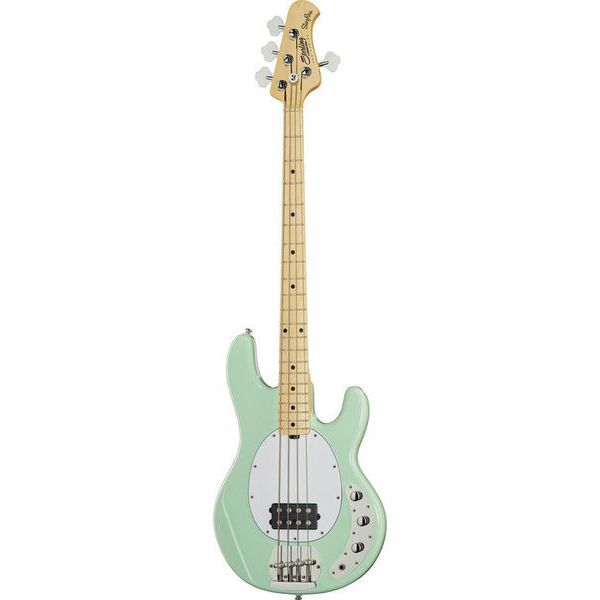
Sterling by Music Man exists specifically to solve that problem, and the SUB Ray4 is the one that gets recommended over and over in bass forums. Basswood body, maple neck, single ceramic humbucker, active EQ — basically the classic StingRay recipe with cheaper wood and an Indonesian factory instead of a Californian one.
I got my hands on the Mint Green one, plugged it into a rehearsal rig, and spent a solid week trying to find something to complain about.
Why This Bass Exists
Music Man’s original StingRay is one of the most copied basses in existence for a reason — that fat, punchy, slightly aggressive tone that cuts through a mix without any EQ trickery. Sterling is Music Man’s own budget sub-brand, built overseas, aimed squarely at players who want the sound without the price tag of the USA original.
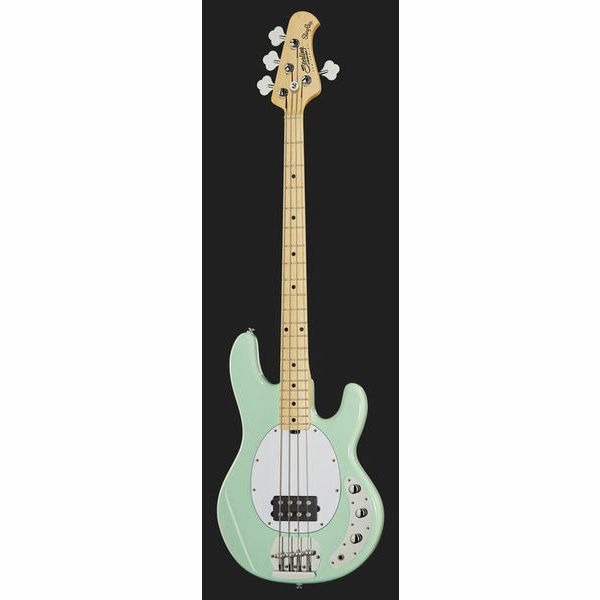
The Ray4 is the standard bearer of that range: a basswood body, bolt-on maple neck, maple fretboard, and a single H-1 ceramic humbucker sitting right where you’d expect on a StingRay. If you’ve played a real StingRay and then pick this up, the layout feels instantly familiar.
Neck Feel and Build
The maple neck has a fast, slightly flat profile with a 38mm nut width, so it’s comfortable whether you’re coming from a Jazz bass or a chunkier P-Bass style neck. Frets are well-dressed for the price point, no sharp edges digging into your hand up near the 21st fret.
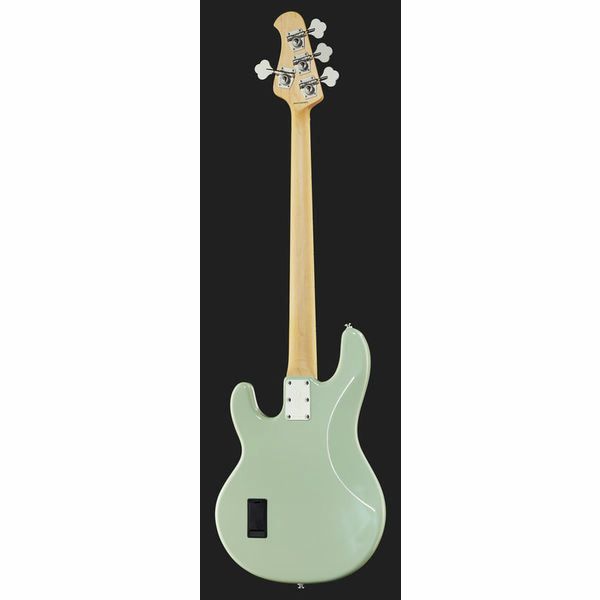
Body is basswood, which is lightweight and resonant, if a little softer-sounding than the ash bodies you get on pricier StingRays. It won’t destroy your shoulder on a long gig, which matters more than people admit.
- Body: Basswood
- Neck: Maple, bolt-on
- Fretboard: Maple, 21 frets
- Scale: 34″ long scale
- Nut width: 38mm
- Pickup: H-1 ceramic humbucker
- Electronics: Active 2-band EQ
- Colour: Mint Green
- Case: Sold separately
How It Sounds
This is the bit that actually matters, and it’s the bit Sterling nails. The active 2-band EQ lets you scoop or boost bass and treble independently, so you can dial in anything from a deep, rounded reggae thump to that classic aggressive StingRay honk that cuts through a dense rock mix.
Slap tone is where the H-1 pickup really shows off. It’s punchy and immediate without turning into an ice-pick in your ears, which is more than you can say for a lot of budget active basses. Fingerstyle playing gets you a warm, present midrange that sits well in a full band mix.
Compared to a passive bass like a Jazz Bass, the Ray4 has noticeably more output and a more „hi-fi” character straight into an amp. If you’re used to passive tone, give yourself a session or two to adjust to how responsive the active EQ is.
Setup and Upgrade Potential
One thing that surprised me is how upgrade-friendly this bass is. Because it follows the exact StingRay bolt-pattern and electronics layout, there’s a healthy aftermarket of pickups, preamps, and pickguards designed to drop straight in.
Out of the box, the setup from the factory was solid — reasonable action, no fret buzz, intonation close enough that a home tech only needed a few minutes to dial it in fully. That’s not always a given at this price point, so it’s worth calling out.
If you do want to chase the full USA StingRay tone eventually, swapping the preamp or pickup down the line is a realistic upgrade path rather than a total rebuild. Plenty of players use this exact bass as a long-term project instrument, upgrading pieces as budget allows rather than replacing the whole thing.
The Niggles
It’s not flawless, so here’s the honest list:
- No case or gigbag included — budget for one separately
- Basswood body means slightly less low-end weight than an ash-bodied StingRay
- Battery-dependent active electronics, so keep a spare 9V on hand
- Stock strings are fine but not amazing — many owners swap them within the first year
None of these are surprising at this price, and none of them are expensive to fix. A battery costs pennies and a case is a one-time purchase.
Ray4 vs Ray4 HH — Which One Do You Actually Want?
Sterling also sells an HH version with two humbuckers instead of one, and we’ve covered that bass separately in our Ray4 HH review. Short version: the HH gives you more tonal variety and a pickup selector, but the standard single-H Ray4 reviewed here is the more authentic StingRay experience, tone-wise. If you want the classic honk rather than options, this is the one to get.
If you like the idea of Sterling’s more experimental designs, their Bongo is worth a look too, though it’s a very different beast stylistically.
Who It’s For
This bass is for the player who wants that specific StingRay attitude — punchy, active, a little aggressive — without saving up for the USA original or the higher-end American-made alternatives. It’s equally at home in a rock band, a function gig, or a home studio.
Pair it with something like the Fender Rumble 100 for gigs, or the smaller Rumble 25 for bedroom practice, and you’ve got a genuinely capable rig for not much outlay.
It’s less suited to players who specifically want a warm, dark, passive tone — for that, look elsewhere. But if „StingRay growl” is the tone in your head, this is the budget-friendly way in.
Final Verdict
The Sterling SUB Ray4 delivers on the one promise that matters: it sounds like a StingRay. Not identical to the USA version, but close enough that most listeners in a mix will never know the difference.
Add in a comfortable neck, solid build quality, and active electronics that actually shape the tone usefully, and you’ve got one of the best value basses on the market right now. Budget for a case and a fresh set of strings, and you’re set for years.