Watch It First
Quick heads up before we start: Squier’s own 40th Anniversary P-Bass line has been discontinued at Thomann, both colorways gone from the shelves. So we’re covering its spiritual successor instead â the Classic Vibe ’60s Precision Bass, which nails the same „retro looks, modern value” brief the 40th Anniversary series was built around.
The P-Bass hasn’t changed much since 1957. That’s not laziness, that’s just what happens when you get a design right the first time.
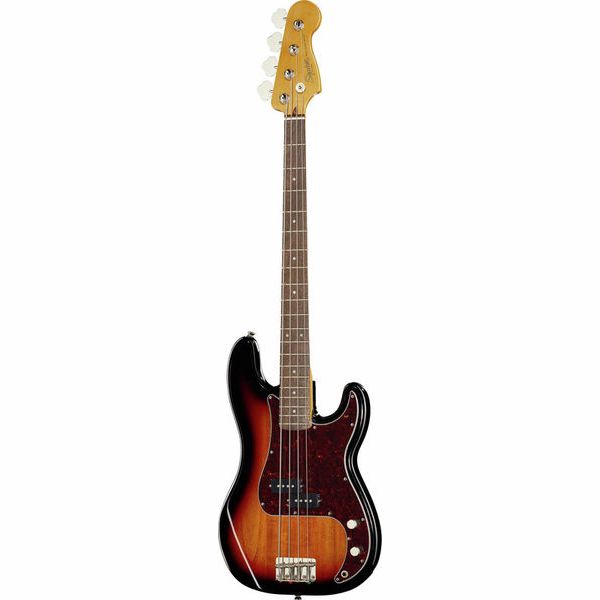
This particular Squier leans hard into that 60s nostalgia: three-tone sunburst, dark laurel board, the whole vintage package. Let’s see if it backs that look up.
Build and Materials
Body’s poplar, neck is maple, bolted on the way Leo Fender intended. Fretboard is Indian laurel â a stand-in for rosewood that looks and feels almost identical.
You get 20 narrow-tall frets, a genuine bone nut, and a four-layer tortoiseshell pickguard that does a lot of heavy lifting for the vintage aesthetic.
Hardware is nickel, styled to look properly old-school â vintage tuners, a bridge with four individual saddles. Nothing here is trying to look modern, and that’s the whole point.
The 60s Details
- Three-tone sunburst finish over poplar
- Pearloid dot inlays on a dark laurel board
- Rounded C-profile neck with a vintage tint
- Split-coil pickup positioned mid-body, 60s-style
It genuinely looks like it rolled off a much pricier production line. That’s the Classic Vibe series’ whole reputation, and this bass earns it.
Playability and Feel
Long scale, 42.8mm nut width, that classic chunky-but-comfortable C neck profile. If you’ve played any P-Bass before, this will feel instantly familiar.
Owners consistently mention it’s lighter than expected and surprisingly comfortable for long sessions. Fit and finish reportedly punch above the price tag too â several reviewers were shocked at how clean the fretwork was out of the box.
Balance is solid on a strap, no annoying neck-dive. It’s built to be picked up and played, not fussed over.
One small thing: a couple of owners noted minor cosmetic quirks on the fretboard or body â a dark mineral streak, a slightly uneven patch of laurel. Nothing structural, just reminders this is a mass-produced instrument, not a boutique build.
Sound and Tone
One Fender-designed Alnico split-coil pickup, and that’s it. No neck/bridge blend to worry about â P-Basses were never about tonal variety, they’re about doing one thing extremely well.
And that one thing is punch. Big, warm, mid-forward punch that cuts through a mix without needing EQ help. This is the tone behind half of Motown, so IMO it’s a bit silly to call it „limited” â it’s focused, not limited.
Roll off the tone knob and add flatwounds if you want to chase that authentic 60s soul sound. Leave it bright and it handles rock, punk, and metal just as easily.
Electronics
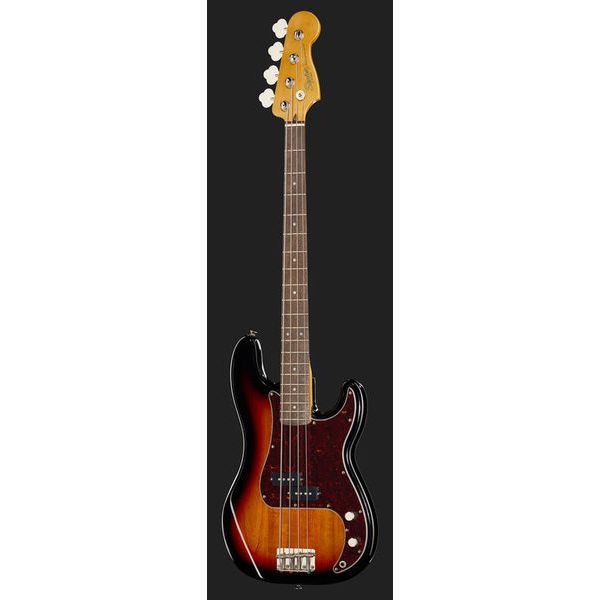
Passive, obviously. One master volume, one master tone. That’s the entire control panel.
Some players coming from active basses or Jazz-style dual pickups might find it sparse. But there’s a reason session players have leaned on this exact setup for 65+ years â sometimes fewer knobs means fewer ways to accidentally ruin your tone mid-gig.
FYI, if you want more tonal flexibility from a similar price bracket, the Squier Classic Vibe ’60s Jazz Bass is worth cross-shopping â same series, dual pickups, different tonal philosophy entirely.
Who Is This For?
Anyone who wants that classic thump without spending Fender USA money. It’s also a great „beater” bass for the gigging musician who doesn’t want to risk their expensive instrument on a sketchy stage.
Motown, soul, punk, classic rock, even metal â the P-Bass tone sits comfortably in all of them. If your playlist skews toward songs that actually need a bass you can hear, this is your bass.
Beginners benefit too. One knob, one tone control, nothing to overthink. You plug in and you sound like a bassist immediately.
Home recordists will appreciate it too â a P-Bass sits in a mix so predictably that engineers barely need to touch the EQ. It’s the „safe choice” for a reason, and that reason is decades of hit records.
If your budget is even tighter, look at the Harley Benton PB-50 for the same basic recipe at a lower rung. This Squier is simply the more refined version of that idea.
Honest Niggles
Single pickup means single tonal personality. If you want versatility within one instrument, look elsewhere â a P-Bass just isn’t built for that.
Wood grain and finish quality can vary slightly between units, as with most instruments at this price point. Nothing dramatic, but check yours over when it arrives.
The stock strings are fine but not exceptional â a lot of owners swap them out early, particularly if chasing that vintage Motown tone with flatwounds.
And obviously: the exact 40th Anniversary edition this article originally targeted isn’t available anymore. If you’re specifically hunting a limited-run collector’s piece, you’ll need the used market â this CV 60s is the better bet for anyone who just wants to play the thing.
Specs at a Glance
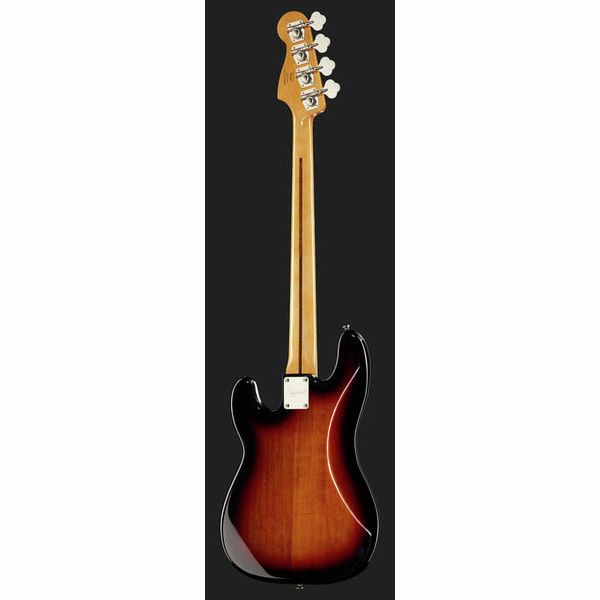
- Body: Poplar
- Neck: Maple, bolt-on, C profile
- Fretboard: Indian laurel, pearloid dot inlays
- Scale: Long scale, 42.8mm nut width
- Frets: 20 narrow-tall
- Pickup: Fender Designed Alnico split-coil
- Controls: Master volume, master tone
- Hardware: Nickel, vintage-style bridge
- Finish: 3-Color Sunburst
Final Verdict
The original 40th Anniversary P-Bass might be gone from Thomann’s shelves, but honestly? The Classic Vibe ’60s covers the same ground and then some.
Retro looks, check. Modern manufacturing consistency, check. That unmistakable P-Bass thump, very much check.
If you’re after a no-fuss workhorse bass that looks like a vintage classic and plays like one too, this is one of the smartest picks in Squier’s whole lineup. Compare it against the Sire Marcus Miller V5 if you’re torn between P-Bass and J-Bass tone â both are excellent, they just do different jobs.
Bottom line: this is proof that „retro” and „cheap-feeling” don’t have to mean the same thing. Squier nailed the assignment here.
Would I recommend it over hunting down a discontinued 40th Anniversary unit secondhand? Yes, without hesitation. New, in stock, and backed by a proper warranty beats a used collector’s piece nine times out of ten â unless you specifically want the limited-edition badge for its own sake.
Also worth a look if you’re browsing this category: the Höfner Club Bass Ignition SE for an even more vintage vibe, or the Epiphone EB-3 if you want 60s thunder from a totally different body shape.