Watch It First
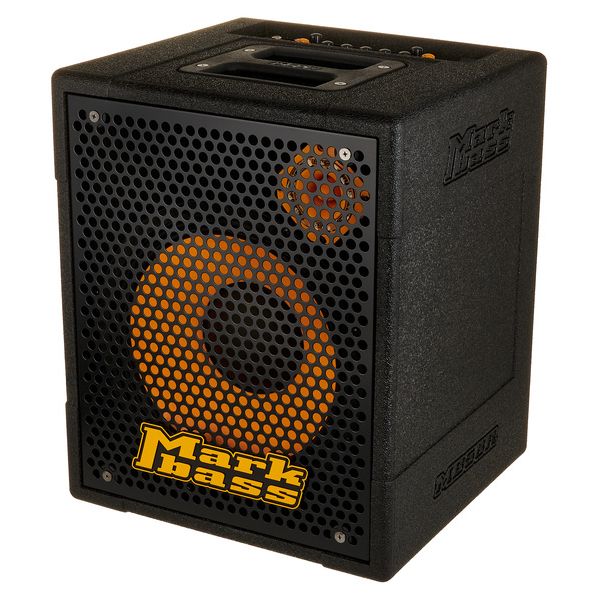
Every gigging bassist has the same recurring injury: a bad back from hauling a heavy rig up two flights of stairs to a tiny stage. The Markbass Mini CMD 121 Pure exists specifically to fix that problem.
It packs 500 watts and a 1×12″ neodymium speaker into a combo that weighs about the same as a carry-on suitcase. That’s not a slight exaggeration; it genuinely comes in around 10.3kg.
I’ve hauled plenty of bass rigs in my time, and this one changes the calculation entirely. Here’s what makes it work so well.
The Weight Is the Whole Story
Neodymium speaker magnets are lighter than the ceramic magnets used in older bass combo designs, and Markbass has built an entire reputation around exploiting that fact. This „Pure” version of the Mini CMD 121 uses the neodymium driver specifically to shave off weight over the standard ceramic model.
What that means in practice: you can carry this thing in one hand, up stairs, across a parking lot, wherever, without needing a dolly or a second trip to the car. For anyone doing multiple gigs a week, that adds up to a genuinely different quality of life.
It’s not a toy, either. 500W at 4 ohms (300W at 8 ohms) is plenty of headroom for most bar gigs, function band work, and even mid-size venues when paired with a PA.
Reviewers consistently single out the same thing, gig after gig: people are genuinely surprised at how light it feels compared to the sound coming out of it. Sound engineers who’ve helped load it in have said as much too, which says something when the people carrying your gear start commenting on it.
The „Old School” Switch and Tone Shaping
Markbass’s signature Old School switch rolls off some of the ultra-modern hi-fi clarity and adds a bit of vintage-style compression and warmth. It’s a genuinely useful voicing option rather than a gimmick, especially if your main bass leans towards a bright, modern-sounding pickup.
The 4-band EQ (Low, Mid-Low, Mid-High, High) covers enough ground for most styles without turning into a confusing parametric mess. A Scooped Mid switch with its own LED indicator gives you an instant slap-friendly scoop when you need it.
The Bi-Band Limiter is a nice safety net too, quietly protecting the speaker from clipping without you having to babysit your gain staging all night. Between the EQ, the Old School voicing, and the scoop switch, you can cover jazz, funk, rock, and worship-band duty without swapping amps.
Built for Actually Gigging
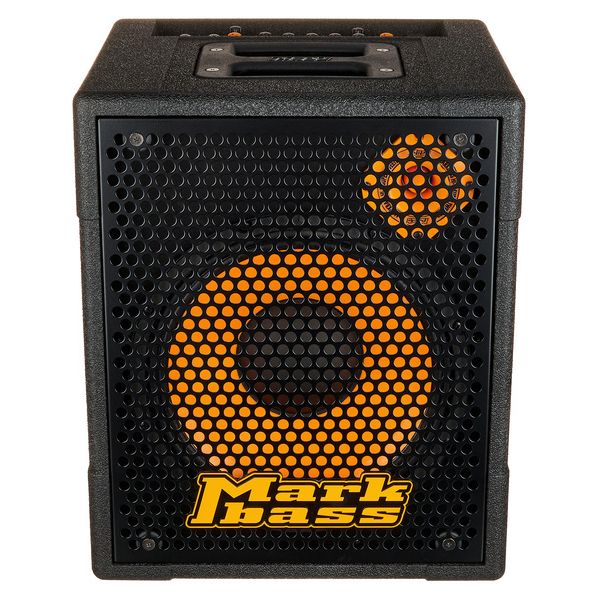
A balanced XLR line out with a Pre/Post EQ switch means you can send a clean, unaffected signal to front of house, or send your shaped tone if the sound engineer prefers it that way. Either option is available at the flip of a switch, no fuss.
The effects send/return loop lets you run a compressor or EQ pedal in the amp’s signal chain properly, rather than just in front of the input where it interacts differently with the preamp.
Two speaker-out jacks mean you can add an extension cabinet for bigger rooms without needing a separate head. That flexibility is a big part of why this stays useful even as your gigs get bigger.
Honest Cons
Reviewers consistently mention the internal cooling fan runs pretty much constantly, and it’s audible at low volumes in a quiet room. It’s not disturbing once you’re actually playing, but it’s worth knowing about if you’re using this for quiet home practice too.
The lightweight cabinet material, while functional, isn’t as bombproof as a heavier ply construction. A few owners note it can dent if handled roughly, so a padded cover is a sensible add-on for anyone touring regularly.
Single 12″ speaker also means it’s voiced more for punch and clarity than massive sub-bass rumble. If you need serious low-end extension for a 5 or 6-string bass tuned low, you may want to pair it with an extension cab rather than relying on this alone for every gig.
Who Should Buy This
This is the combo for gigging bassists doing multiple shows a week who are tired of the physical toll of a heavy rig. It’s equally great for anyone who drives to gigs in a small car where trunk space and back health both matter.
If you mainly play at home and never gig, the weight advantage matters a lot less, and you might get more value from a combo with a bigger speaker instead. But for working musicians, the weight-to-power ratio here is genuinely hard to beat at this level.
- Power: 500W @ 4 Ohm, 300W @ 8 Ohm
- Speaker: 1×12″ neodymium + Hi-Fi tweeter
- Controls: Gain, Line Out, Low, Mid-Low, Mid-High, High, Old School, Master Volume
- Scooped Mid switch with LED, Bi-Band Limiter
- FX send/return loop
- Balanced XLR line out with Pre/Post EQ switch
- 2x speaker output jacks for extension cabs
- Weight: 10.3kg
It’s also worth noting how well this pairs with a pedalboard. The effects loop and clean line-out mean a compressor, EQ, or octave pedal integrates properly instead of just getting stacked in front of the input and fighting the preamp’s own gain staging.
Final Verdict
The Markbass Mini CMD 121 Pure is one of those rare products where the marketing claim and the real-world experience actually line up. It’s genuinely light, genuinely loud enough for real gigs, and the tone shaping is flexible enough to cover most styles without overcomplicating things.
The constant fan noise and lighter-duty cabinet are worth knowing about going in, but neither one changes the overall picture: this is a genuinely excellent gigging bassist’s amp, and the lightweight design isn’t just a spec sheet bullet point, it’s the whole reason to buy it.
Looking for a bass head instead of a combo? Our Markbass Little Mark IV review covers Markbass’s other popular option. Pairing this amp with the right instrument matters too: check our Fender Player II Jazz Bass review, our Yamaha TRBX604FM review, or our Fender American Professional II P Bass review. If you play multiscale, our Ibanez SRMS805 review is worth a read, and for something more classic, see our Squier Classic Vibe ’60s Precision Bass review.