Watch It First
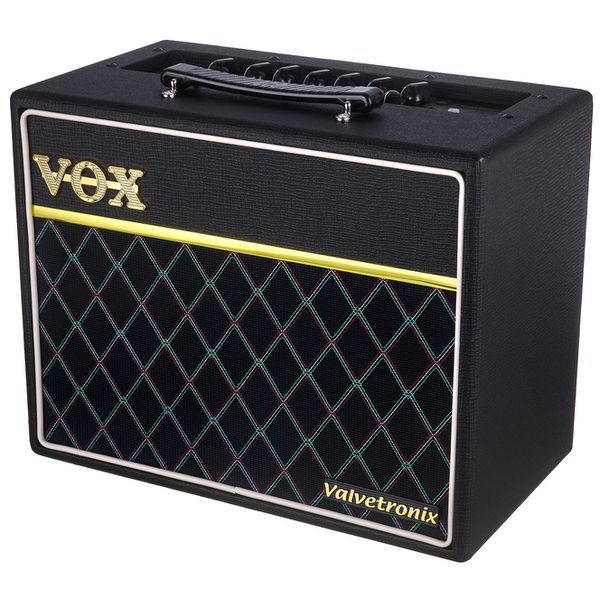
Vox’s Valvetronix line has been around forever, and the VT20X was the small combo that made a lot of bedroom players fall for that Vox chime without buying an actual AC30. It’s since been refreshed into the Valvetronix 20 Classic Blue — same concept, updated internals, that unmistakable retro blue tolex.
It’s a hybrid amp — real tube in the preamp, digital modeling doing the heavy lifting for amp voicing and effects. On paper that sounds like a compromise. In practice it’s the whole point.
Modeling amps at this size usually feel like a toy. This one, weirdly, doesn’t. IMO that’s mostly down to the real tube doing actual work in the signal path instead of being decorative.
Build and Design
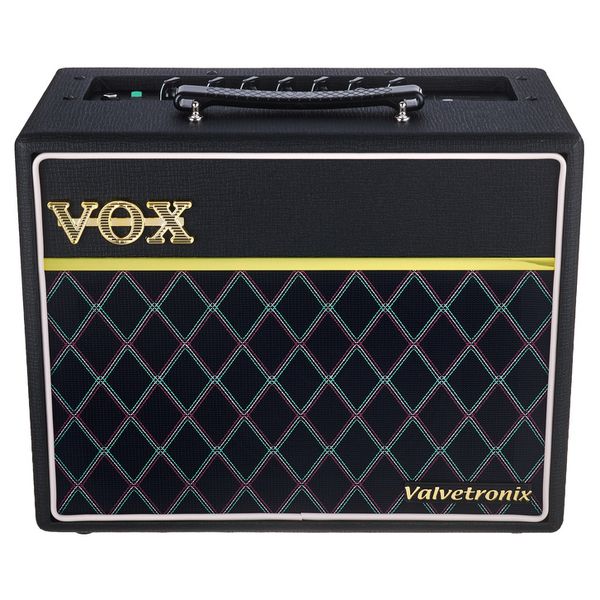
20 watts through a single 8″ speaker, wrapped in that new chassis Vox redesigned specifically to get more usable bass response and resonance out of a small cabinet. It’s not huge — 410 x 347 x 225mm, 7.3kg — but it’s got real presence when you switch it on, chicken-head knobs and all.
Under the hood: a Valvetronix preamp running one 12AX7 tube through a multi-stage circuit, feeding a hybrid power section that’s part digital, part analogue. Vox calls the modeling engine VET+ (Virtual Elements Technology), and it’s doing the job of simulating everything from the amp’s power supply sag to the speaker’s own resonance, not just the tone stack.
Controls and Ease of Use
Amp Models, Gain, Treble, Middle, Bass, Volume, Power Level — pretty conventional layout, plus a bank of switches for channels, pedal-style effect toggles, tap tempo/tuner, bias shift, and class switching (more on that below). It looks more intimidating than it plays; give it twenty minutes and you’ll be dialing tones without the manual.
Tone — 11 Amp Models, Real Flexibility
11 amp models onboard (jumping to 20 if you use the free Tone Room editor software), plus 13 effects and 33 presets — again, more if you dig into the editor. That’s a genuinely wide net for a 20-watt combo, covering everything from clean Vox jangle to properly saturated high-gain.
The Bias Shift and Class switches are the neat party trick here — they let you nudge the simulated power amp behaviour between different tube bias points and class A/AB operation, which changes the compression and breakup character without touching gain. It’s a deeper rabbit hole than most amps this size bother offering, and it genuinely changes how the amp feels to play, not just how it sounds on a recording.
Compared to something like a Peavey Vypyr X2, the Vox leans more toward classic British/American amp voicings rather than trying to cover every genre under the sun — it knows what it’s good at and doesn’t overreach.
Recording and Home Use
The headphone output doubles as a practical late-night practice tool, and it’s genuinely usable rather than an afterthought — the modeling engine translates reasonably well direct, so you’re not just getting a dry, lifeless headphone mix. That’s not always true on amps in this bracket.
The USB port lets you connect to the Tone Room editor on a computer for deeper preset editing and unlocking those extra amp models and presets — worth doing even just once, since the stock 11 models are good but the extended library adds genuinely useful variety for recording different parts.
No direct recording output is a slight miss for a modeling amp in 2026 — you’ll still want to mic the speaker or use an audio interface’s instrument input if you’re tracking guitar parts, rather than expecting a clean USB audio interface function built in.
Who’s This Amp For
Bedroom players and small-gig gigging guitarists who want genre flexibility without carrying a pedalboard everywhere. Anyone who likes tweaking — the Tone Room editor and the Bias/Class switches reward players who enjoy digging into settings rather than just picking a preset and leaving it alone.
It’s also a solid practice-room companion for someone who already runs a pedal-based rig — like a Marshall DSL1CR for tone-chasing at home — but wants one box that covers a dozen different amp flavours for writing and demoing ideas quickly.
The Honest Niggles
No FX loop, so if you run a looper pedal expecting to insert it between preamp and power section, you’re out of luck — it has to go in front like everything else. No line input either, and no Bluetooth, which feels like a slightly odd omission for a 2026-era amp when rivals increasingly bundle both.
One reviewer specifically flagged the USB connector as a mini-USB port rather than USB-C, which is a small but real annoyance if you’ve already thrown out all your old mini cables. And 20 watts through an 8″ speaker, like any amp this size, isn’t going to keep up with a loud drummer — it’s a practice and small-room amp first.
How It Compares
Its bigger sibling, the Vox Valvetronix 40 Classic Blue, gets you a 10″ speaker and more headroom for the same amp modeling engine — worth the step up if you’ll ever play with a full band. Against a Boss Dual Cube LX, the Vox has a more focused, less overwhelming interface, though the Boss edges it on stereo width and portability.
Against a simpler amp like the Blackstar HT-20R MKIII, the Vox trades some raw tube-amp simplicity for a much wider tonal palette — pick based on whether you want one great sound dialed in fast, or a dozen usable ones to choose from.
Quick Specs
- Power: 20W
- Speaker: 1x 8″
- Preamp: 1x 12AX7 tube, hybrid digital/analogue power section
- Amp models: 11 onboard (20 via Tone Room editor)
- Effects: 13 onboard
- Presets: 33 onboard (60 via editor)
- Connectivity: 6.3mm input, USB (mini), aux input, headphone out, footswitch connector
- Weight: 7.3kg
- Colour: Classic Blue
Final Verdict
The Vox Valvetronix 20 Classic Blue keeps what made the VT20X a small-amp favourite and adds real depth with the Bias Shift and Class switching most modeling combos this size don’t bother offering. It’s not trying to be everything to everyone, and that focus works in its favour.
For bedroom players and small-gig guitarists who want genuine tonal range in a compact package, this punches well above its size. Easy recommendation if the classic Vox voicing is your thing.