Watch It First
The Grand Auditorium shape in action. This is the body everyone else has been copying for thirty years.
Taylor invented the Grand Auditorium in 1994 because Bob Taylor wanted one guitar that did everything reasonably well rather than one thing brilliantly.
It worked so completely that the shape is now the default for most acoustic brands, whether they admit it or not.
The 114ce is the cheapest way to get the actual Taylor version, and it is a much better guitar than its position in the range suggests.
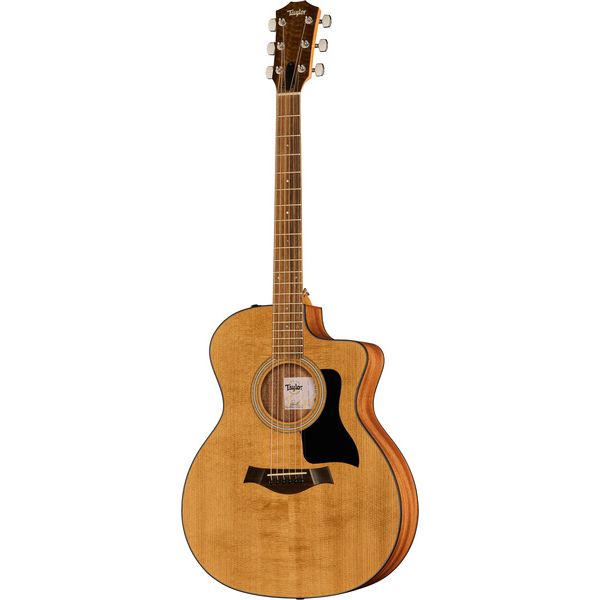
Why Grand Auditorium Is the Do-It-All Shape
It is narrower at the waist than a dreadnought and slightly shallower, which cuts the boom without losing the body.
The result is an even response across the strings. No one frequency shouts over the others.
Strum it and it behaves. Fingerpick it and every note is separate. That balance is the whole design brief and Taylor nailed it decades ago.
The Cutaway
The ce in the name means cutaway plus electronics. The cutaway costs you a tiny bit of low end and buys you the upper frets.
For a guitar sold as a do-it-all, that trade is obviously correct. You want the whole neck.
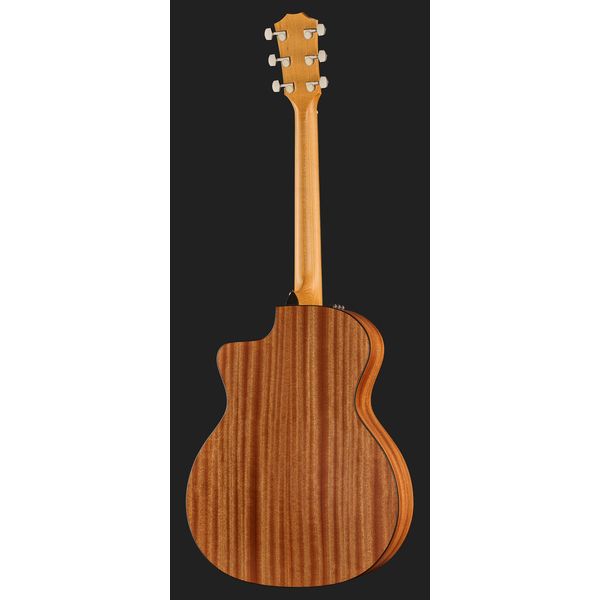
Torrefied Top and C-Class Bracing
Two things here that are more interesting than the price suggests.
The top is solid torrefied sitka spruce. Torrefaction is a heat treatment that drives moisture out of the wood and stiffens it, which is roughly what decades of playing does naturally.
In practice it means the guitar sounds more open and played-in on day one than an untreated top does. It is not a gimmick.
C-Class Bracing Explained Without the Marketing
Taylor V-Class bracing gets all the attention on the expensive models. C-Class is the version they developed for smaller and cheaper bodies.
It is aimed at improving low-end response and sustain without the top losing stiffness. On this guitar it clearly works – the bass is stronger than you expect from a Grand Auditorium at this price.
Laminated sapele back and sides is the cost saving. Given the top and the bracing are doing most of the acoustic work, it is the sensible place to save.
The Taylor Neck
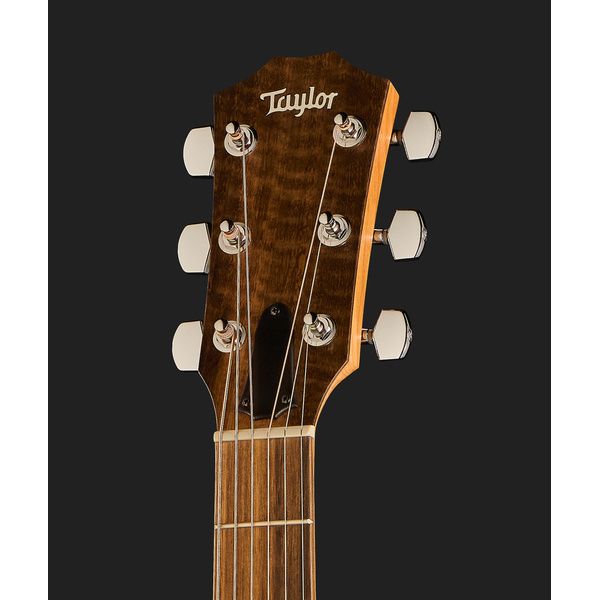
This is the underrated part. Taylor necks are famously easy to play – slim, comfortable, low action from the factory.
Maple neck, ebony fingerboard, 648 mm scale, 42.8 mm nut, 20 frets, NuBone nut and TUSQ bridge saddle.
The 42.8 mm nut is narrower than a Martin. Easier for electric players and anyone with smaller hands, slightly tight for aggressive fingerstyle.
The Bolt-On Neck Advantage
Taylor use a patented bolt-on neck joint. It means a neck reset – normally a serious, expensive job on an acoustic – is comparatively simple.
Nobody thinks about this when buying. Everybody appreciates it fifteen years later.
Expression System 2
ES2 places the pickup sensors behind the saddle rather than under it. The claim is a more natural, less piezo-quacky sound.
I think the claim mostly holds up. It is one of the better factory acoustic systems and it needs less corrective EQ than most undersaddle pickups.
Controls are volume, treble and bass, mounted discreetly on the upper bout. Simple, no menus, no tuner.
The Honest Niggles
- Laminated back and sides mean it will not open up the way an all-solid guitar does
- No onboard tuner, which at this price feels like an omission
- Narrower nut is less comfortable for serious fingerstyle players
- Gig bag rather than a hard case
- The plain sapele and satin-ish look is understated to the point of anonymous – it is a working guitar, not a showpiece
The gig bag is a decent one, to be fair. But a guitar at this level deserves a case.
Who Is It For?
The player who owns one acoustic and needs it to cover everything. Recording, open mics, songwriting, a bit of everything.
Also electric players buying their first proper acoustic. The narrow nut and low action make the transition painless.
If you want more guitar, the Taylor 214ce is the obvious next rung. If you want the dreadnought version, look at the 110ce.
For a mahogany-family alternative at similar money the Martin D-16E-01 goes all-solid, and if you want to spend a lot less the Yamaha FG830 and Yamaha APX600 are the sensible options.
114ce vs 214ce: The Only Comparison That Matters
These two get cross-shopped constantly, so here is the short version.
The 214ce moves you into the 200 Series – layered rosewood back and sides instead of sapele, more decorative appointments, and a slightly richer, more scooped voice.
The 114ce is drier and more mid-focused. In a mix, honestly, the 114 often sits better. Solo in a room, the 214 sounds more impressive.
Where the Money Goes
Cosmetics account for more of the price gap than tone does. Binding, inlays, finish detail.
If you play more than you display, the 114ce is the better value proposition. That has been true for a long time.
Recording and Live Notes
ES2 into a DI is genuinely gig-ready with minimal fuss. That is not something you can say about every acoustic pickup system.
Micing it, the even response means you spend less time hunting for the sweet spot. Aim somewhere around the 14th fret and it works.
The lack of an onboard tuner is the one live annoyance. Bring a clip-on or a pedal tuner and forget about it.
Two Months In
The torrefied top means there is less of the dramatic opening-up you get with a fresh untreated spruce top – it arrives most of the way there.
Action stayed put through a season change, which speaks well of the neck joint and the build.
Nothing rattled loose, nothing needed adjusting. Boring, in the best way.
The Spec Sheet
- Style: Grand Auditorium with cutaway
- Top: Solid torrefied sitka spruce
- Back and sides: Laminated sapele
- Bracing: C-Class
- Neck: Maple
- Fingerboard: Ebony with dot inlays
- Scale: 648 mm
- Nut width: 42.8 mm, NuBone nut
- 20 frets
- TUSQ bridge saddle
- Pickup: Expression System 2
- Black pickguard, chrome machine heads
- Finish: Natural
- Includes Taylor gig bag
- Made in Mexico
Final Verdict
The 114ce does exactly what it says: it is a do-it-all acoustic that does not embarrass itself at anything.
The torrefied top and C-Class bracing give it a maturity of tone that guitars at this price usually do not have. The Taylor neck makes it a pleasure to actually pick up.
Laminate back and sides is the honest limitation and the reason it costs what it costs.
If you want one acoustic and you want to stop thinking about it, this is close to the correct answer. That is high praise for a guitar this far down a range.