Watch It First
Taylor guitars have a reputation problem. Everyone assumes you need a spare kidney to afford one.
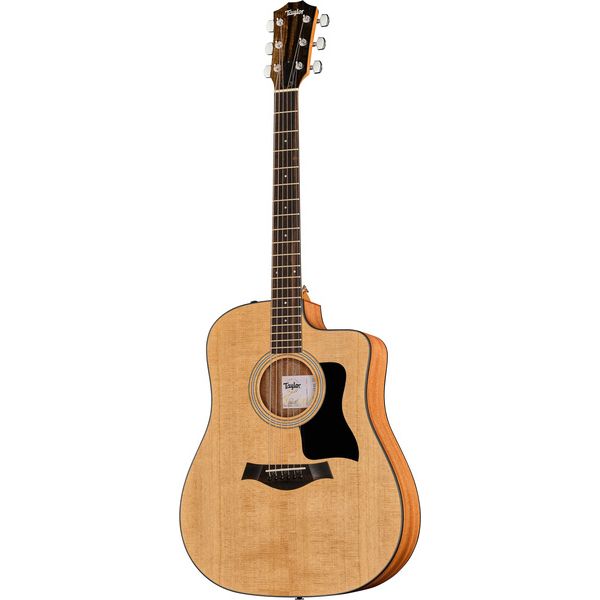
The 110ce Sapele quietly proves that wrong. It’s a full-size cutaway dreadnought with a torrefied solid spruce top and Taylor’s own electronics, sitting at a price that doesn’t require a payment plan.
I spent a good few weeks with one. Here’s the honest breakdown.
What You’re Actually Getting
The 110 series is Taylor’s true entry point, and the „ce” version adds a cutaway plus the Expression System 2 pickup. That combo used to only exist a few rungs up the catalog.
The top is solid torrefied spruce, which is basically spruce that’s been baked to mimic decades of aging. It sounds more open right out of the box than a „raw” spruce top would.
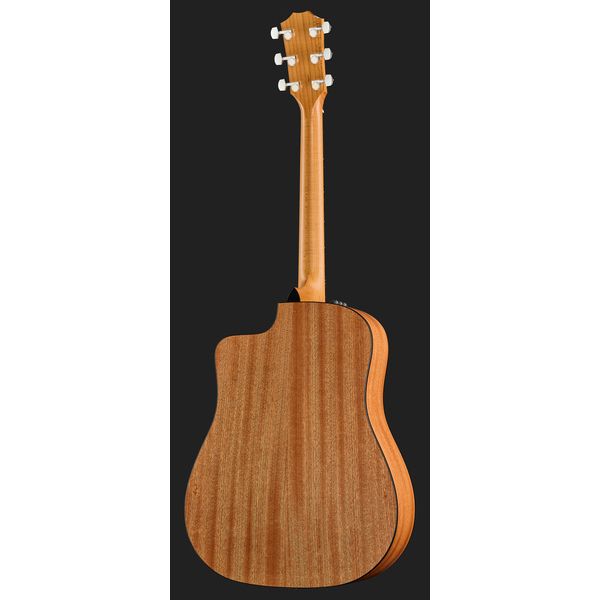
Back and sides are laminate sapele, a mahogany cousin that leans warm rather than bright. It’s a sensible pairing – the top brings sparkle, the body keeps things grounded.
- Body: Dreadnought with Venetian cutaway
- Top: Solid torrefied spruce
- Back & sides: Sapele, laminate
- Neck: Tropical mahogany
- Fretboard: Ebony, 20 frets
- Nut width: 42.8mm
- Electronics: Taylor Expression System 2
- Includes: Taylor gig bag
How It Plays
Dreadnoughts have a reputation for being boxy and stiff under the fretting hand, especially for smaller players. The cutaway helps, but it’s the neck that actually won me over.
It’s carved from tropical mahogany with a shape Taylor calls a „Standard” profile – not too chunky, not a skinny electric-guitar neck either. It just disappears under your hand, which is exactly what you want.
Setup Out Of The Box
Taylor’s factory setups are consistently good, and this one was no exception. Action was low without buzzing, intonation was clean up the neck, and the Nubone nut kept tuning stable even with aggressive strumming.
If you’re coming from a budget guitar with a factory setup that felt like fighting a bear trap, this will feel like a different instrument entirely.
Plugged In: The Expression System 2
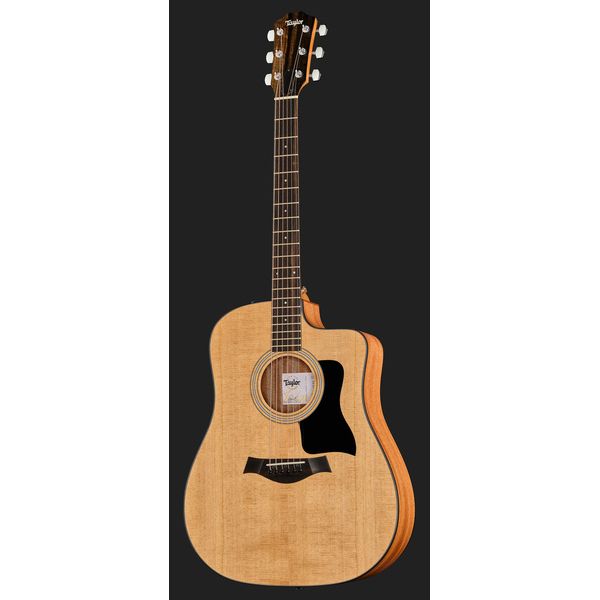
This is where the 110ce quietly punches above its weight. ES2 is Taylor’s own behind-the-saddle pickup system, and it’s noticeably more natural than the piezo units you’ll find on most guitars in this range.
There’s none of that quacky, glassy harshness that makes cheap acoustic-electrics sound like a kazoo through a PA. Volume, bass and treble controls are tucked inside the soundhole, out of sight but easy enough to reach.
If you’re gigging small rooms or open mics, this alone justifies the step up from a basic laminate guitar with a bolt-on pickup.
Who It’s For
This is a guitar for the player who’s outgrown their first beginner acoustic and wants something they won’t need to replace in two years.
It also makes sense for gigging players who want a reliable stage guitar without committing to Taylor’s pricier 200 or 300 series. If you’ve been reading through our best cheap acoustic guitars roundup and want to spend a bit more for noticeably more guitar, this is where that jump lands.
Who Should Look Elsewhere
If you mostly play unplugged at home, you’re paying for electronics you won’t use much. A Seagull S6 gets you similar solid-top tone for less if amplification isn’t a priority.
Taylor 110ce vs The Usual Suspects
The obvious comparison in-house is the Taylor GS Mini, which is smaller, more travel-friendly, and arguably more fun for casual playing. The 110ce is the „grown-up” alternative when you want full dreadnought volume and projection.
Against something like the Ibanez AW54 Artwood, the Taylor wins on build consistency and that ES2 pickup, though the Ibanez is the cheaper way in if electronics aren’t a priority.
Tone Across Playing Styles
Strummed hard with a pick, the 110ce has that classic dreadnought push – plenty of low-mid thump without turning muddy. It’s a satisfying guitar to bash out open chords on.
Switch to fingerstyle and it holds up surprisingly well for a guitar in this bracket. Individual notes stay separated instead of blurring into a wash, which is where a lot of cheaper laminate guitars fall apart.
Flatpicking and light lead work also translate cleanly through the ES2 pickup, so if you’re the type who plugs in mid-song to solo over a chord loop, it won’t embarrass you.
Hardware and Build Details
Tuners are chrome, smooth, and hold pitch reliably – no cheap-feeling slop in the gears, which is a common complaint on budget dreadnoughts.
The bridge and saddle are Tusq, a synthetic bone alternative that’s consistent from guitar to guitar, unlike real bone which can vary piece to piece. It’s a small detail, but it’s the kind of consistency you’re paying Taylor for.
Fit and finish around the neck joint and binding is clean – no glue lines, no sloppy lacquer pooling in the corners. It doesn’t scream „budget guitar” the way some sub-$500 instruments do.
Taylor’s Warranty Bonus
Registering the guitar bumps Taylor’s standard warranty out to 12 years, which is worth doing the day it arrives. It costs nothing and takes five minutes.
The Niggles
Nothing’s perfect. A couple of owners note the factory nut can feel a touch sharp-edged before it wears in – not a dealbreaker, just worth a quick file if you’re picky.
It’s also made in Taylor’s Mexico facility rather than the El Cajon shop, which some purists will care about and most players genuinely won’t notice in hand.
And no, it doesn’t come with a hard case – just a gig bag. Budget for a case separately if you’re traveling with it a lot.
Final Verdict
The Taylor 110ce Sapele isn’t flashy, and it doesn’t try to be. It’s a well-built, honestly voiced dreadnought with genuinely useful electronics, wearing the Taylor badge at a price that doesn’t feel like a stretch.
For anyone stepping up from a first guitar or hunting for a dependable gigging acoustic, it’s one of the smarter buys in the segment right now. IMO it’s the Taylor to buy before you’ve earned the right to spend real money on one.