Watch It First
Everyone knows the Yamaha FG800. It is the acoustic that gets recommended in every beginner thread on the internet, forever, until the heat death of the universe.
The FG830 sits one shelf above it and gets far less attention, which is a shame, because it is not a slightly nicer FG800. It is a different-sounding guitar.
So: is it worth the jump? I spent a while with one to find out, and the answer depends entirely on what you actually want a dreadnought to do.
The Rosewood Changes Everything
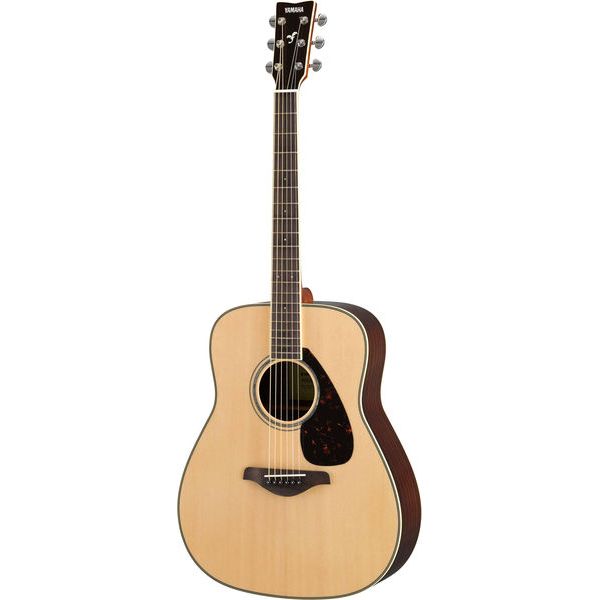
This is the headline and it is not marketing fluff. The FG830 has rosewood back and sides where the FG800 uses nato.
Rosewood does a very specific thing to a dreadnought. It scoops the mids slightly, deepens the bass, and adds that glassy shimmer on the top end.
The practical result: fingerpicked passages ring out with more separation, and open chords bloom instead of just landing.
It is a hi-fi voice rather than a punchy one. If you want a guitar that cuts through a noisy room with midrange, that is genuinely the FG800 – and it is not a downgrade, it is a different job.
So Which One Should You Buy?
Strummer in a singalong band? FG800.
Fingerstyle, recording, or you just like a guitar that sounds expensive on its own in a quiet room? FG830, without much hesitation.
Complete beginner who has no idea yet? Honestly the Yamaha F310 is still the cheapest sensible way to find out whether you will stick with it.
Scalloped Bracing, and Why It Actually Matters
Yamaha redesigned the FG bracing a while back and the whole current range benefits from it.
Scalloped X bracing means the braces under the top are carved thinner in the middle, so the soundboard can move more freely.
More movement equals more volume and more low end, particularly from a light touch. You do not have to hit the thing hard to get a response out of it.
On the FG830 that combines with the rosewood to give a guitar that is loud without being shouty. It has headroom.
Old FGs from the pre-2016 era were notoriously stiff and needed years of playing to open up. This one arrives already awake.
Build and Details
The solid spruce top is the other half of the tone story, and it is the reason the FG830 will keep improving for years.
Laminate backs and sides are fine. A laminate top is where budget acoustics go to die, and Yamaha does not do that here.
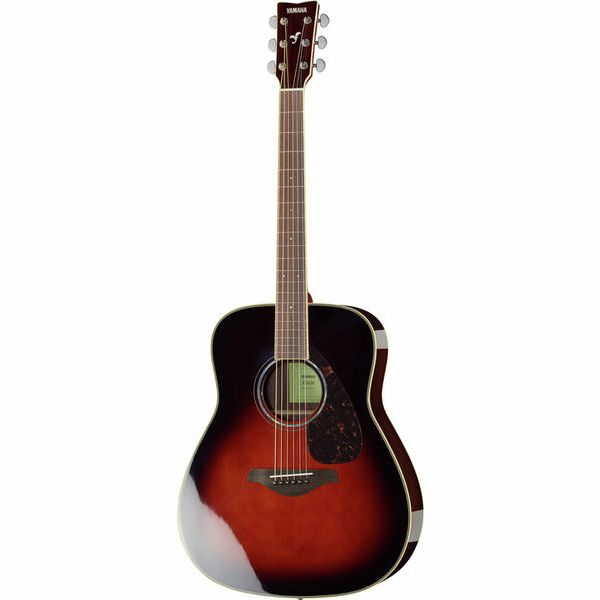
- Solid spruce top with scalloped X bracing
- Rosewood back and sides (Dalbergia latifolia)
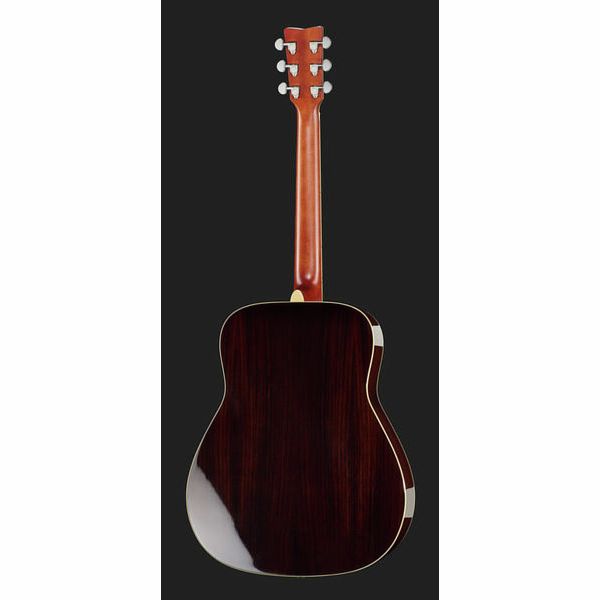
- Nato neck, rosewood fingerboard and bridge
- 650mm scale, 43mm nut width, 20 frets
- Chrome die-cast machine heads
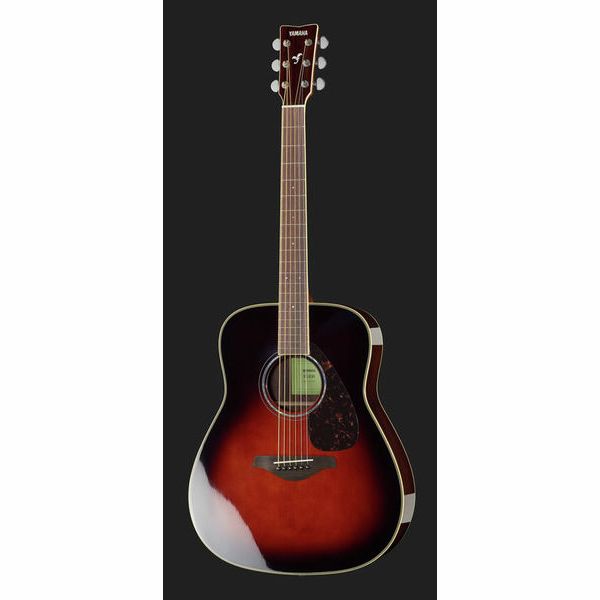
- Available in Natural and Tobacco Brown Sunburst
Cosmetically it is a step up from the 800 too – proper binding, a nicer rosette, and a fingerboard that actually looks like rosewood because it is.
Finish on mine was clean everywhere I looked. Yamaha factory QC remains irritatingly consistent.
The Neck
43mm nut, 650mm scale, a slim-ish C that suits people with normal hands.
It is not a fingerstyle-specialist neck – if you want wide string spacing you will still find it a bit tight. But for chords and general playing it is very easy going.
The Niggles
No electronics. None. If you need to plug in, you are either buying a pickup or looking at something like the Yamaha APX600 instead.
It is a full dreadnought and it feels like one. Smaller players and anyone who plays sat down for hours may find the body a lot to wrestle with.
The factory strings are perfectly average. Fresh phosphor bronze wakes it up noticeably – do it on day one.
The saddle is on the tall side out of the box, which is Yamaha giving you room to lower it. Worth a setup if the action feels high.
And the rosewood voice is not universally loved. Some people find scooped mids woolly in a band. If that is you, be honest about it before you buy.
How It Sits Against the Competition
This price bracket is brutally crowded, so context helps.
The Fender CC-60S is the comfier, smaller-bodied alternative if a dreadnought feels like hugging a fridge.
The Ibanez AW54 Artwood goes the opposite way tonally – mahogany, dry, woody, midrange-forward.
Step up a chunk and the Takamine P3DC is where things get seriously good, but you are paying a lot more for the privilege.
Within Yamaha, the CSF3M is the small-body option if portability matters more than volume.
Who I Would Recommend It To
Anyone past the first six months who has decided guitar is sticking around.
Home recordists on a budget, because it takes a microphone beautifully and that shimmery top end sits nicely in a mix.
And anyone who wants one acoustic that they will not need to replace, because this is genuinely a keeper rather than a stepping stone.
What It Sounds Like In Practice
Spec sheets are one thing. Here is what actually happens when you sit down with it.
Fingerpicked
This is where the FG830 earns its money. Individual notes stay separate instead of smearing into each other, and the bass strings have real weight underneath.
Travis picking sounds properly three-dimensional on it, which is not something you can say about most acoustics at this level.
The trade-off is that a light touch on the treble strings can sound a little thin until the top loosens up. Give it a few months of regular playing.
Strummed Hard
It takes a beating without collapsing, thanks to that scalloped bracing giving the top room to move.
But the scooped mids mean it does not shove its way to the front of a mix the way a mahogany or nato dreadnought does.
In a room with a cajon and a second guitarist you may find yourself wishing for a bit more midrange bark. Worth knowing.
Recorded
Stick a decent condenser mic about where the neck meets the body and it sounds like a much more expensive guitar than it is.
That shimmery rosewood top end is exactly what engineers reach for on acoustic tracks, and it sits under a vocal without fighting it.
Living With It Long Term
Solid tops open up. That is not folklore – the wood genuinely changes as it gets played and dries out further.
An FG830 at five years old is a noticeably better guitar than one straight out of the box, which is a strange thing to say about a budget instrument but it is true.
It also holds its value reasonably well secondhand, mainly because everybody knows the FG name and trusts it.
Keep it humidified in winter, wipe the strings down, and there is no obvious reason this would not still be going in twenty years.
Final Verdict
The FG830 is the point in the Yamaha range where the guitar stops being a sensible beginner recommendation and starts being an instrument you would choose on tone alone.
It punches well above its money, and the rosewood back and sides plus that solid spruce top give it a voice that costs a lot more elsewhere.
It is not for everyone – no pickup, big body, and a hi-fi voice that not every strummer wants. Those are real limits, not fake balance.
But if the description of that sound made you nod, this is one of the easiest yes answers in the whole budget acoustic world. lol, I nearly bought a second one.