Watch It First
Takamine’s G-Series gets all the attention because it’s cheap and everywhere. But the Pro Series is where the brand actually shows what it can do.
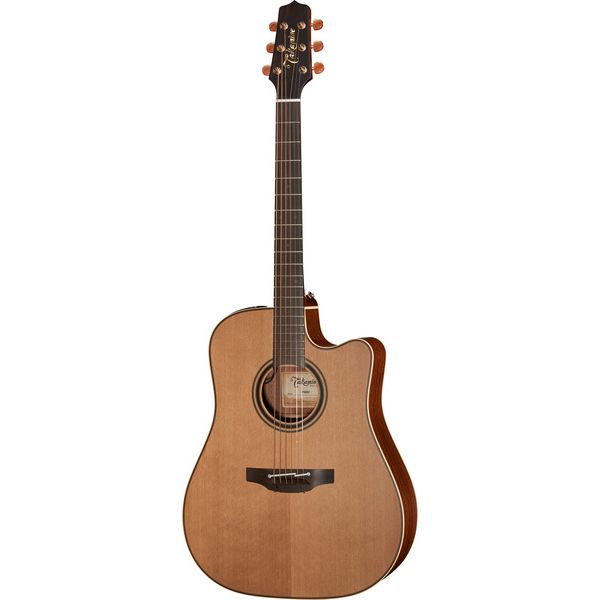
The P3DC is a Japanese-built dreadnought with a solid cedar top, a real CT4BII preamp, and a build quality that punches well above its price bracket. It’s been sitting quietly on Thomann while everyone argues about Taylors and Martins.
I spent a few weeks with one, plugged it in, unplugged it, dragged it to a rehearsal room, and honestly? It’s kind of criminal how good this thing is for the money.
What You’re Actually Buying
„Pro Series” isn’t just marketing fluff here. The P3DC is built in Japan, not one of Takamine’s overseas factories, and that shows up in the fit and finish the moment you take it out of the case.
The top is solid cedar rather than the spruce you’ll find on most budget dreadnoughts, like the ever-present Yamaha FG800. Cedar responds faster and gives you a warmer, more immediate tone right out of the box, without years of playing-in needed to open it up.
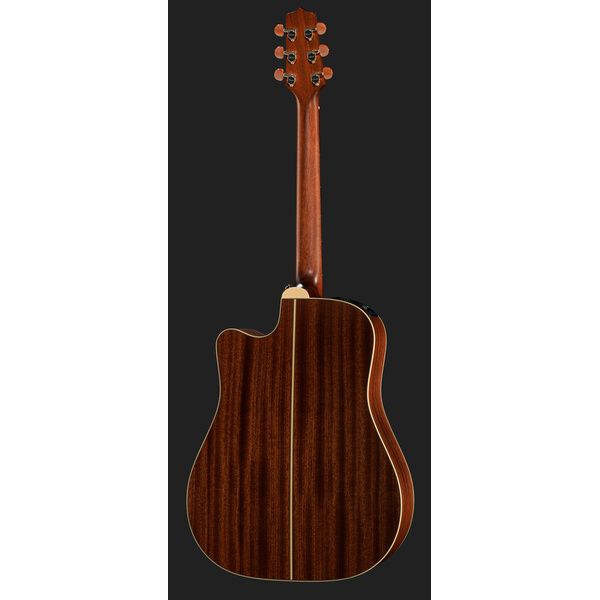
Back and sides are sapele, which is basically mahogany’s less expensive cousin and sounds close enough that most players won’t tell the difference blindfolded. It adds a bit of midrange punch that suits strummers and fingerstyle players equally well.
Neck, Electronics, and the Boring-But-Important Stuff
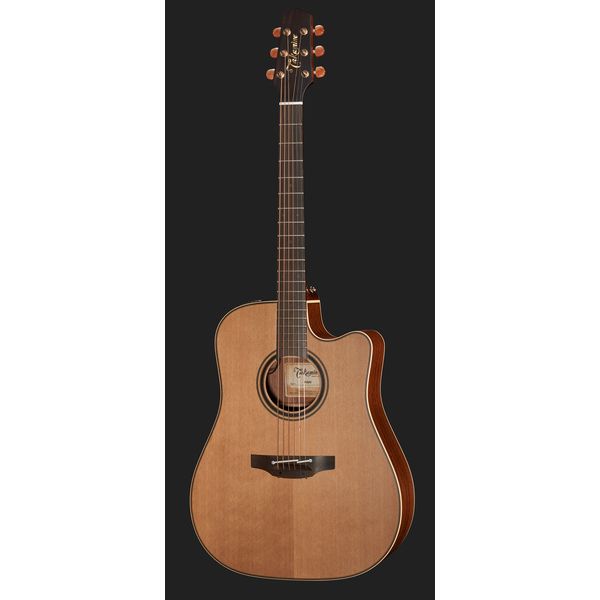
The neck is mahogany with a rosewood fretboard, 21 nickel frets, and a 42.5mm nut width, so it’s not a slim shredder neck but not a baseball bat either. It’s a comfortable, medium-C profile that works for chord-heavy playing.
Plugged in, you’re running through Takamine’s own CT4BII preamp, which includes a built-in tuner and a reasonably useful EQ section. It’s not going to replace a proper DI’d acoustic rig for serious touring, but for open mics, small gigs, and home recording it does the job without any nasty piezo quack.
- Body: Dreadnought with cutaway
- Top: Solid cedar
- Back & sides: Sapele
- Neck: Mahogany
- Fretboard: Rosewood, 21 frets
- Scale length: 644mm
- Nut width: 42.5mm
- Electronics: Takamine CT4BII preamp with tuner
- Tuners: Gold-finished
- Strings: D’Addario EXP16, .012-.053
- Finish: Natural
- Includes: Softcase
- Built in: Japan
How It Plays and Sounds
Unplugged, the P3DC has that classic dreadnought thump in the low end, but the cedar top keeps it from getting boomy or muddy. Fingerpicked passages come through clear, and strummed chords have enough sustain to fill a room without an amp.
Playability is where it gets interesting. Out of the box, a couple of owner reviews on Thomann mention the factory action running a bit high, which tracks with what I felt too. It’s not unplayable by any means, but if you’re picky about low action, budget for a setup. A decent tech can drop the saddle and adjust the truss rod in twenty minutes for not much money, and it transforms the guitar.
The cutaway is genuinely useful too, not just cosmetic. You can actually reach the upper frets, which a lot of dreadnoughts pretend to offer but don’t really deliver on.
Recording and Live Use
I ran the P3DC through a small PA at a rehearsal room and then again straight into an audio interface at home, and it behaved consistently in both settings. The CT4BII preamp doesn’t add much colour of its own, which is exactly what you want from a pickup system — it just gets out of the way.
For recording, I’d still reach for a small-diaphragm condenser over the pickup if I had the time to mic it up properly. But for quick voice memos, writing sessions, or a gig where you can’t be bothered soundchecking a mic, the onboard electronics are more than acceptable.
One thing worth mentioning: the built-in tuner is genuinely handy for quick checks between songs, even if you’ll still want a clip-on tuner as backup for anything critical. It’s a small convenience that adds up over a gig.
The Niggles
Nothing at this level is perfect, so let’s be honest about the cons:
- Factory action can run high — plan for a setup if you’re fussy
- Softcase included, not a hardshell case, so it’s fine for home use but not rough touring
- Gold tuners look great new but can show wear over years of use
- No onboard tuner backlight, so it’s a bit fiddly in dark stage lighting
None of these are dealbreakers. They’re the kind of things you’d expect to trade off at this price versus something like a Taylor or a higher-tier Martin.
Who It’s For
This is a guitar for the player who’s outgrown their first acoustic and wants something that actually sounds like an instrument, not a rite of passage. If you’re still weighing up entry-level options, the P3DC is a tier above that conversation entirely.
Singer-songwriters who gig regularly will appreciate the cutaway and onboard preamp. Fingerstyle players will like the cedar top’s responsiveness. If you’re browsing our roundup of acoustic guitars for intermediate players, this one deserves a spot on the shortlist.
Takamine P3DC vs the Competition
The obvious comparison inside Takamine’s own range is the step-up P5DC, which uses solid rosewood back and sides instead of sapele and costs noticeably more. If your budget stretches, it’s worth a look, but the P3DC gets you 80% of the tone for a lot less outlay.
Outside the brand, players often cross-shop this against something like the Epiphone Hummingbird. The Hummingbird wins on looks and vintage vibe, but the Takamine wins on build consistency and the electronics package, IMO.
If you want a bigger, boomier voice, some of the guitars in our best jumbo acoustics guide might suit you better, but for an all-rounder dreadnought, the P3DC holds its own.
Final Verdict
The Takamine P3DC is proof that „Pro Series” doesn’t have to mean „priced like a pro’s paycheck.” Solid cedar top, real Japanese build quality, a usable preamp, and a tone that sounds like a proper instrument rather than a stepping stone guitar.
Budget for a setup if the factory action bugs you, and you’ll end up with a dreadnought that can genuinely carry you from bedroom demos to small gigs without ever feeling like the weak link. Recommended.