Watch It First
Walk into any open mic, church hall or wedding gig in Europe and count the thin-body Yamahas. I will wait.
The APX600 has been quietly outselling flashier guitars for years, and it is not because of marketing. It is because it does one specific job extremely well.
It is also not the guitar for everyone, and I want to be honest about that before you click anything.
What the APX Shape Is Actually For
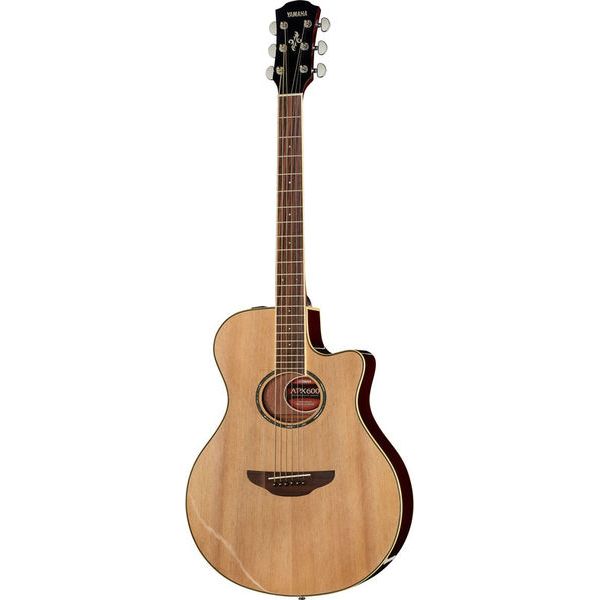
The APX body is thinner than a standard dreadnought and has a deep cutaway. That combination means two things.
One, it is comfortable. If you have ever wrestled with a big-bodied acoustic while standing up for a two-hour set, the difference is immediate.
Two, it is built to be plugged in. The reduced body depth cuts down on boominess and feedback on a loud stage, which is exactly the trade Yamaha intended.
The catch nobody mentions
That same thin body means a quieter, less rich unplugged sound. Sat on your sofa with no amp, the APX600 will not thrill you the way a full dreadnought does.
If you want raw acoustic volume in a cheap guitar, the Yamaha F310 from the same brand will genuinely outgun it. Different tool, different job.
The Electronics Are the Real Story
The APX600 runs Yamaha’s System 65 preamp with an SRT piezo pickup. On paper that is a lot of words for a budget guitar. In practice it is a properly usable stage system.
You get volume, a three-band EQ, a mid-frequency control and a built-in tuner. The mid sweep is the part that matters – it lets you dial out the honk that makes cheap piezos sound like a kazoo.
Is it studio grade? No. Plug it into a decent PA or acoustic amp and it sounds clean, balanced and predictable, which for gigging is what you actually need.
Bring your own DI habits
Like almost every piezo system in this bracket, it can get quacky if you hammer it. Ease off the treble, pull a little 2 kHz out at the desk, and it settles down.
The tuner is bright, accurate and dead easy to read in a dark room. Small thing, but you notice its absence on cheaper competitors.
Build and Materials
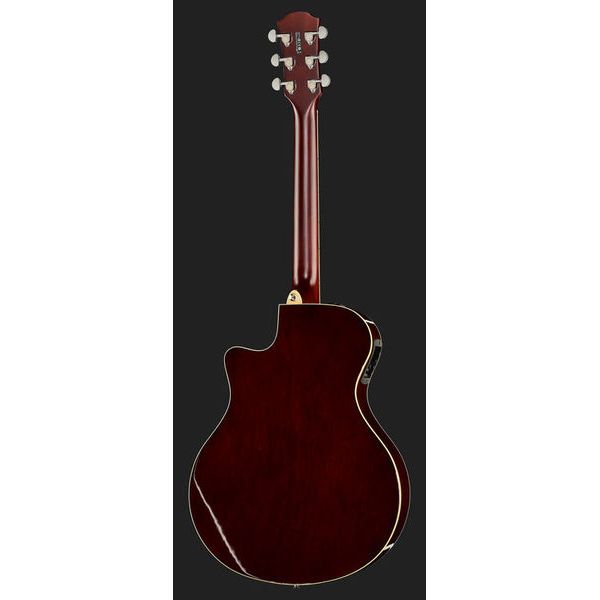
Spruce top, nato back and sides, a tone wood neck and a rosewood fingerboard and bridge. The top is laminated, not solid, and Yamaha does not pretend otherwise.
Purists will grumble. Working players will notice that a laminate top shrugs off temperature swings, humidity changes and the back of a van far better than a solid top does.
Nut width is 43 mm and the scale is 634 mm, slightly shorter than a full-size dreadnought. Combined with a genuinely slim neck profile, it is one of the easier acoustics to fret.
The setup lottery
This is the most consistent complaint in owner reviews, and it is fair. Action out of the box is often higher than it needs to be, and the factory strings are stiff and lifeless.
Lower the saddle a touch, fit a decent set of phosphor bronze strings and the guitar transforms. It is maybe an hour of work and it is worth every minute.
Who Should Buy One
Gigging singer-songwriters. This is the core audience and it is not close. Light, comfortable, plugs in, stays in tune, does not feed back.
Worship and function band players. The cutaway and slim neck make upper-fret work easy, and the tuner saves you between songs.
Players with smaller hands or shorter arms. The thin body and short scale are a genuine ergonomic advantage, not a marketing line.
Home recordists chasing a lush strummed acoustic sound should look at something like the Ibanez AAD51CE or a solid-top cutaway instead. Mic-ing an APX is not where it shines.
Honest Niggles
Fret wear gets mentioned repeatedly by heavy players. The frets are on the softer side and a gigging player will notice divots sooner than on a pricier instrument.
The preamp mids can feel a little thin. Nothing a house EQ cannot fix, but it is a known character trait rather than a bug.
And the laminated top means the guitar will not open up and improve with age the way a solid-top instrument does. What you buy is what you keep.
The Obvious Rivals
The Fender CD-60SCE gives you a solid top and a fuller unplugged voice, but a bigger, less stage-friendly body.
Step up in money and the Takamine GN71CE is the classic gigging upgrade path, with a noticeably better preamp.
Want something with more personality and less workhorse energy? The Yamaha Storia III is a very different proposition from the same brand, and the Baton Rouge X11S/FJE-AB is worth a look too.
A Word on the M and FM Versions
Yamaha sells a few APX600 variants and the naming is not exactly self-explanatory, so it is worth two minutes of your time before ordering.
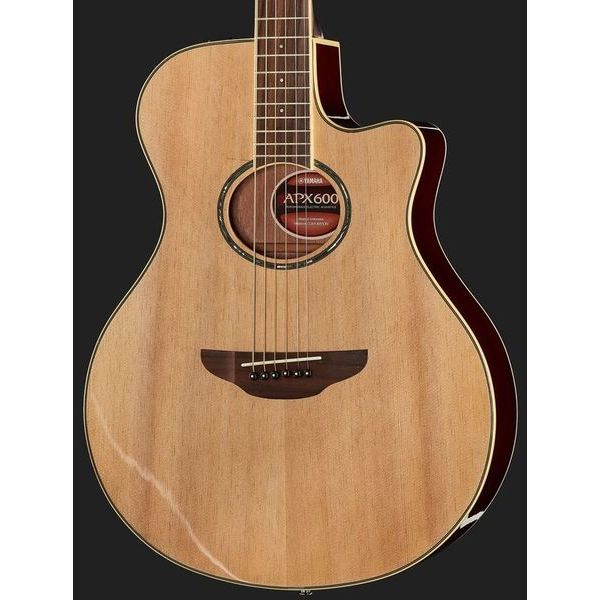
The plain APX600 has the spruce top. The APX600M swaps to a mahogany-look top with a satin finish, which shifts the voice slightly warmer and takes a little sparkle off the top end.
The APX600FM adds a flamed maple top and costs meaningfully more. It looks superb under stage lights, though the tonal difference is smaller than the price gap suggests.
My honest take: buy on looks here. The electronics, neck and body shape are identical across the range, and those are the parts doing the actual work.
Specs at a Glance
- Body: nato back and sides, thin APX profile with cutaway
- Top: spruce (laminated)
- Neck: tone wood, slim profile
- Fingerboard and bridge: rosewood
- Nut width: 43 mm
- Scale: 634 mm
- Frets: 22
- Tuners: chrome die-cast (TM29T)
- Electronics: Yamaha System 65 preamp with SRT piezo pickup
- Controls: volume, 3-band EQ, mid frequency, built-in tuner
- Factory strings: Yamaha S10
- Finishes: Natural, Black, Vintage White, Old Violin Sunburst, Oriental Blue Burst and more
Final Verdict
The APX600 sells and sells because it solves a real problem cheaply. It is a plug-in-and-play stage acoustic that is comfortable to hold, easy to fret and forgiving in a loud room.
It is not a fingerstyle showpiece and it will not wow anyone acoustically in a quiet room. If that is your use case, walk away and buy a solid-top instead.
But if you gig, if you play amplified more than you play unplugged, or if standard acoustics just feel like hugging a barrel, this is one of the smartest buys in the entire budget bracket. Get it set up properly and it will out-earn its price many times over.