Watch It First
Cort doesn’t get nearly enough credit, and the Core-OC SP is a decent example of why that’s a shame.
It’s a small-body cutaway acoustic-electric with a solid spruce top and solid mahogany back and sides – not laminate, actual solid wood, at a price point that usually only buys you laminate.
I’ve spent a good while with this one, so let’s get into what it’s actually like to play and hear.
Build and Materials
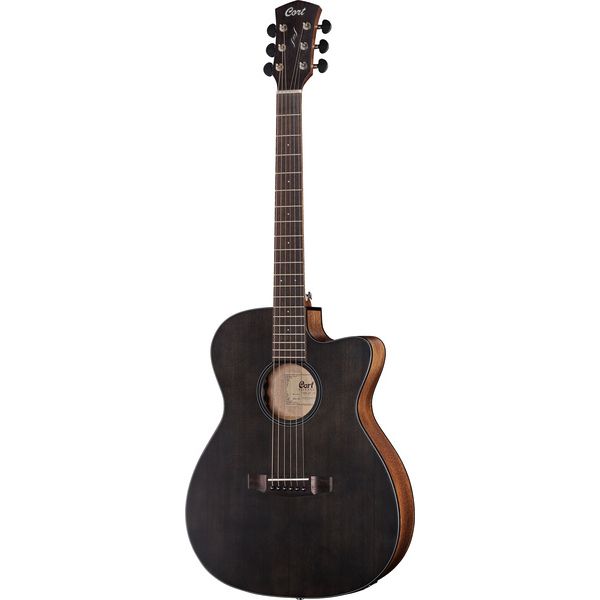
The Core-OC SP is an Orchestra-shaped body with a cutaway, which is basically Cort’s way of saying „smaller than a dreadnought, easier to hug.”
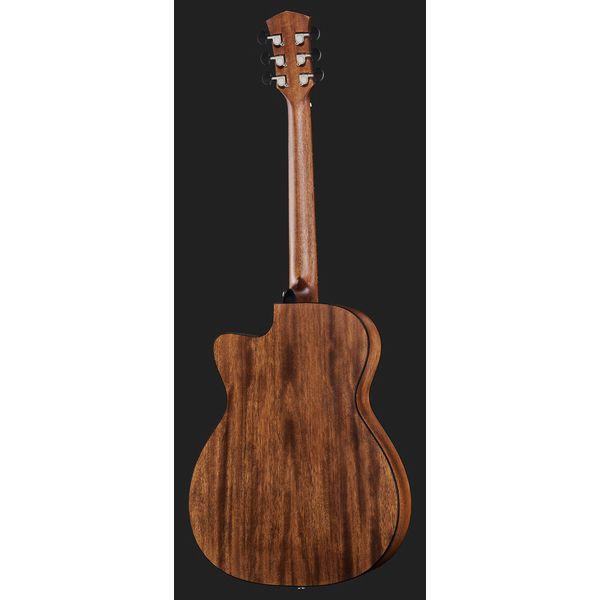
Top is solid Sitka spruce, back and sides are solid mahogany. That’s a proper all-solid build, and it’s rare to see at this end of the market.
The neck is mahogany too, paired with an ovangkol fretboard and bridge. Nut and saddle are real bone, not plastic – small detail, but it matters for sustain.
Fit and Finish
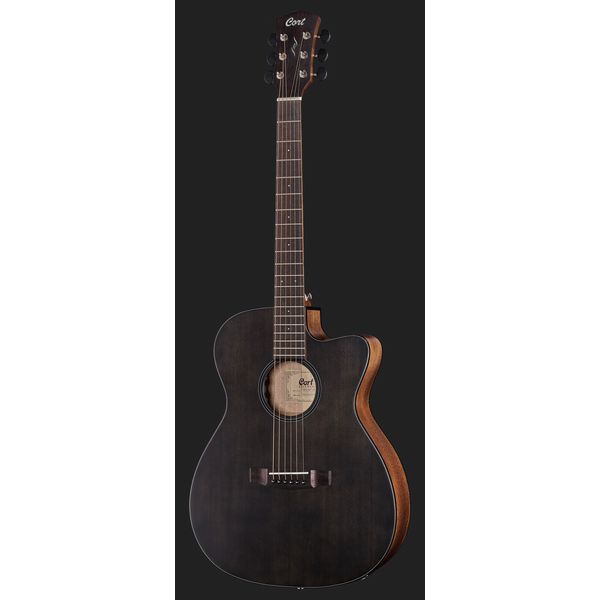
Cort finished this one in a thin, open-pore lacquer under a Transparent Black tint, so you can still see the wood grain through the colour. It looks genuinely upmarket for what it is.
Thin finishes also let the top vibrate more freely than a thick gloss coat would. IMO that’s part of why this one sounds livelier than its price suggests.
Hardware is simple and sensible: closed chrome tuners with black buttons, and they hold tune reasonably well once the strings settle in.
Cort has been building instruments for other, bigger-name brands for decades behind the scenes, so the factory know-how going into their own-name guitars like this one is honestly underrated.
Playability and Feel
At a 43mm nut width and 643mm scale, this sits in comfortable territory for most hands – not as narrow as some electric crossovers, not as wide as a fingerstyle-focused dread.
The Orchestra body is noticeably easier to sit with than a full dreadnought. If you’ve ever wrestled a big-bodied guitar like the Martin D-X2E on a small sofa, you’ll get why the size here is a selling point on its own.
The cutaway actually works too – you can reach up past the 14th fret without your hand cramping into the heel, which is more than I can say for some bargain-bin cutaways.
Action out of the box was low-ish and even. No fret buzz, no dead spots on the neck. For a guitar in this bracket, that’s not a given.
Sound and Tone
Solid mahogany back and sides give this a warm, midrange-forward voice rather than the scooped, boomy thing you get from rosewood dreadnoughts.
That makes it a genuinely good fingerstyle guitar – notes separate cleanly, and it doesn’t turn to mud when you’re picking chords low on the neck.
Plugged in, the built-in Fishman Sonitone preamp does the job without colouring the tone too much. It’s a simple, unobtrusive system – no onboard tuner, no EQ sliders, just volume and tone control tucked inside the soundhole.
If you want a nylon-string contrast for softer, mellower material, it’s worth putting this up against something like the Cordoba C5 CE – completely different animal, but a useful reference point for tone.
Who It’s For
Songwriters and fingerstyle players will get the most out of this. The smaller body and balanced tone suit close-mic’d recording and living-room writing sessions equally well.
It’s also a solid pick for gigging singer-songwriters who need something light enough to carry but still want a real, plugged-in acoustic voice rather than an acoustic simulator pedal bolted onto an electric.
If you mostly strum big open chords and want maximum boom, honestly, look elsewhere – a dreadnought will serve you better.
Honest Cons and Niggles
The preamp is basic. No onboard tuner and no EQ display means you’re relying on your amp or PA to shape the tone further.
A few owners mention the tuner buttons feeling a touch loose out of the box – nothing a screwdriver and five minutes won’t fix, but worth checking on arrival.
It ships with a soft case, not a hard shell. Fine for home and local gigs, less fine if you’re throwing it in a van every weekend.
If you want a built-in display and more tone-shaping control, something like the Takamine P3DC steps up in that department, for more money.
And if budget is the actual concern rather than tonewood, the Fender CC-60S is a cheaper way into a small-body acoustic – just without the solid back and sides here.
How It Compares
Stack the Core-OC SP against other small-bodied acoustics and it holds up better than you’d expect. Most guitars in this bracket use laminate back and sides; Cort went solid mahogany instead, and you can hear the difference in sustain.
Compared to something like the Taylor GS Mini, the Core-OC SP is a touch bigger and a bit warmer sounding, with less of that bright, almost mandolin-like snap Taylor’s mini bodies are known for.
It’s also worth noting this isn’t a beginner’s first guitar in the traditional sense – it’s better suited to someone upgrading from a laminate starter instrument who wants to actually hear what solid wood does to tone. FYI, that jump is bigger than most people expect.
Specs at a Glance
- Body: Orchestra shape with cutaway
- Top: Solid Sitka spruce
- Back and sides: Solid mahogany
- Neck: Mahogany, ovangkol fretboard and bridge
- Scale length: 643mm (25.3″)
- Nut width: 43mm
- Electronics: Fishman Sonitone preamp
- Nut and saddle: Bone
- Includes: Deluxe soft case
Final Verdict
The Core-OC SP isn’t flashy, and it doesn’t try to be. What it does is give you real solid tonewoods, a comfortable body, and a usable plug-in system, without the price tag those things usually carry.
If you want a travel-friendly, fingerstyle-happy acoustic-electric that doesn’t sound cheap once it’s plugged in, this one earns its spot on the shortlist. Comparable options like the Taylor GS Mini and Alhambra 1C are worth a look too, but Cort makes a strong case for itself here.