Watch It First
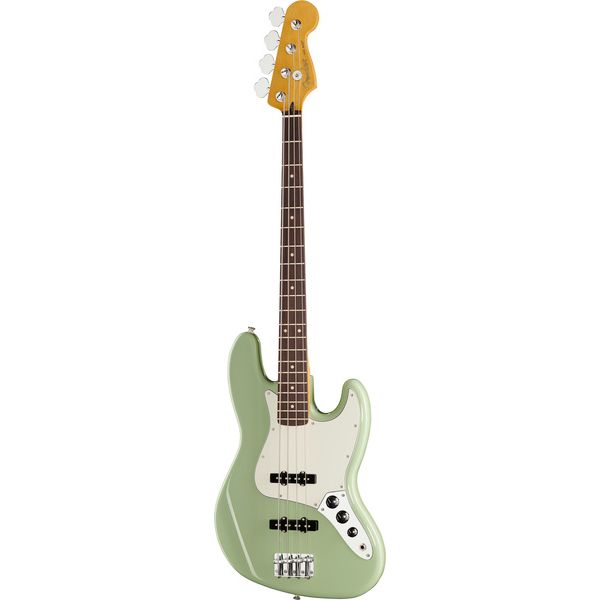
Small correction before we start: there’s no actual „Fender Player II Jaguar Bass.” Fender never brought the offset Jaguar Bass into the Player II generation — the Jaguar name in Player II is guitar-only now.
What Fender did carry into Player II, in the same offset-adjacent, modern-muscle spirit, is the Fender Player II Jazz Bass. Same scale, same „everyday workhorse with real upgrades” pitch, and honestly a more useful instrument for most players than the old Jaguar Bass ever was. So that’s what we’re covering here.
If you grew up wanting a weird offset-shaped bass because Nirvana or the Pixies made it look cool, don’t worry — I’ll touch on where that itch still gets scratched further down.
Why Not the Jaguar Bass?
The original Player Jaguar Bass was always a slightly odd product — a Jazz Bass-scale instrument wearing a Jaguar-shaped body, mostly bought for looks rather than any real tonal difference from a Jazz Bass.
When Fender rebuilt the Player line into Player II, they clearly decided that niche wasn’t worth carrying forward. Fair enough — the Jazz Bass covers the same tonal ground and then some, and it’s a certified classic instead of a novelty shape.
Build & Design
Alder body, bolted maple neck with a Modern „C” profile, 9.5″ fretboard radius, 20 medium-jumbo frets. This is Fender’s current „get everything right at this price” recipe, and it shows.
The nut width sits at 1.5″ (38.1mm) — slightly narrower and faster feeling than a P-Bass. If you’ve got smaller hands or you’re coming from guitar, this neck is noticeably easier to wrap around than a chunkier Precision neck.
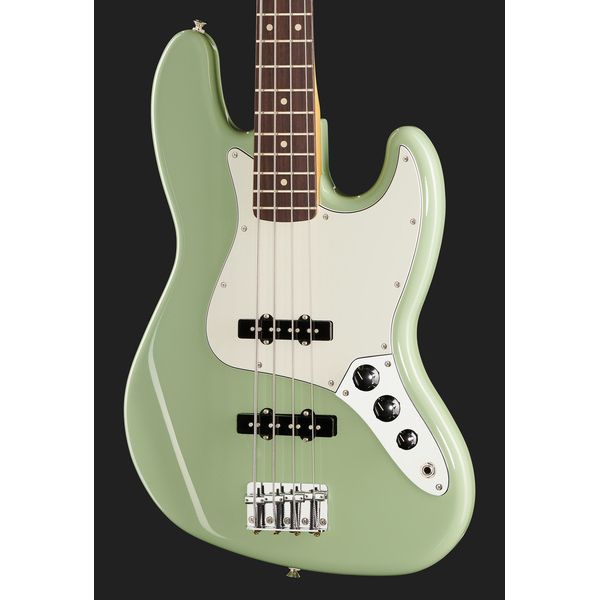
Fit and finish on Player II basses has genuinely stepped up from the original Player series. Fret ends are clean, the synthetic bone nut is properly cut, and the 3-ply parchment pickguard looks a lot classier than it has any right to at this price.
Colour and Vibe
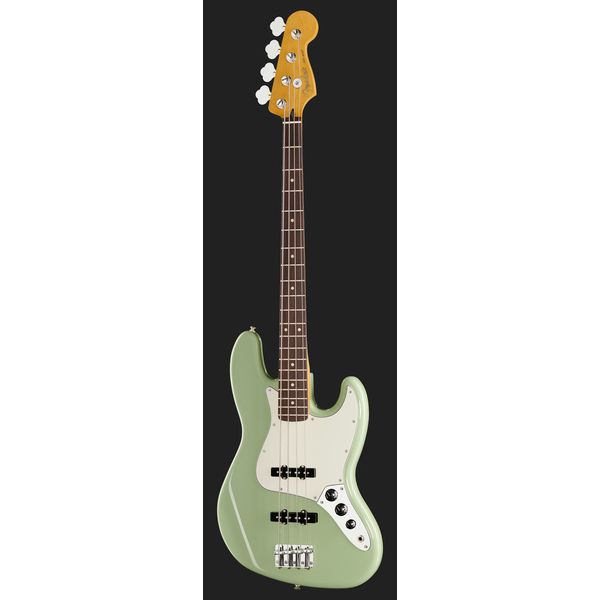
The Birch Green finish reviewed here is genuinely one of Fender’s better recent colour choices — muted, a bit vintage, doesn’t scream for attention on stage but photographs beautifully. Worth checking other finishes too if green’s not your thing.
How It Stacks Up in the Player II Range
Worth noting Fender didn’t just reissue the old Player Jazz Bass with a new badge — Player II is a genuine redesign across the board, not just this model. The whole range got the upgraded pickups, the improved neck carve, and better fret work as standard, which is why this generation feels like such a jump from the original Player series basses a lot of gigging musicians already own.
That matters here specifically because it means you’re not just buying „a Jazz Bass shape” — you’re buying into a whole platform Fender clearly put real engineering time into. For a lot of working bassists, that’s the actual selling point, way more than which offset body shape happens to be in the catalogue this year.
Tone
Two Player Series Alnico 5 Jazz Bass single coils, two volumes plus a shared tone knob — the classic Jazz Bass control layout, which means you get proper blend control between neck and bridge pickup rather than a simple on/off switch.
Neck pickup solo gives you that warm, round, almost P-Bass-adjacent thump. Bridge pickup solo is where the classic Jazz Bass growl and snap lives — great for slap, great for cutting through a busy mix. Blend both and you get the versatility Jazz Basses are famous for.
Compared to a Precision Bass, this thing is just more flexible tonally — you can dial in a P-Bass-ish thump or go full funk/slap territory without changing instruments.
Playability
This is where Player II basses really win people over. The neck is fast, the frets are dressed well, and the whole thing just feels more „premium” than the price suggests.
Slap and pop players will appreciate the slightly flatter fretboard radius and low factory action. Fingerstyle players get a comfortable, familiar Jazz Bass neck profile that basically every bassist has muscle memory for already.
One small niggle from reviewers (and echoed in a few Thomann customer reviews): some units ship with a slightly proud fret or two near the higher positions. Nothing a quick setup won’t sort, but worth a once-over when it arrives — same advice applies to basically any bass at this price point, including a budget Ibanez or similar.
Who’s This For?
- Gigging bassists who want maximum tonal flexibility from one instrument
- Players moving from a Squier Jazz Bass and wanting a genuine step up in build and tone
- Funk, soul, indie, alt-rock — anywhere that classic Jazz Bass snap and growl belongs
- Anyone who wants a Fender bass with more versatility than a single-pickup P-Bass
If you specifically want that offset Jaguar body shape for stage presence, you’ll need to hunt secondhand for an original Player Jaguar Bass — it’s genuinely gone from the current lineup.
Key Specs
- Body: Alder
- Neck: Maple, bolt-on, Modern „C” profile
- Fretboard: Pau ferro/rosewood, 9.5″ radius, 20 medium-jumbo frets
- Scale length: 34″ (864 mm)
- Nut width: 1.5″ (38.1 mm)
- Pickups: 2x Player Series Alnico 5 Jazz Bass single coils
- Controls: 2 volume, 1 tone (passive)
- Hardware: Nickel/chrome, standard open-gear tuners
Niggles
No case or gig bag included — a bit annoying when you’ve just dropped real money on a bass and now need to buy protection separately.
Some quality control variance reported on fret dressing, as mentioned above — check yours over, or buy from somewhere with a solid return policy (Thomann’s is generous, FYI).
And again — if you actually wanted the offset Jaguar body specifically, this isn’t it. Manage your expectations on the shape, even if the tone and playability more than make up for it.
Final Verdict
The Player II Jazz Bass is a genuinely excellent modern workhorse bass — more versatile than a P-Bass, better built than the original Player series, and priced sensibly for what you get.
Is it what you searched for if you specifically wanted a Player II Jaguar Bass? No, because that product doesn’t exist anymore. But if what you actually wanted was a do-it-all Fender bass with real tonal range for gigging and recording, this quietly does the job better than the Jaguar Bass ever did. Worth trying before you write it off just because of the name mismatch.
Compare it against a StingRay-style alternative or a RockBass if you want, but for the classic Fender Jazz Bass experience at a fair price, this one’s hard to beat right now.