Watch It First
Tube amps and small apartments have never really gotten along. Crank a Marshall or a Fender combo enough to get real breakup and your neighbours start leaving notes.
Blackstar’s HT-5R MKIII is built to fix exactly that problem – a genuine valve combo with a power soak that drops it all the way down to 0.5 watts without gutting the tone.
I plugged in expecting the usual compromise where „bedroom friendly” means „kind of thin.” That’s not really what happened here, and I want to walk through why.
Build and Design
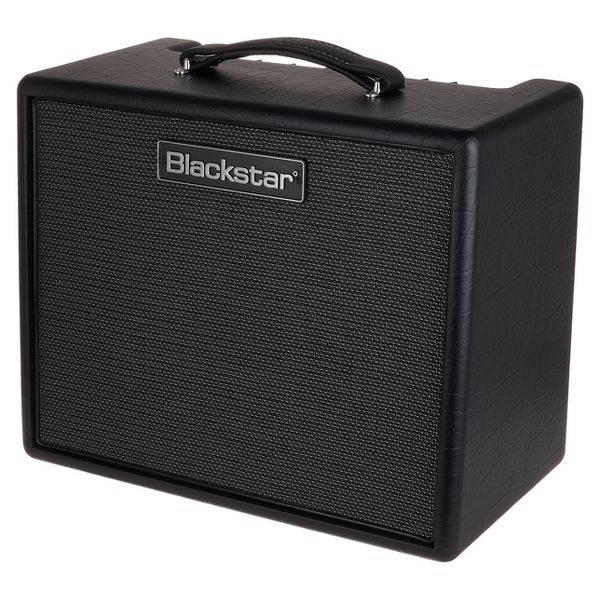
It’s a proper 1×12 combo, black tolex, Blackstar’s usual clean fascia with the amber control readout. At 12.4kg it’s not a featherweight, but it’s still a one-hand carry to the car.
Under the hood you get a single ECC83 preamp tube doing the heavy lifting on gain, with a 12BH7-style power valve on the output side. Two channels: Clean and Overdrive, switchable via the included footswitch.
Controls That Actually Make Sense
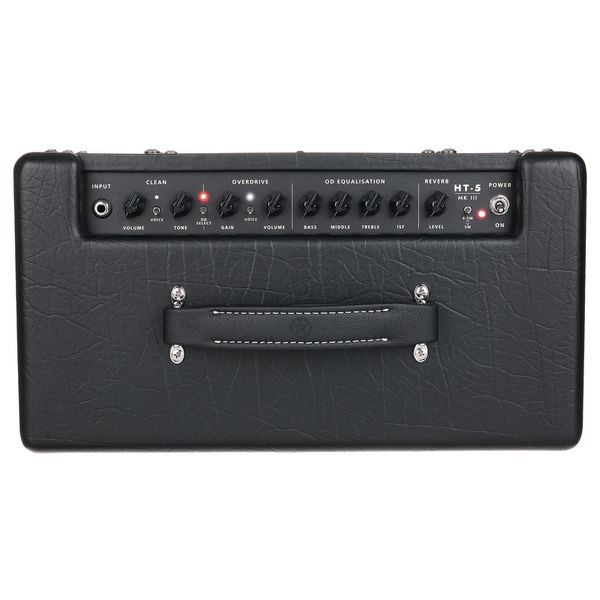
Clean Volume, Clean Tone, Overdrive Gain, Overdrive Volume, Bass, Middle, Treble, ISF (Blackstar’s voice-shifting knob that leans the tone American or British), and a Reverb Level dial.
Round the back there’s an effects loop, XLR output with cab simulation for recording or going direct to FOH, USB-C, a headphone out, and three speaker-out options at 8 or 16 ohms if you ever want to run it into an external cab.
The Power Reduction Trick
This is the whole reason to buy this amp over a louder alternative. Reviewers keep mentioning the same thing: dropping it to 0.5W happens after the power tube, not before, so you keep the actual tube compression and sag instead of just choking the signal.
Practically, that means you can dime the gain at midnight without your neighbours calling the police, and the amp still feels and responds like a real valve amp being pushed, not a toy.
Playability and Sound
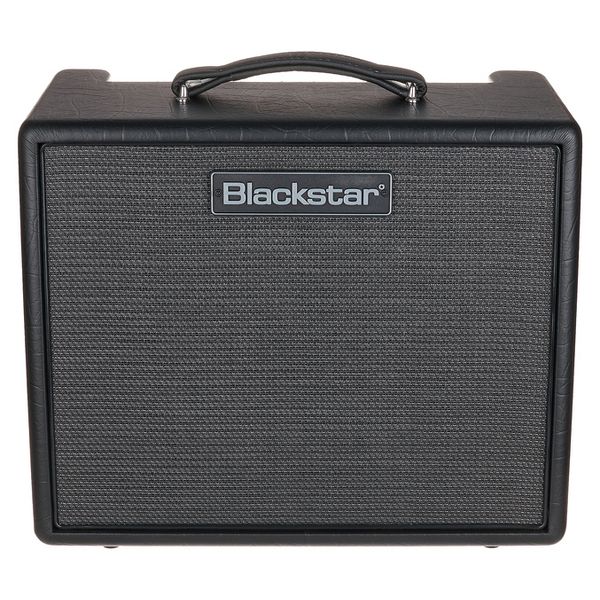
The clean channel is genuinely good – two knobs, volume and tone, plus that ISF control to lean it Fender-ish or Marshall-ish. Set at noon it splits the difference nicely and stays clear even as you push volume.
Overdrive is where it gets interesting. Gain opens up faster than you’d expect for a 5-watter, moving from edge-of-breakup into proper saturated crunch well before you hit halfway on the dial. It’s not a metal amp, but for blues, classic rock and indie tones it’s genuinely satisfying.
I ran it with a Squier Sonic Strat and the single coils came through with real chime on the clean side. Swapping to something with humbuckers pushed the overdrive channel into thicker, more compressed territory – it’s genuinely reactive to what you plug in, which isn’t always true of amps in this price bracket.
If you’re weighing this against a Strat vs a Squier Classic Vibe for your main guitar, our Fender Player Stratocaster vs Squier Classic Vibe comparison is worth a read – either pairs nicely with this amp’s clean channel.
The reverb is fine, not spectacular. A few owners have mentioned they’d like a longer, more ambient tail for shoegaze-style textures – if that’s your thing, check our guide to guitars for shoegaze and ambient for guitars that pair well with external reverb pedals instead of relying on the onboard tank.
Who It’s For
Apartment dwellers who still want real tube feel. Home recordists who want an XLR out with cab sim built in. Gigging players who want a genuinely small, light backup amp for low-volume acoustic-adjacent sets. It’s not for anyone chasing high-gain metal tones or big-stage volume without a PA.
Honest Niggles
Reverb is the weakest link – usable, but shallow compared to something like a Fender with spring reverb, or even the Vox AC10 mentioned in reviews as having a longer tail.
Gain on the overdrive channel ramps up fast, so if you like fine control over just-barely-breaking-up tones, you’ll be working in a narrow window of the dial.
At 12.4kg it’s not the lightest 5-watter on the market, and the price sits closer to amps with a lot more headroom on paper – you’re partly paying for the power-reduction engineering, which is fair, but worth knowing going in.
HT-5R MKIII vs the Alternatives
The Marshall DSL5CR is the obvious cross-shop – similarly low-wattage, similarly bedroom-friendly, with a more scooped, British-voiced overdrive by default. If you want that classic Marshall crunch out of the box rather than a switchable voice, it’s worth comparing.
If modelling amps are more your thing than real tubes, the Fender Mustang LT25 gets you dozens of amp voicings and built-in effects at a lower price, though you lose the actual valve dynamics this amp is built around.
And if you’re just starting out and haven’t settled on a guitar yet, our guide to the best cheap electric guitars for beginners pairs naturally with a small amp like this one – neither will break the bank and both leave room to grow.
Guitarists have been shrinking their rigs for years now – see our Marshall MG10 vs MG15 comparison for how the solid-state side of that trend plays out.
Specs
- Power: 5W, switchable down to 0.5W
- Speaker: 1x 12″
- Preamp tube: 1x ECC83
- Power amp tube: 1x 12BH7
- Channels: Clean, Overdrive
- Controls: Clean Volume, Clean Tone, Overdrive Gain, Overdrive Volume, Bass, Middle, Treble, ISF, Reverb Level
- Outputs: XLR (with cab sim), headphone, USB-C, 3x speaker out (8-16 ohms)
- Extras: Effects loop, footswitch included
- Weight: 12.4kg
- Available since April 2024
Final Verdict
The HT-5R MKIII solves a real problem: how to get honest tube dynamics at a volume that won’t get you evicted. The power-reduction circuit isn’t a gimmick – it genuinely holds onto the feel of the amp being pushed, even at whisper volume.
It’s not the cheapest 5-watter out there, and the reverb won’t wow anyone. But for home practice, small recording setups, or a backup amp for quiet gigs, it does exactly what it promises.
If you want real valve tone without needing a PA or understanding neighbours, this is one of the smartest ways to get there right now.