Watch It First
Most budget bass combos are polite. Clean, a bit boring, built to not offend anyone. The Orange Crush Bass 50 did not get that memo.
It’s got attitude baked right into the circuit, thanks to a blendable overdrive section that most amps twice the price don’t bother with. Orange basically said „why not” and shipped grit as standard.
I’ve had one of these on rotation for practice and small rehearsal sessions, and it’s become the combo I recommend first whenever someone asks about a starter bass rig. Here’s why.
What’s Actually Inside
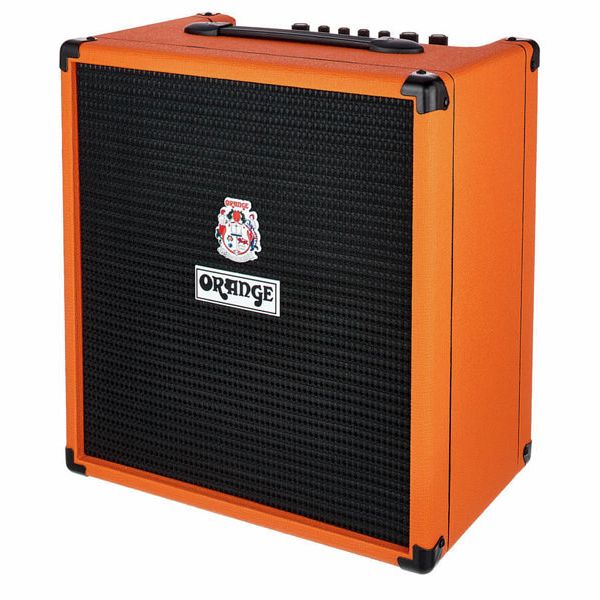
50 watts through a single 12″ speaker, fully analogue signal path – no digital modelling nonsense here. Controls run Volume, Treble, Middle (with a sweepable Mid Frequency knob), Bass, and then the party piece: Gain and Blend.
Those last two knobs let you mix a dirty, driven signal in alongside your clean tone, from a subtle growl right up to properly thunderous distortion. It’s genuinely one of the best-implemented onboard overdrives on any budget bass amp, full stop – better thought out than most standalone bass overdrive pedals, honestly.
Tone
Clean
With Blend rolled off, the clean tone is warm and rounded rather than ultra-hi-fi – it won’t out-sparkle a boutique combo, but it’s got a solid, gigging-usable fundamental. The 3-band EQ plus mid-freq sweep gives you real shaping power, way more than the „bass, mid, treble and pray” setup you get on cheaper combos.
Dirty / Blended
This is where the Crush Bass 50 earns its „real attitude” reputation. Dial in some Gain and Blend and you get everything from a subtle valve-like growl to full-on stoner fuzz territory, all without losing your low end – which is the classic failure point of cheap bass drive circuits. It’s genuinely fun to play through, and it pairs beautifully with punchier basses like a Precision-style bass if you want maximum grunt.
Build and Controls
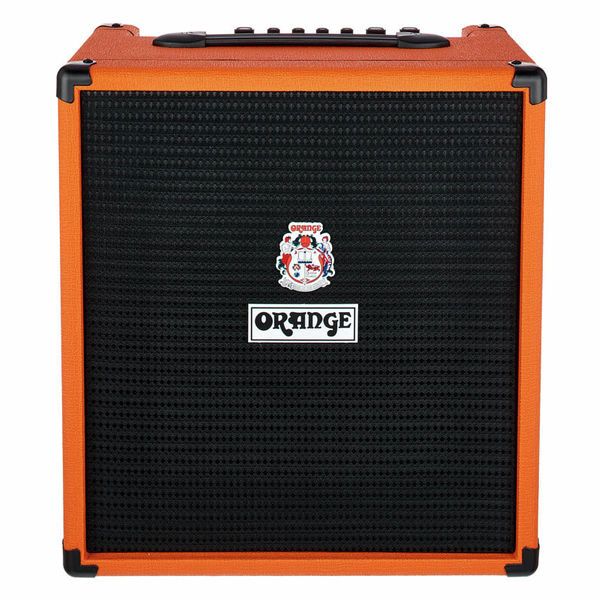
Classic Orange looks – that basket-weave grille and picture-frame cabinet – which honestly still turns heads even on a budget combo. At 14.45kg it’s genuinely easy to carry with the built-in top handle, briefcase-style. Not a featherweight, but very manageable for a 12″ combo.
Round back you get an FX loop, AUX input for jamming along to tracks, and a headphone output with cab-sim circuitry baked in for silent practice – a genuinely useful feature that a lot of rivals skip or bolt on badly. There’s also a built-in tuner, which sounds minor until you’re the one guy on stage without one.
Footswitchable Overdrive
The blend/overdrive circuit can be footswitched, though the switch itself isn’t included in the box – it’s a separate purchase. Worth budgeting for if you want to flip between clean and dirty on the fly during a set rather than reaching down mid-song.
Who’s This For
Beginner and intermediate bassists who want one combo that covers home practice, rehearsal, and the occasional small gig, without needing a pedalboard to get some grit. Rock, punk, stoner, and grunge players especially will love the onboard overdrive – if that’s your world, it’s basically a built-in fuzz pedal you don’t have to buy separately.
It’s also a great „quiet practice” amp thanks to the headphone/cabsim output and AUX input, so it doesn’t have to just live at rehearsal – it earns its keep at home too. If you’re weighing it against something like a Bugera combo on pure value, the Orange wins on tone character even if the spec sheets look similar on paper.
Honest Niggles
- Volume and EQ pots can feel a bit loose/imprecise at low settings – fine adjustments take some patience.
- 50W and a single 12″ won’t keep up with a loud drummer at full-band volume – it’s a practice/small-gig amp, not a backline monster.
- No DI output, so recording direct means going through an interface or mic’ing the cab instead.
- Footswitch for the overdrive isn’t included – factor that into your budget if you want hands-free switching.
How It Compares
Against a Fender Rumble 100 or a Markbass Micromark, the Orange gives up some raw headroom and polish, but claws it right back with personality – the Rumble is the more „correct” sounding amp, the Crush Bass is the more fun one. If you play in a band that leans rock, punk, or anything with a bit of dirt, the Orange’s built-in overdrive alone might save you buying a bass overdrive pedal.
Compared to something like a Warwick Rockbass paired with a generic combo, buying the Crush Bass 50 alongside a budget bass like the Harley Benton PB-50 gets a genuinely gig-ready starter rig for not much outlay at all.
Specs at a Glance
- Power: 50W analogue
- Speaker: 1x 12″
- Controls: Volume, Treble, Middle, Mid Freq, Bass, Blend, Gain
- Extras: FX loop, built-in tuner, AUX input, headphone out with cabsim
- Overdrive: Footswitchable blend circuit (footswitch sold separately)
- Weight: 14.45kg
- Dimensions: 485 x 430 x 275mm
Final Verdict
Playability and Real-World Use
I ran this through a full rehearsal with a drummer and a guitarist, and it held its own better than expected for a 50W combo – up until the drummer really dug in, at which point it started to run out of headroom. That’s a limitation of the wattage class, not a design flaw, and it’s exactly what you’d expect at this price point.
For home use, it’s honestly overkill in the best way – you’ll never need more than a quarter of the volume knob in a bedroom, and the headphone/cabsim output means late-night practice sessions don’t wake the whole house. That cabsim circuit is also decent enough for quick demo recordings straight into an audio interface, even without a proper DI.
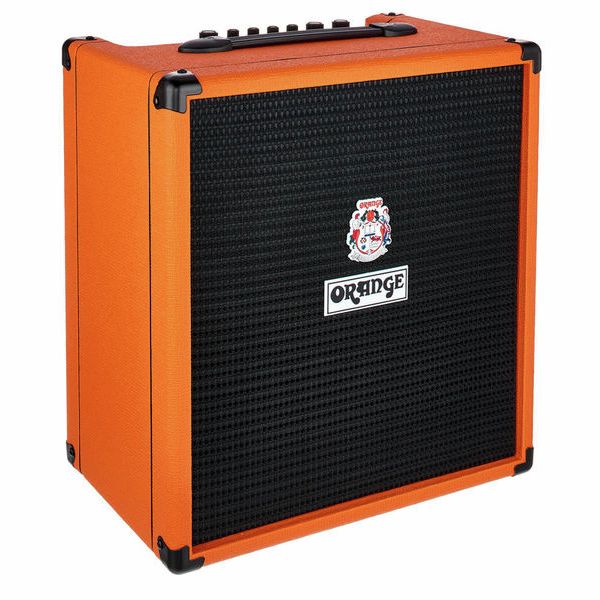
Is the Orange Crush Bass 50 worth it? Yeah, honestly – it’s one of the few budget bass combos with actual personality, not just a spec sheet. The blendable overdrive alone puts it ahead of most rivals in this bracket.
It won’t out-muscle a proper 15″ or 2×10 rig at a loud gig, and the pots could be tighter, but for practice, rehearsal, and small shows, it does more than its price tag suggests. If you want a bass amp that sounds like it has a bit of a personality disorder in the best possible way, this is it 😉