Watch It First
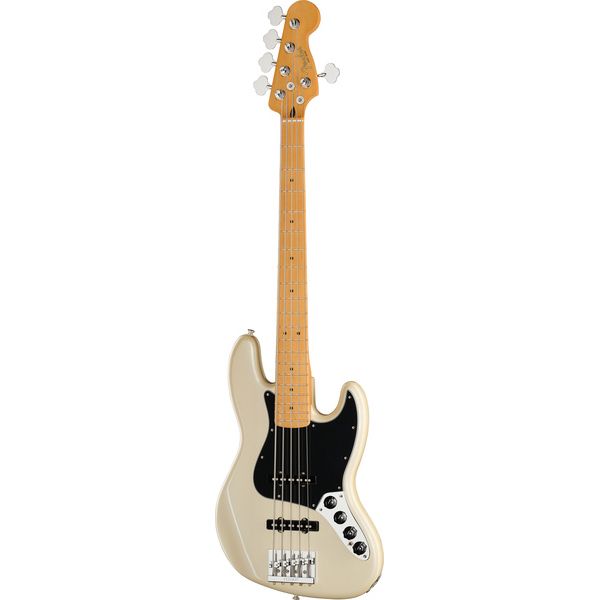
I’ve been circling five-string Jazz basses for a while now, mostly because every shop demo ends with me not wanting to give the thing back. The Fender Player II Mod J Bass V is the one that actually broke me down. It’s not the cheapest route into five-string land, but it might be the smartest one right now.
Fender quietly reworked the whole Player line a couple years back, and the „Mod” variant throws in the stuff five-string players actually ask for — active electronics, noiseless pickups, and a low B that behaves itself instead of flopping around like a wet rope. That last bit matters more than people give it credit for.
This isn’t a bass for someone who just wants „a bass, but with five strings.” It’s for someone who wants that B string to sit in the mix properly. IMO that’s the whole reason to pay extra for the Mod version instead of grabbing a base-model five-string somewhere else.
Built Like Fender Actually Means It This Time
The body’s alder, the neck bolts on and it’s maple all the way through — neck and board both. Fender went with a Modern „C” profile here, which is thin enough for fast playing but still gives your thumb something to hang onto on that wider five-string neck.
Fretboard radius sits at 9.5″, which is the sweet spot Fender’s used forever — flat enough for low action, round enough that chords (yes, bassists play chords sometimes) don’t feel weird. TUSQ nut, 20 medium jumbo frets, and a HiMass bridge with chromed zinc saddles for sustain that doesn’t disappear on the low string.
Fender also throws in a Deluxe gigbag, which sounds like a small thing until you price one separately. It isn’t nothing.
Neck Feel and Playability
Five-string necks can feel like a plank if the maker doesn’t think about string spacing. Fender didn’t screw this up — the 47.6mm nut width is wide enough for the B string to have room without turning the whole neck into a canoe paddle.
Scale length is a proper 34″ even with the fifth string, which is exactly what you want for low-B tension. Compare that to some budget five-strings — like the Harley Benton PJ-4 Deluxe — where corners get cut to hit a price point, and you’ll feel the difference within about thirty seconds of playing.
Setup and Strings
Out of the box the factory nickel-plated strings are a reasonable .045-.125 set, which is a sane starting point for a five-string B that still needs to feel playable rather than like a cable. If you’re switching from a four-string, give yourself a session or two just adapting to the extra string spacing before you judge the instrument on tone alone.
Worth a mention too: because the electronics are active, plugging straight into a DI or interface gives you a hotter, cleaner signal than most passive basses manage on their own. That’s a genuine advantage for home recording setups where you don’t want to fight noise floor before you’ve even added a compressor.
Tone — Noiseless Pickups, Active AND Passive
Two Player II Noiseless Jazz Bass V single coils handle the pickup duties, and the electronics switch between active and passive. Passive mode gets you that classic Jazz Bass growl and grit for when you want it raw. Flip to active and you get a 3-band EQ with boost and cut on bass, mid, and treble — proper tone-shaping range, not just a token stack.
One quirk worth mentioning: instead of the usual two volume knobs, this one uses a single volume plus a pan pot to blend the pickups. Some players love it immediately. Others (me, for the first week) keep reaching for a knob that isn’t there. You get used to it.
Who’s This Bass For
Gigging bassists who need a low B for modern worship, metal, or pop sets where the five-string isn’t optional anymore. Session players who want one instrument that covers passive-vintage and active-hi-fi tones without swapping basses between takes. Home recorders running direct through an interface will appreciate how quiet those noiseless pickups actually are — no hum creeping into a take at 1am.
Pair it with something like the Fender Rumble 40 for practice at home, or step up to an Ampeg Rocket Bass RB-110 or a Warwick BC 20 Bass Combo if you’re gigging small rooms. All three handle a five-string’s extended low end better than a guitar combo pretending to be a bass amp.
The Honest Niggles
It’s heavier than the standard four-string Player II Jazz, which is just physics — more string, more hardware, more weight on your shoulder by the third set. Active electronics mean a 9V battery to remember, and yes, it will die at the worst possible moment eventually. Budget one spare in your gig bag.
The pan-pot blend control also isn’t for everyone — if you’re used to dual volumes on a classic Jazz Bass, there’s a short relearning period. Not a dealbreaker, just worth knowing before you buy.
How It Compares
Against a similarly priced five-string from Ibanez, the Fender wins on pickup quietness and that active/passive flexibility, but loses a bit on sheer aggressive output — the Ibanez house tone leans more hi-fi-scooped by default. Against the base Player II Jazz Bass (four-string), this is simply a different tool — you’re not upgrading, you’re adding range.
If your pedalboard leans toward shaping tone rather than just recording direct, a Boss CS-3 Compressor tames the extra dynamic swing an active five-string can throw at your amp, and a Boss GE-7 Equalizer gives you hands-on control beyond the onboard 3-band if you’re chasing a very specific live tone.
Quick Specs
- Body: Alder
- Neck: Maple, bolt-on, Modern „C” profile
- Fingerboard: Maple, 9.5″ radius
- Scale: 34″ long scale
- Frets: 20, medium jumbo
- Nut: TUSQ, 47.6mm width
- Pickups: 2x Player II Noiseless Jazz Bass V single coils
- Electronics: Active/Passive switchable, 3-band EQ, volume + pan pot
- Bridge: Fender HiMass, chromed zinc saddles
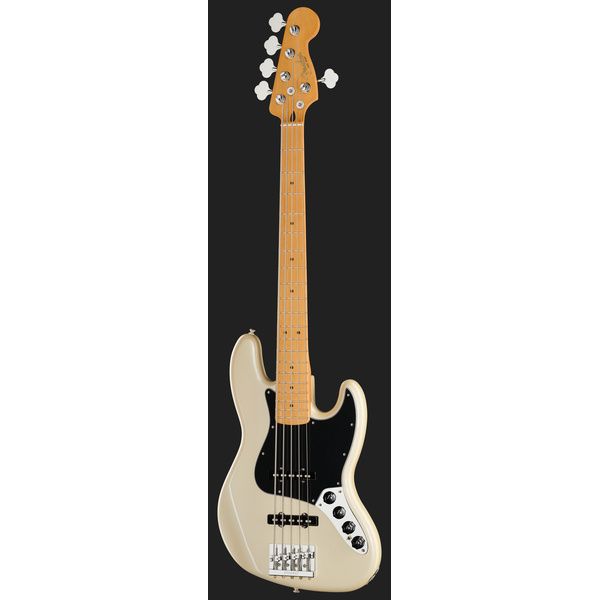
- Finish: Olympic Pearl
- Includes: Deluxe gigbag
Final Verdict
The Fender Player II Mod J Bass V earns its spot above the base Player line by actually solving the problems five-string players complain about — dead-quiet pickups, real tone flexibility, and a B string that doesn’t feel like an afterthought. It’s not a budget pick, and it doesn’t pretend to be.
If you’ve been putting off going five-string because you didn’t want a noisy, unbalanced bass, this is the one that removes that excuse. Punches above its weight for anyone serious about extended range. Recommended, lol — wouldn’t have written this much about it otherwise.