Watch It First
Wah pedals are the one effect that everyone can identify blindfolded, and the standard Cry Baby has basically defined the sound since the 60s.
The problem is that the classic enclosure eats a stupid amount of pedalboard real estate for one knob-free effect.
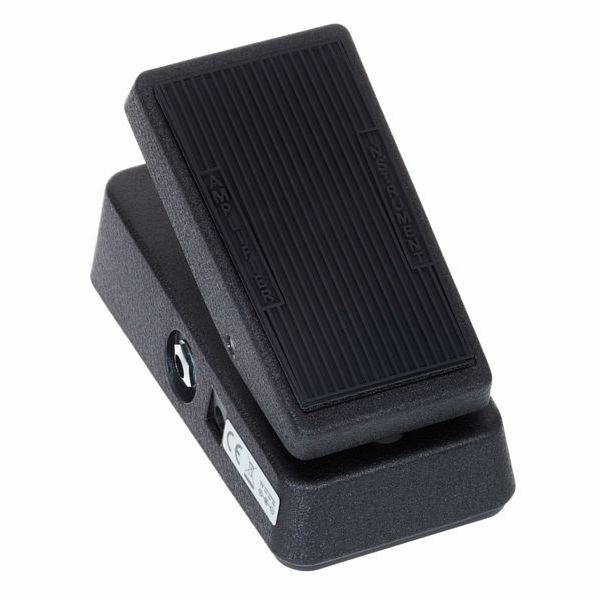
Dunlop’s answer is the CBM95 Cry Baby Mini – same guts, half the footprint – so let’s see if shrinking it costs you anything.
Build Quality
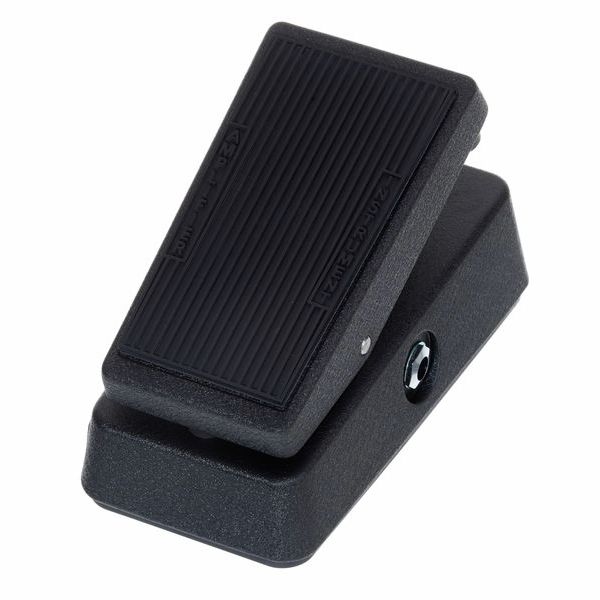
Don’t let the smaller size fool you – this is still a proper die-cast metal enclosure, not a lightweight plastic shell.
Dunlop even lets you adjust the pedal tension with an included key, so if the treadle feels too stiff or too loose out of the box, you can dial it in yourself.
It’s a true hardwire bypass design, meaning your signal runs straight through unaffected when the pedal is off – no buffering weirdness to worry about.
At 435 g it’s genuinely light, and the reduced footprint means it takes up roughly half the space of a standard GCB95 on your board.
Tone and Sound
Inside the shell is the same legendary red Fasel inductor that’s been in Cry Baby pedals for decades, so tonally this isn’t a „mini version” compromise.
Three Internal Voicings
Pop the bottom cover off and there’s a small switch that lets you pick between three voicings: GCB95 (the standard, classic sound), Vintage (more pronounced mids, closer to an old-school fuzz-face-era wah), and Low (a narrower frequency sweep).
Most players will land on GCB95 and stay there, but it’s a nice option if you want a slightly different flavor without buying a second pedal.
The full sweep range is present and correct – none of the „shrunk the pedal, shrunk the wah range” complaints you sometimes hear about compact wahs.
Funk, Rock, and Beyond
Classic funk chuck-wah works exactly as you’d expect, and it’s equally happy doing Hendrix-style vocal wah or more aggressive rock textures.
If you’re chasing a vintage organ-adjacent funk tone, pairing this with something like the EHX C9 Organ Machine opens up territory way beyond straightforward wah.
Playability and Usability
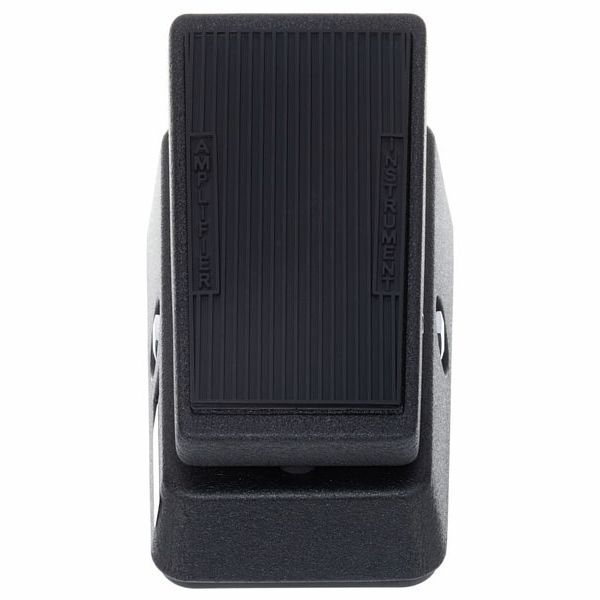
The rocking action is smooth, and because it’s a mini pedal, the throw is naturally a bit shorter than a full-size Cry Baby.
That takes a little adjustment if you’re switching from a full-size wah, especially getting used to where „heel down” actually sits.
Once you’re used to the shorter travel, it’s every bit as expressive, and the adjustable tension helps you dial in exactly the resistance you like.
It uses either a 9V battery or a standard 9V DC adapter, so power flexibility isn’t an issue either way.
Who Is This Pedal For
Anyone building a compact board who doesn’t want to sacrifice a wah pedal to save space – that’s the whole pitch, and it delivers.
It’s also great for players who travel light or gig with a small bag, since it’s genuinely pocket-friendly compared to a full-size Cry Baby.
If you’re stacking this with drive pedals, it plays nicely before or after something like the Ibanez TS808 depending on whether you want a wah-into-drive or drive-into-wah voicing.
Honest Niggles
- Shorter treadle throw takes an adjustment period if you’re used to full-size wahs
- Voicing switch is internal, so it’s not a quick on-the-fly toggle mid-set
- Being smaller, it can feel slightly less stable underfoot on soft carpet compared to a wide-base wah
None of these stopped me from using it as my main wah, but they’re worth knowing going in.
How It Compares to Alternatives
Against the standard Dunlop Crybaby GCB95, the tone is essentially identical – the difference is purely footprint and treadle throw, not sound.
Compared to modulation-based alternatives to a classic wah, like the sweep you’d get from a Boss BF-3 flanger or a Boss TR-2 tremolo, nothing really substitutes for a real wah’s vocal, foot-controlled character.
If fuzz-and-wah is your thing, this pairs perfectly with something in the vein of the Boss FZ-5 or the MXR Classic 108 Fuzz Mini for a proper late-60s rock tone without needing three pedals’ worth of board space.
Setting It Up on a Small Board
Because of the reduced footprint, this is a great choice for pedalboards where you’re already tight on space after fitting drive, modulation, and time-based effects.
Position it early in the chain, before drive pedals, for a classic vocal wah-into-distortion tone, or after for a smoother, more filtered wah character.
Either way works – it really comes down to what era or artist’s tone you’re chasing.
A Note on Battery vs Adapter
Running it on a 9V battery is genuinely convenient for a mini pedal like this – no cable clutter, and battery life is solid since a wah only draws power while it’s actually in use, not always-on like some buffered pedals.
If you’re daisy-chaining a pedalboard power supply anyway, just make sure your adapter matches the correct 2.1 mm barrel with the internal-negative polarity Dunlop specifies, since getting that wrong can cause hum or, worse, damage the pedal.
I’ve run mine both ways over time and honestly default to battery power just for the one-less-cable simplicity when I’m swapping pedals around a lot.
Worth mentioning too: it’s compatible with the same style of pedalboard mounting hardware as most Boss-sized compact pedals, so fitting it onto a densely packed board isn’t a hassle.
Key Specs
- Type: Compact wah pedal
- Inductor: Legendary red Fasel coil
- Bypass: True hardwire bypass
- Voicings: GCB95, Vintage, Low (internal switch)
- Power: 9V battery or 9V DC adapter (adapter not included)
- Dimensions: 133 x 75 x 65 mm (depressed)
- Weight: 435 g
Final Verdict
The Cry Baby Mini proves you don’t have to trade tone for footprint – it’s the same Fasel-loaded wah sound in a shell that actually fits modern, densely-packed pedalboards.
The shorter treadle throw is a genuine adjustment, not a total non-issue, so try one in a shop if you can before committing sight unseen.
For anyone rebuilding a board and needing to claw back space without losing a beloved effect, this is a smart, low-risk swap.
Recommended, especially if your current wah is the reason your board doesn’t close properly.