Watch It First
Boss went decades without a proper fuzz pedal in the main lineup. Weird, right? Every other flavor of dirt got the compact-pedal treatment except the one that started it all.
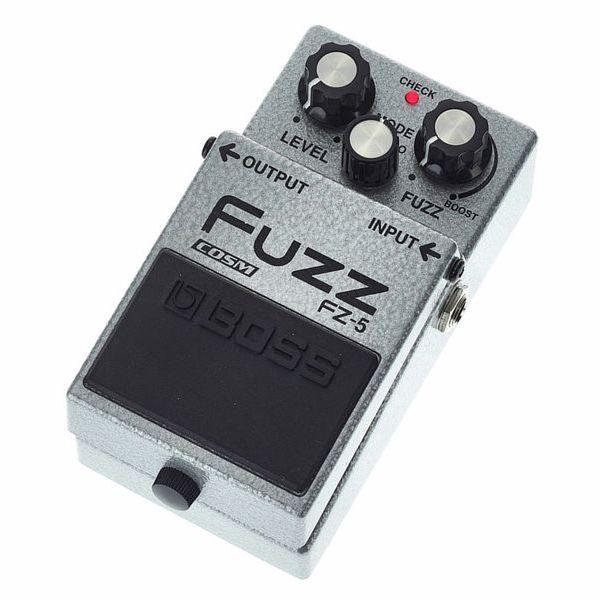
The FZ-5 is their fix: three classic fuzz circuits, digitally modeled with COSM, crammed into the usual bulletproof Boss box. Some purists will roll their eyes before they’ve even plugged it in.
IMO that’s their loss. I’ve had this thing on and off my board for a while now, so here’s the honest rundown, warts and all.
What’s Actually In The Box
The FZ-5 packs three vintage fuzz voicings behind a single Mode switch: a Maestro FZ-1A style circuit, a Fuzz Face style circuit, and an Octavia-style octave-up fuzz. That’s three pedals worth of history for the price of one.
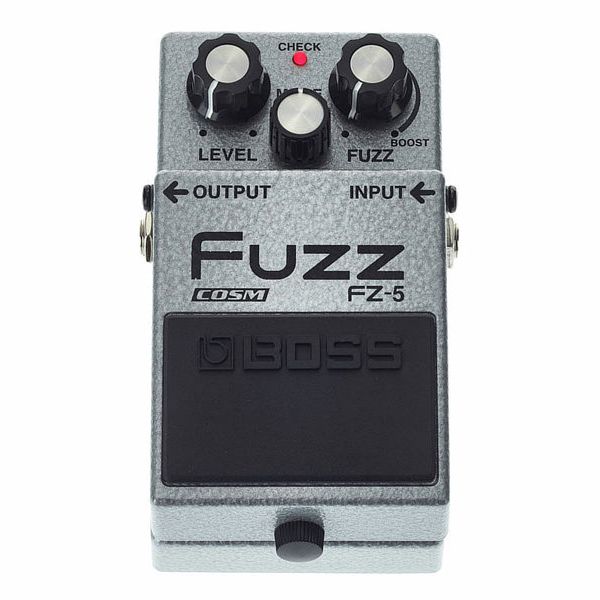
On top of the three modes, there’s a Boost function baked into the Fuzz knob’s upper range, which basically lets you push each voicing from „vintage growl” into „way too much sustain.” Controls are dead simple: Fuzz, Mode, Level. No hidden menus, no expression pedal jacks, nothing you need a manual for.
Playability And Controls
It’s a standard-size Boss compact pedal — 73 x 129 x 59mm, about 400g — so it slots onto any board without eating three slots like a lot of modern fuzz boxes do.
The footswitch is the usual silent Boss mechanism, bypass is solid, and the LED is bright enough to see on a dark stage. Nothing fancy here, but nothing to complain about either. It just works, every time, which honestly counts for a lot when you’re relying on a pedal at a gig.
If you’ve used a Tube Screamer before, the ergonomics will feel instantly familiar — twist a couple knobs, flip a switch, stomp, done.
How It Actually Sounds
Fuzz Face Mode
This is the mode most people will live in. Smooth, singing, slightly farty at low gain, then it blooms into that classic wooly sustain the moment you dig in. Clean up the guitar volume and it cleans up too, just like the real vintage circuits it’s modeling.
Maestro FZ-1A Mode
Grittier, more compressed, more „60s fuzz box left out in the rain” in the best possible way. Great for riffs that need to sound a little unhinged without going full metal.
Octavia Mode
The octave-up mode is the wildcard. It’s spiky, glassy, a bit temperamental depending on where you play on the neck — exactly like a real Octavia. Bridge pickup, a bit of Boost dialed in, and you’re basically doing your best Hendrix impression whether you meant to or not.
None of the three modes sound sterile or „digital” in a bad way. Boss’s COSM modeling has been good for a long time now — the same tech underpins stuff like their modulation pedals — and it shows here. You’d have a hard time A/B-ing this against the real vintage units in a blind test.
Build Quality
It’s a Boss compact pedal, so build quality was never going to be the question mark here. Metal chassis, tough pots, a footswitch rated for approximately forever. These things survive touring vans, spilled beer, and being stepped on by drummers who wandered over during soundcheck.
Power draw is a modest 36mA, runs off a 9V battery or the standard Boss PSA adapter (not included — grab one if you don’t already have a pedalboard power supply).
Who It’s For
If you want one box that covers vintage fuzz, garage-rock grit, and octave weirdness without hauling three separate pedals to practice, this is basically a no-brainer. It’s also a smart first fuzz for players who’ve never owned one and don’t want to gamble on a single-trick boutique box.
- Classic rock and blues players who want vintage fuzz textures on tap
- Anyone building a compact board who can’t justify three fuzz pedals
- Players curious about Octavia-style tones without committing to a dedicated unit
- Gigging musicians who need something that just won’t die
Honest Niggles
It’s not perfect. The Fuzz knob’s sweet spot on some modes is a touch narrow — small movements make a bigger difference than you’d expect, so expect some fiddling before you land on „the” tone.
Fuzz pedals in general hate being placed after a buffered pedal or wah, and this one’s no exception — put it first in the chain or you’ll fight weird gating and volume drops. And if you’re a die-hard analog-only fuzz snob, no amount of COSM modeling is going to change your mind. That’s fine, this pedal isn’t really trying to win you over anyway.
Live Vs. Studio Use
On stage, the FZ-5 is a set-and-forget pedal. Pick your mode before the set, maybe nudge the Level between songs, and it’ll behave consistently through a two-hour gig without any weird drift or noise issues — something you can’t always say about vintage-style analog fuzz circuits that hate temperature changes and long cables.
In the studio it’s just as handy because you can print three distinctly different fuzz character on the same track without swapping pedals between takes. Track a rhythm part in Fuzz Face mode, then flip to Octavia for a doubled lead an octave up, all without re-patching your cables.
It also plays nicely with drive pedals stacked in front of it, if you want to push it into a denser wall of gain — try stacking it after something like the TS9 for a tighter low end before the fuzz smears everything together.
Specs At A Glance
- 3 fuzz modes: Maestro FZ-1A, Fuzz Face, Octavia
- COSM digital modeling with analog-style Boost control
- Controls: Fuzz, Mode, Level
- Connectors: 6.3mm input/output jacks, 9V DC adapter input
- Power: 9V battery or 9V DC adapter (not included), 36mA draw
- Dimensions: 73 x 129 x 59mm
- Weight: approximately 400g
Final Verdict
The Boss FZ-5 isn’t trying to be a boutique fuzz that costs more than your amp. It’s a practical, road-ready, three-in-one fuzz box that nails vintage tones without the vintage reliability headaches. For most players it’ll punch well above where its price tag suggests.
If your board has a fuzz-shaped hole in it and you don’t want to gamble on a single-trick pedal, this is one of the safest bets going. Pair it with a solid EQ pedal to tame the low end, or run it straight into a clean amp and let it do its thing.
Worth also checking out our notes on the Electro-Harmonix Nano Metal Muff and the Micro POG if you’re building out a full dirt-and-octave section on your board.