Watch It First
The Yamaha F310 has been on sale since 2003. That is over twenty years of essentially the same guitar sitting on essentially the same shelf, quietly outselling almost everything around it.
And it is still the answer that gets fired back at every single „what should my first acoustic be” post on every guitar forum on the internet.
Which either means it is genuinely brilliant, or we are all just very lazy. Let us work out which one it is.
So What Are You Actually Getting?
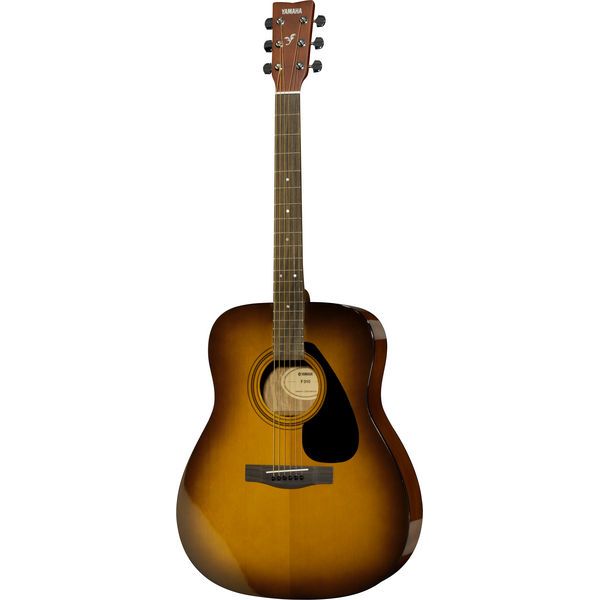
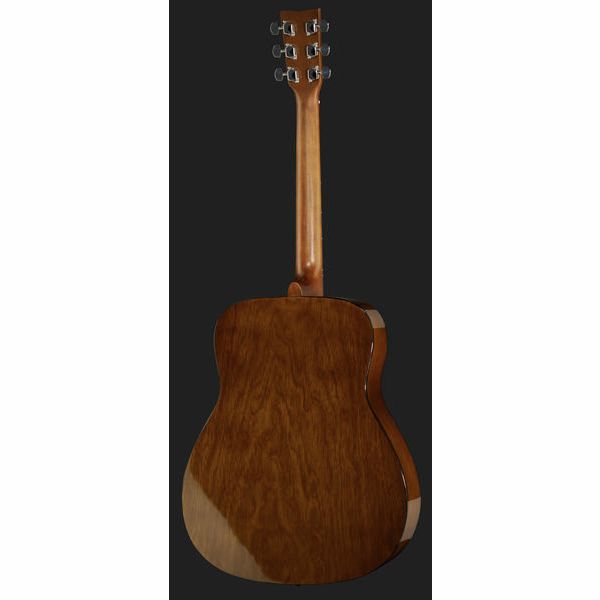
Spruce top, meranti back and sides, nato neck, rosewood fingerboard. Nothing exotic. Nothing that makes a spec-sheet nerd sit up straight.
The scale length is 634 mm and the nut is 43 mm wide, which makes it a slightly shorter-scale dreadnought than the usual 650 mm crowd. That detail matters more than it sounds like it should.
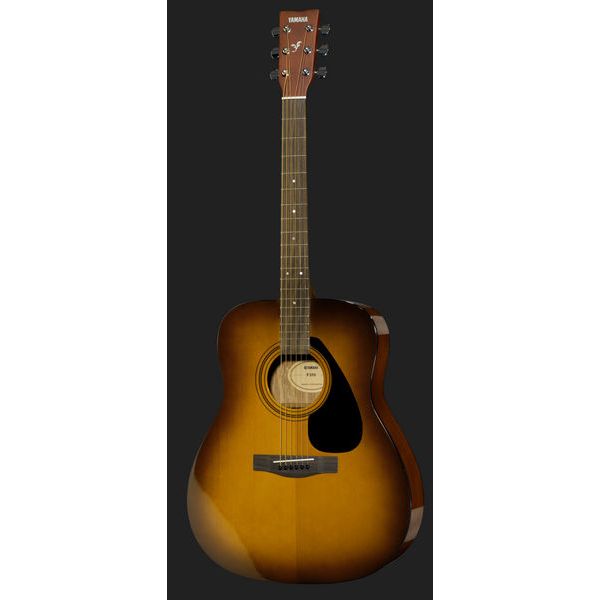
Chrome open-gear tuners, 20 frets, and a Tobacco Sunburst finish on the version I keep going back to. The plain natural one is arguably better looking, but that is a wardrobe argument, not a guitar argument.
The laminate question
Yes, the top is laminated. No, this is not a solid-top guitar, and no amount of forum shouting will change that.
Does it matter at this money? Honestly, not much. A badly built solid-top guitar sounds worse than a well built laminate one, and Yamaha build quality is the actual secret weapon here.
If you want solid wood on a budget, the Harley Benton CLO-65M gets you there for silly money. But it is a different guitar with different compromises.
How It Feels
The neck is the bit nobody talks about and it is the bit that matters most for a first guitar.
It is slim-ish, flat-ish, and completely unintimidating. Beginners do not fight it. That is the whole job description.
Because of the shorter scale, string tension is a touch lower than a full-size dread, so barre chords hurt slightly less on week three. Small thing. Enormous difference when you are still building calluses.
Factory action is usually a bit high. Not unplayably high – just high enough that a proper setup turns it from „fine” into „actually really nice”. Budget for that, or learn to do it yourself. It is a genuinely useful skill.
Weight and balance
It is a dreadnought, so it is a big box. If you are small, or buying for a kid, a smaller body like the Cort Core-OC will suit better.
For an average adult, though, it sits fine. No weird neck dive, no awkward reach.
How It Sounds
Bright. Quite bright, actually. There is a scooped, glassy thing going on in the mids that is very Yamaha and very recognisable.
Strummed open chords ring out with more volume than the price suggests. That is the meranti and the dreadnought box doing their thing.
Fingerpicking is where it shows its budget. The individual notes are clear but a bit thin, and there is not much bloom or sustain to hang onto.
Put fresh phosphor bronze strings on it and about 40 percent of that thinness disappears. Factory strings on cheap acoustics are almost always the worst part of the guitar.
The Niggles – Because There Are Some
The finish around the neck joint is not always perfect. Mine had a tiny lacquer ripple you could feel with a fingernail.
The tuners work but they are not smooth. You will overshoot the note more than once while tuning up.
And the bridge saddle is plastic. Swapping it for bone is a cheap upgrade that makes a real, audible difference. Take that as a compliment to the rest of the guitar – it is worth upgrading.
Also, no pickup. If you want to plug in out of the box, look at the Fender CD-60SCE instead.
How It Stacks Up
Against the Harley Benton D-120NT, the Yamaha wins on consistency and loses on outright value. The Harley Benton is cheaper. The Yamaha is more predictable out of the box.
Against the Cort Earth 100, the Cort has a warmer, rounder voice and the Yamaha has more sparkle. Genuinely a taste call.
And if you have more to spend, the Martin D-X2E or the Taylor 110ce are the obvious next steps up. Different league, different budget.
Specs at a Glance
- Top: spruce (laminated)
- Back and sides: meranti
- Neck: nato
- Fingerboard: rosewood
- Scale: 634 mm
- Nut width: 43 mm
- Frets: 20
- Tuners: chrome, open gear
- Pickup: none
- Finish: Tobacco Sunburst, gloss
Final Verdict
The F310 is not exciting. It is not going to be the guitar you keep forever, and it is not going to make anyone at an open mic ask what you are playing.
What it is, is reliable. It shows up built properly, in tune, playable, and it stays that way. For a first acoustic that is worth more than any single spec on the sheet.
Twenty-plus years of people recommending it is not laziness. It is just a very boring guitar that keeps quietly doing its job.
Give it a setup and a set of decent strings and it will comfortably outplay its price for years. That is the whole review, really.
Living With One For a While
The thing that surprised me most was how little it changed over time.
Expensive acoustics open up. They get louder, warmer, more responsive as the top loosens. A laminate top does not really do that.
So the F310 you play in year three sounds almost exactly like the F310 you played in week one. Which is either a bug or a feature depending on how you look at it.
For a beginner it is a feature. Nothing gets worse. It just sits there being consistent while you get better around it.
Humidity and abuse
Laminate has one proper advantage and this is it – it does not care about your flat.
Central heating in winter, damp in summer, chucked in the boot of a car. A solid top would sulk. This thing shrugs.
If you want a guitar that lives on a stand in a normal room and gets picked up at random, that toughness is worth real money.
What I Would Change First
Three upgrades, in the order I would actually do them.
Strings first. A set of decent phosphor bronze transforms it. Cheapest, biggest improvement, no contest.
Setup second. Get the action down at the 12th fret and the nut slots filed properly. A tech will do it for less than you think.
Bone saddle third. Only if you have done the first two and still want more. It tightens up the low end and adds a bit of clarity on top.
Beyond that, stop. If you are considering a pickup install, you are better off saving that money towards something like the Ibanez AAD51CE instead.
Is There a Reason Not To?
One, really. If you already play, and you know what you like, the F310 will bore you.
It has no character. It is not going to surprise you or push you anywhere. It is a competent tool and it knows it.
But if you are buying a first acoustic, or a knockabout second one for the sofa, „no surprises” is exactly the pitch.