Watch It First
Five-string basses used to be the thing you „graduated” into once you’d saved up real money. The Ibanez SR305E quietly made that idea outdated years ago, and it’s still doing the job today.
It’s not flashy. Ibanez isn’t pretending it’s a boutique instrument, and it doesn’t need to. What it is: a genuinely playable, honestly built five-string that a working bassist could gig on without apologizing for it.
I spent a good stretch with the Deep Ocean Metallic DOT version for this one. Here’s where it earns its keep, and where it doesn’t quite.
Build and Materials
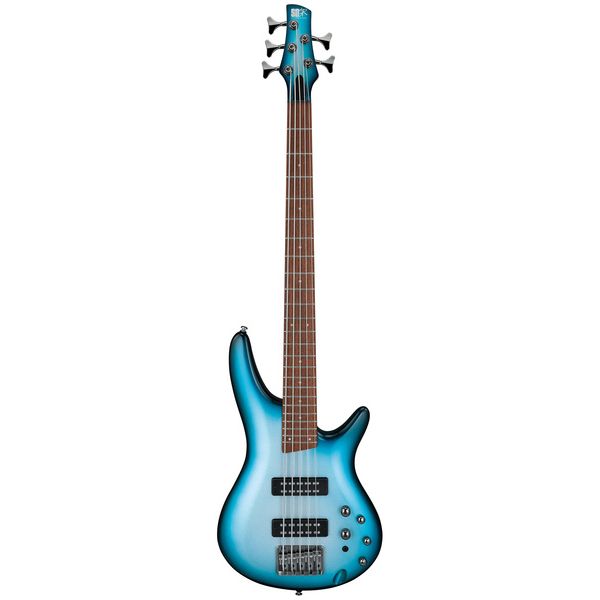
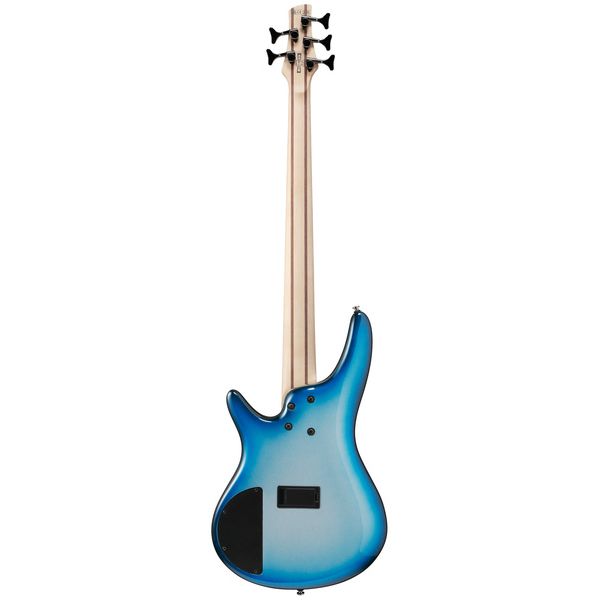
The body is nyatoh, a wood Ibanez leans on a lot in this price bracket because it’s light, resonant enough, and doesn’t cost a fortune. Bolted onto it is a 5-piece maple/walnut neck, which is really the SR series’ calling card. That laminate construction isn’t just for looks, it adds stability and a bit of extra snap to the low end compared to a plain one-piece neck.
The fingerboard is jatoba, dressed with 24 medium frets and simple white dot inlays (hence „DOT” in the model name). Nut width sits at 45mm, which is on the narrower side for a 5-string, and that’s a deliberate choice. More on that in a second.
Hardware and Electronics
Two PowerSpan Dual Coil humbuckers handle pickup duty, one at the neck and one at the bridge, feeding into Ibanez’s own 3-band active EQ. There’s a 3-way Power Tap switch too, which splits the coils and genuinely changes the character of the pickups rather than just thinning out the volume like some cheaper coil-splits do. The bridge is Ibanez’s Accu-cast B125, hardware is finished in Cosmo Black, and it ships with D’Addario EXL165 strings, which is a nicer-than-expected touch at this level.
Playability and Feel
This is where the SR305E actually separates itself from most budget 5-strings. That 45mm nut and Ibanez’s slim SR neck profile mean it doesn’t feel like you’re wrestling a plank. A lot of cheap five-strings widen the neck so much that smaller-handed players (or anyone coming from a 4-string) find the first few sessions genuinely uncomfortable. This one doesn’t do that.
String spacing is tight enough for fast fingerstyle runs but still gives your thumb room to mute the low B properly. Balance on a strap is solid too, nyatoh keeps the body light and it doesn’t neck-dive the way some 5-strings with skinnier bodies tend to.
Tone and Sound
Plugged in, the active electronics give it more range than you’d expect for the money. Roll the mids down and boost the lows and you get a modern, scooped tone that suits metal or hard rock. Flatten the EQ and it’s a surprisingly clean, articulate voice that works fine for funk or pop lines too. It won’t fool anyone into thinking it’s a Marcus Miller signature bass, but it’s genuinely versatile rather than a one-trick pony.
If you’re coming from a 4-string like the Ibanez SR300E, the tonal DNA will feel familiar, just with that extra low B adding real weight underneath. Compared to something like the Squier Classic Vibe 70s Jazz Bass, the SR305E leans more modern and aggressive than vintage-warm, which is worth knowing before you buy.
Who It’s For
This one’s aimed squarely at players who need a real 5-string without spending boutique money. If you’re a gigging bassist who wants a low B for modern worship, metal, or covers gigs and doesn’t want to babysit a fragile instrument, this fits. It’s also a solid step-up bass for someone who learned on a 4-string and is ready for the extra range without a steep price jump.
Honest Niggles
Nothing here is a dealbreaker, but let’s not pretend it’s perfect.
- Some units arrive with slightly loose control pots, so give the knobs a wiggle check before your first gig.
- The stock strings are fine but not remarkable, budget for a set of your preferred brand eventually.
- No gig bag or case included, which stings a bit at this price point.
- The low B can feel a touch floppy if you’re used to higher-end 35″ scale 5-strings, though 34″ scale is honestly the more comfortable choice for most players.
How It Compares
Against beginner-focused 4-strings like the Squier Affinity P Bass PJ, the SR305E is playing a different game entirely since it is built for a five-string workflow from the ground up rather than bolted on as an afterthought. If you are still deciding between a 4 and 5-string altogether, something like the Squier Sonic Bronco Bass is a cheaper, simpler starting point, but you will outgrow it faster.
Don’t forget the amp side of the equation either. A bass this capable deserves something better than a toy practice amp, pairing it with a Fender Rumble 100 or an Ampeg BA-108 will actually let you hear what those PowerSpan pickups and the active EQ are doing.
Key Specs
- Body: Nyatoh
- Neck: 5-piece bolt-on maple/walnut
- Fingerboard: Jatoba, 24 medium frets
- Scale: 864mm / 34″
- Nut width: 45mm
- Pickups: 2x PowerSpan Dual Coil humbuckers
- Electronics: Ibanez Custom 3-band active EQ, Power Tap 3-way switch
- Bridge: Accu-cast B125
- Hardware: Cosmo Black
- Strings: D’Addario EXL165 (.045-.130)
Final Verdict
The Ibanez SR305E isn’t trying to be a premium instrument, and that’s exactly why it works so well. It nails the fundamentals a 5-string bass actually needs: a comfortable neck, usable electronics, and hardware that won’t fall apart on tour. IMO it’s one of the smartest ways into five-string bass playing right now.
If you’ve been eyeing a low B but didn’t want to gamble serious money on the idea, this is the bass that removes the excuse. Give it a proper play before you decide, but don’t be surprised if it ends up coming home with you 😉