Watch It First
Warwick basses have a reputation for being expensive, growly, and slightly intimidating. The RockBass Corvette $$ exists to prove that reputation doesn’t have to come with a boutique price tag.
It’s built overseas rather than in Warwick’s German factory, but the design DNA – that distinctive Corvette body, the wenge fingerboard, the Warwick tone – is unmistakably the real thing.
Honestly, this is one of those basses that quietly outperforms its price bracket, and I don’t say that about every „budget version of a premium brand” instrument.
Build and Design
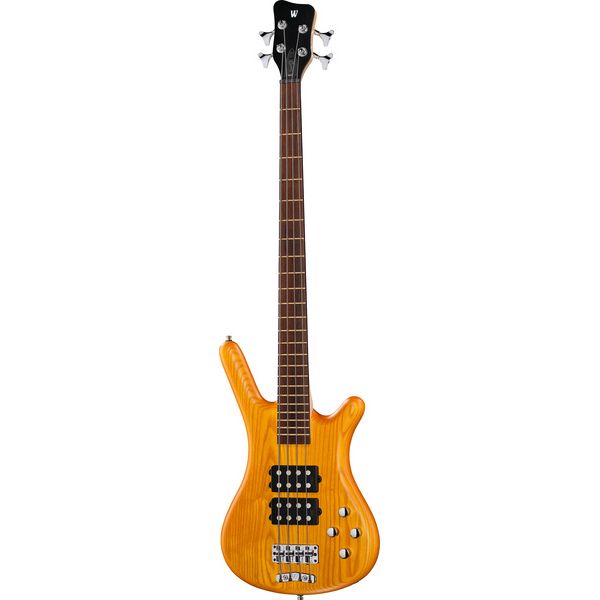
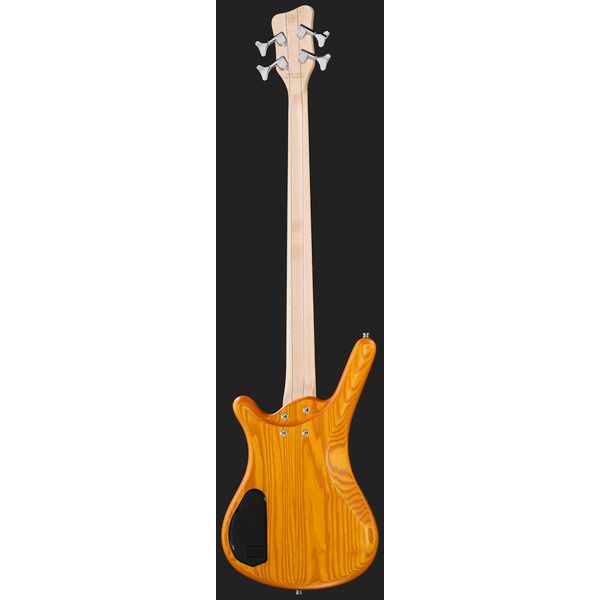
The body is ash, and the neck is a multi-piece bolt-on maple design with wenge stripes running through it – the same construction philosophy Warwick uses on far pricier instruments, just executed at a RockBass price point.
The wenge fingerboard is the real signature move here. It’s dense, dark, and gives the whole bass a distinctly different feel under the fingers compared to the rosewood or maple boards most basses in this price range use.
24 jumbo frets made from a titanium-brass alloy is genuinely unusual spec for this price bracket – most basses top out at 20 or 21. That extra real estate matters if you play up high regularly, and the harder alloy resists wear noticeably better than standard nickel-silver frets.
The Honey Violin Transparent Satin finish shows off the ash grain nicely without feeling flashy, and Warwick’s own security locks on the strap buttons are a small but genuinely thoughtful touch – this is a bass built by people who’ve thought about what happens on a real stage.
How It Plays and Sounds
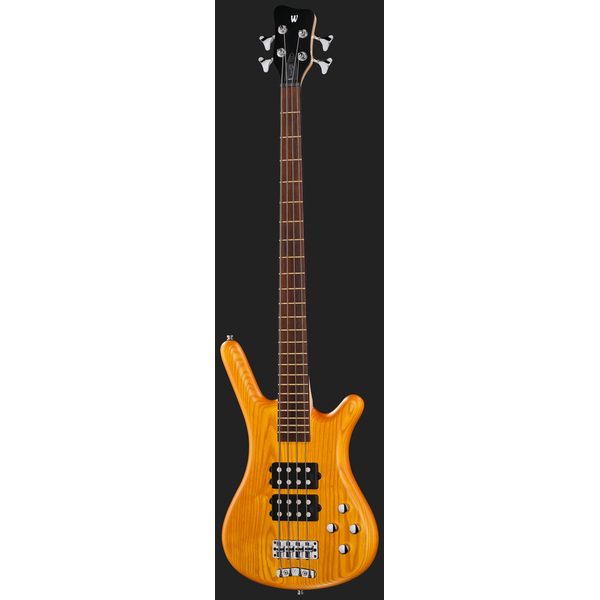
Two passive MEC MM-style humbuckers feed an active 2-band RockBass preamp, with separate controls for volume, pickup balance, treble, and bass. That balance knob is the key to this bass’s versatility – you’re not locked into one voicing.
Blend toward the bridge and you get that classic StingRay-adjacent growl. Favor the neck and it thickens into something closer to a modern P-bass, but with more clarity thanks to the wenge board and active electronics.
The wenge fingerboard genuinely does something audible here – there’s a brightness and note definition that darker boards like rosewood soften. Slap players in particular will notice how articulate this bass stays even at higher gain settings.
Weight sits around 4kg, which is reasonable for an ash-bodied active bass – noticeable on a long set, but not punishing.
Who It’s For
This is the bass for the player who wants genuine Warwick DNA – that wenge board, that active MM-style growl – without the full German-made price. It suits funk, fusion, and modern rock players who want an instrument with real personality rather than a generic all-rounder.
It’s also a smart step-up purchase for a bassist who’s already comfortable on something like the Sterling by Music Man StingRay RAY35HH and wants to explore a different tonal identity with a similarly active, humbucker-driven bass.
Less obviously, the 24-fret neck makes it a genuinely good option for anyone crossing over from lead guitar or a bass like the Ibanez EHB600 who wants full range without switching to a genuinely exotic instrument.
The Honest Niggles
Factory setup is hit-or-miss on this one based on user reports – some units arrive nearly ready to play, others need a proper action adjustment before they feel right. Budget in a setup with your local tech if you’re not comfortable doing it yourself.
It’s active-only, so carry a spare 9V battery – there’s no passive fallback if it dies mid-set.
Stock levels and lead times can vary significantly by finish and string count, so check availability carefully before you commit to a specific color if you’re on a deadline.
And at this price, you’re competing against some serious alternatives – it’s worth comparing it directly against something like the Yamaha BB235 if raw value per złoty is your main concern rather than the specific Warwick tone and feel.
Where It Fits in a Rig
The active preamp already does a lot of tonal shaping, so keep the pedalboard modest. A compressor like the Boss CS-3 is still worth having to control dynamics live, especially if you’re digging in with a pick.
For amplification, this bass rewards something with genuine headroom and clean articulation – a head like the Markbass Little Mark IV or a combo like the Ampeg Rocket Bass RB-110 both let that wenge-board clarity actually come through instead of getting smoothed over.
If you’re assembling a full home practice setup around this bass, the Warwick BC 20 is a natural, brand-matched companion for smaller spaces.
Specs at a Glance
- Body: Ash
- Neck: Multi-piece bolt-on maple with wenge stripes
- Fingerboard: Wenge, 508mm (20″) radius
- Scale: 864mm (34″, long scale)
- Frets: 24, jumbo, titanium-brass alloy
- Nut width: 38.5mm (Just A Nut III Tedur)
- Pickups: 2x passive MEC MM-style humbuckers
- Electronics: Active 2-band RockBass preamp (volume, balance, treble, bass)
- Bridge: 2-piece Warwick design
- Strings: Warwick RED .045-.105 (factory)
- Weight: ~4.0kg
- Finish: Honey Violin Transparent Satin
RockBass vs. the German-Made Warwick
It’s worth being upfront about what „RockBass” actually means. Warwick builds these overseas rather than at the Markneukirchen factory, which is exactly how they keep the price this far below the German-made Corvette $. The shapes, the electronics layout, and the general design language all carry over faithfully.
What you’re mainly trading away is the last few percent of fit-and-finish polish and the hand-selected tonewoods that justify the premium line’s price. For most players, especially anyone who hasn’t spent serious time on a German Warwick, that gap is genuinely hard to notice in a live mix or a recording.
Final Verdict
The RockBass Corvette $$ delivers genuine Warwick character – that wenge board clarity, the active MM growl, the 24-fret range – without asking you to save up for the German-made version. It’s a bass with real identity, not just a generic value pick wearing a famous logo.
Factory setup can be a little inconsistent and it demands a battery, but neither is a dealbreaker once you know to check for them. For a player who wants something genuinely different from the usual P/J or StingRay-style options, this is one of the more interesting basses in its price range – and honestly, one of my favorites to recommend.