Watch It First
Buying your first bass is intimidating enough without fifty near-identical models staring back at you from a search page. The Squier Affinity Precision Bass PJ cuts through that noise by doing the one thing a beginner bass actually needs to do: sound decent, stay in tune, and not fall apart in year one.
It’s not flashy and it’s not trying to be. What sets it apart from a plain P-Bass is right there in the name – PJ. You get the classic split-coil Precision pickup at the neck plus a Jazz-style single coil at the bridge, which more or less doubles the tonal range for not much extra cash.
I’ve spent time with a few of these over the years – loaner basses at gigs, students bringing them into lessons, one that lived under my desk for a review cycle – and they’re consistently solid for what they cost. Let’s get into why, and where the compromises actually show up.
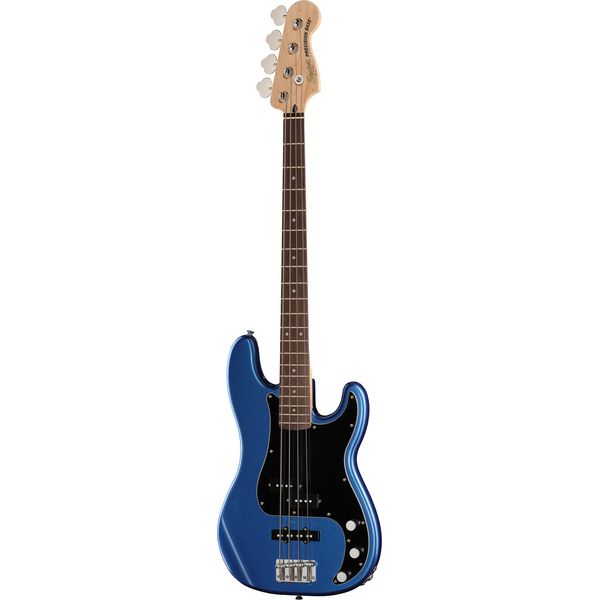
The PJ Pickup Setup – Why It Actually Matters
A standard Precision Bass gives you one split-coil pickup and one sound: thick, punchy, a bit one-dimensional. Fine for a lot of players, but limiting when you’re still figuring out what you like.
Add the bridge Jazz pickup and suddenly you’ve got options. Roll off the P pickup and lean on the J alone and you get a brighter, more scooped tone that cuts through a mix nicely for slap or funk lines. Blend both and you land somewhere between vintage thump and modern clarity.
It’s a genuinely useful upgrade over a plain P for the price difference, and it’s the main reason this model gets recommended over the standard Affinity P so often. For rock, punk, or straightforward pop bass lines, you’ll probably live on the P pickup alone anyway – but having the J there for when a song calls for more bite is the kind of flexibility beginners don’t know they need until they need it.
Build Quality – Where Squier Cut Corners (and Where It Didn’t)
The body is poplar, which is standard fare at this price point – light, fairly resonant, nothing exotic. The neck is bolt-on maple with a laurel fingerboard, which has become Squier’s go-to substitute for rosewood across most of the Affinity line.
Hardware is chrome throughout: a 4-saddle standard bridge, vintage-style open-gear tuners, and a synthetic bone nut. None of it is premium, but none of it feels like it’s going to quit on you either. The 3-ply pickguard is a nice period-correct touch that a lot of budget basses skip.
Where corners genuinely get cut is in the setup out of the box. Multiple owners (myself included, on a demo unit) have found the factory action higher than it should be and the electronics occasionally a bit crackly until they bed in. Budget ten minutes with a screwdriver, or better, get your local shop to do a proper setup – it transforms the thing.
Playability & Neck Feel
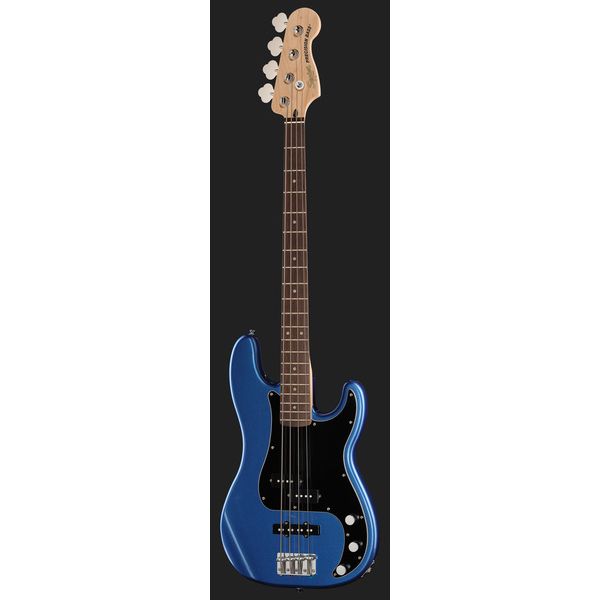
The C-shape neck profile is comfortable for pretty much any hand size, and at 34″ scale with 20 medium jumbo frets it plays like a „real” bass rather than a scaled-down beginner toy. That matters more than people think – you won’t outgrow the feel of this thing in six months.
It’s not a light instrument, but it balances well on a strap, which is more than you can say for some budget P-Basses that neck-dive the second you stand up. If you’re moving on from an entry-level 6-string and picking up bass for the first time, the transition in hand feel is genuinely painless.
Amp Pairing & Recording
Plugged straight into an interface via DI, the P pickup gives you a clean, punchy foundation that needs almost no EQ work – it just sits in a mix. The J pickup adds enough top end that you can dial back the mid-scoop most cheap basses need in post.
For live or practice use, don’t skimp on the amp side of the equation. A basic combo will flatten out the tonal difference between the two pickups; something with a bit more headroom lets the PJ voicing actually shine through.
Who’s This Bass For?
Beginners, obviously – but also gigging players on a tight budget who need a reliable backup, or home studio owners who want a proper P/J tone without spending on a Player Series Fender. It also makes sense as a first bass for guitarists dabbling in production who just need solid low end on a track.
Pair it with something like the Ampeg BA-108 for home practice, or the Hartke HD25 if you want a bit more headroom, and you’ve got a complete rig for not much outlay. If you’re planning on gigging soon, look at something with more wattage like the Fender Rumble 100 instead.
Honest Niggles
The tuners lack a bit of precision compared to sealed die-cast units – fine tuning takes patience. The bridge saddles are basic stamped metal, not the most premium feel under the fingers. And as mentioned, the factory setup is rarely gig-ready straight out the box.
The stock strings are also nothing special – serviceable, but swapping them for a decent roundwound set is one of the cheapest upgrades you can make and it noticeably improves the tone. None of these are dealbreakers, and honestly, you’d expect worse at this price. IMO it’s still one of the more sensible first-bass purchases going.
How It Stacks Up
Against the Squier Sonic Precision Bass, this PJ model is the step up – the Sonic drops the bridge pickup and trims a few other features to hit an even lower price point, so it’s the better pick only if budget is truly the only factor.
Step up from here and you land on the Squier Classic Vibe 50s Precision Bass, which brings nicer finishes and upgraded electronics for a noticeably higher price – worth it once you know bass is a long-term thing for you.
If you want something visually different but similarly priced, the Squier Affinity Jaguar Bass H is worth a look too, though it’s a different beast tonally with its single humbucker rather than a PJ split.
Specs at a Glance
- Body: Poplar
- Neck: Bolt-on maple, C profile
- Fingerboard: Laurel, 241mm radius
- Scale: 34″ (864mm) long scale
- Frets: 20 medium jumbo
- Pickups: P/J – split-coil Precision (neck) + single-coil Jazz (bridge)
- Controls: 2x volume, 1x master tone (passive)
- Bridge: 4-saddle standard, chrome
- Nut: Synthetic bone, 41.3mm width
- Hardware: Chrome, vintage-style tuners
Final Verdict
The Squier Affinity Precision Bass PJ isn’t reinventing anything, and it doesn’t need to. It nails the basics – solid build, versatile tone thanks to that PJ pickup pairing, and a neck that feels like an actual instrument rather than a toy.
Budget a proper setup after it arrives and this is genuinely one of the smarter first-bass buys out there, whether you’re gigging on a shoestring or just figuring out if bass is your thing. Punches well above its price tag – and that’s really all you can ask for at this level.