Watch It First
Yamaha has a slightly annoying habit of building guitars that quietly outperform far more famous names, then declining to make a fuss about it.
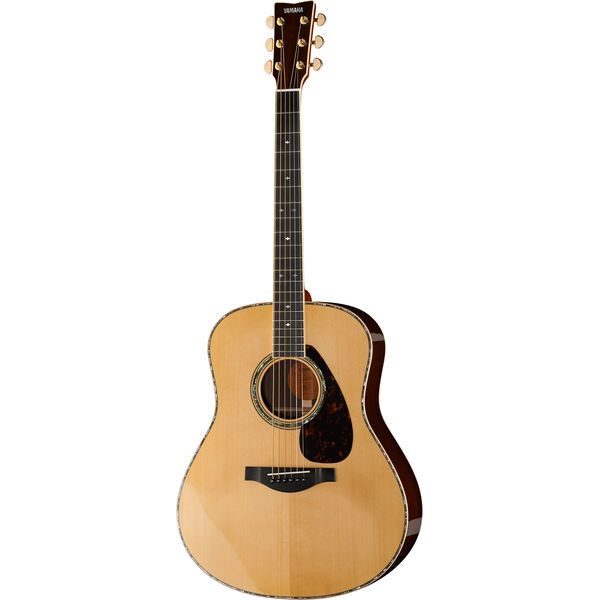
The LL16 D A.R.E. is the worst offender in their acoustic line. Solid Engelmann spruce top, solid rosewood back and sides, and a top treatment nobody else does.
I have played a lot of acoustics this year. This is the one that made me go quiet and then check the price tag twice.
What A.R.E. Actually Is
Acoustic Resonance Enhancement. It sounds like marketing nonsense. It is not, and I say that as someone who is deeply cynical about wood-related buzzwords.
Yamaha treats the top with controlled heat, humidity and pressure before the guitar is built, which changes the cellular structure of the spruce to mimic decades of natural ageing.
The practical result is a guitar that sounds broken-in on day one. No three-year wait for the top to open up. It is already there.
Is it identical to a genuinely old instrument? No. But it skips the awkward first year where a new solid-top acoustic sounds a bit tight and stiff, and that is worth a lot.
The Jumbo That Is Not Really a Jumbo
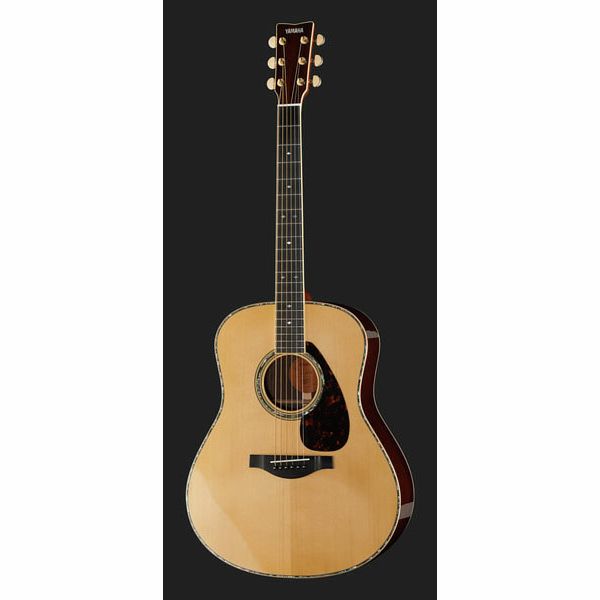
The L-series body is Yamaha’s original jumbo shape, and it is narrower at the waist than a Gibson-style jumbo while still being deep.
That means it sits on your leg better than the body size suggests. It is not the wrestling match a proper jumbo like the Epiphone Dove Studio can be.
The trade is projection. It is loud, but it is a focused loud rather than a room-filling boom. Recording engineers tend to like that. Buskers sometimes do not.
Neck and Feel
Five-layer mahogany and rosewood neck, ebony fingerboard, mother-of-pearl inlays. The laminated neck is a stability play and it works – I have never seen an L-series with a twisted neck.
Scale is 650 mm with a 44 mm nut. Slightly wider than a lot of imports, slightly narrower than a Martin at 44.5 mm, and the profile is comfortable rather than chunky.
How It Sounds
Engelmann spruce is softer and sweeter than Sitka. Combined with solid rosewood you get a top end that shimmers rather than cuts.
Strummed open chords have that rosewood scoop in the mids and a bass note that hangs around long after you expected it to fade.
Fingerstyle is where it genuinely shines. Note separation is excellent and the guitar responds to a very light touch, which a lot of big-bodied acoustics simply do not.
It is a more refined sound than almost anything else near this money. Put it next to a similarly priced import and the Yamaha sounds like it belongs a tier higher.
The Pickup Is the Weak Link
The D in LL16 D means it has electronics. What it does not mean is that they are any good.
It is a passive piezo with no onboard preamp and no controls whatsoever. Plug in, and whatever your amp or DI does is what you get.
You will need an external preamp or a decent acoustic DI to make it sound like anything other than a slightly brittle quack. Budget for that.
On the plus side, no battery to die mid-set and no ugly control box cut into the side of an otherwise gorgeous instrument. I will take that trade, personally.
Specs at a Glance
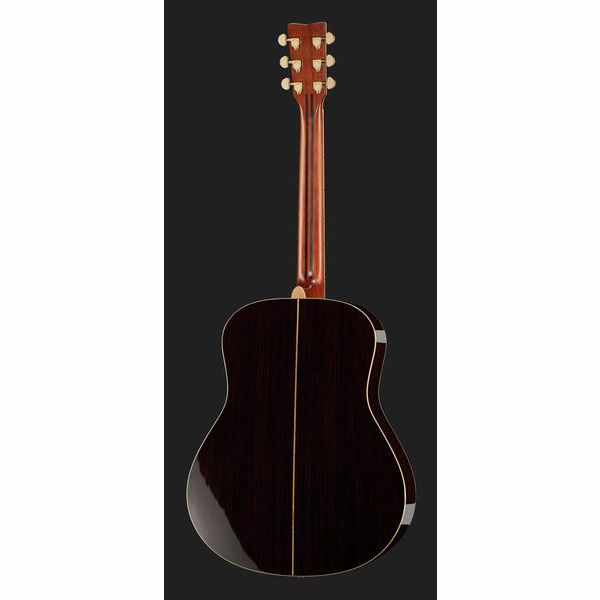
- Body: original jumbo (L-series) shape
- Top: solid Engelmann spruce with A.R.E. treatment
- Back and sides: solid rosewood
- Neck: 5-layer mahogany and rosewood
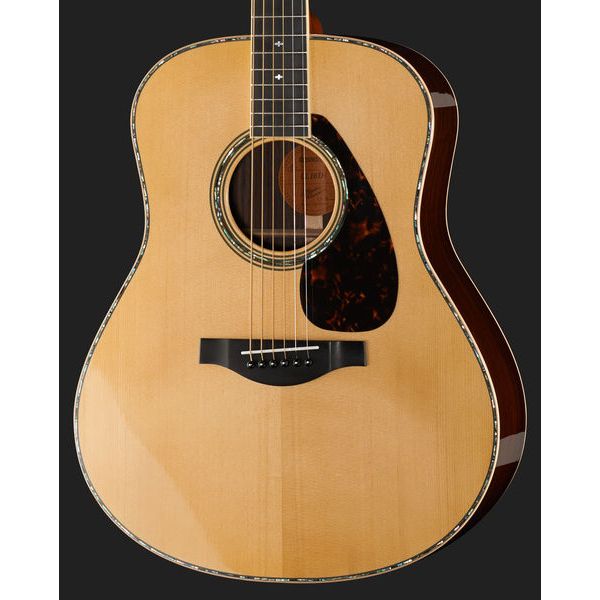
- Fingerboard: ebony with mother-of-pearl inlays
- Frets: 20
- Scale: 650 mm
- Nut width: 44 mm
- Electronics: passive piezo pickup, no preamp
- Tuners: gold-coloured Yamaha
- Finish: high-gloss natural polyurethane
- Softbag included
Build Quality, Up Close
This is a Chinese-built guitar to a Japanese specification, and the execution is frankly better than it has any right to be.
Bracing is tidy inside, glue lines are clean, and the binding work is properly done. I went looking for corners cut and did not find any obvious ones.
The gloss finish is thin and even. That matters acoustically – a thick, plasticky coat chokes a top no matter how good the wood underneath is.
Factory setup on mine was very good out of the box, which is rarer than it should be at any price.
A Month of Playing It
It became my default writing guitar within about a week, which is the highest compliment I have to give.
It handles being played quietly at midnight without turning thin, and it handles being hammered without turning to mush. That range is unusual.
Against a Taylor 110ce it is warmer and less bright. Against a Seagull S6 it is more refined and more expensive-sounding, as it should be.
The closest comparison I have to hand is a solid-rosewood Martin, and honestly the Yamaha holds its own more than brand loyalty would like to admit.
The Niggles
The pickup, obviously. I have already said my piece but it bears repeating, because people buy the D model expecting a plug-and-play stage guitar and it is not that.
You get a softbag, not a hardcase. On a solid-rosewood instrument that lives and dies by humidity, that feels like a strange saving.
The gold-coloured tuners will go patchy over a few years. They work fine, they just stop looking smart.
And there is no cutaway. If you live above the twelfth fret, look at the LL16 variants that have one, or look elsewhere entirely.
Who Should Buy One?
Anyone ready to stop buying beginner acoustics. This is a proper grown-up instrument that will not need replacing.
Songwriters and home recordists especially. That balanced, slightly polite voice sits into a mix beautifully with almost no EQ.
If you want something smaller and cheaper from the same brand, my write-up on the Yamaha CSF3M covers the parlour end. And the Yamaha APX600 is the actual stage answer if plugging in is your priority.
Strings, Humidity and Not Ruining It
Solid rosewood is beautiful and it is also the fussiest common tonewood about humidity. A Polish winter with the radiators on will dry it out fast.
Get a soundhole humidifier and a cheap hygrometer. Between about 45 and 55 percent relative humidity and the guitar will be happy indefinitely.
Let it drop into the twenties and you get fret sprout first, then a sunken top, then genuinely expensive problems. IMO this is the single most important thing to know before buying any all-solid guitar.
On strings, phosphor bronze .012s suit it. I tried .011s for a week and the guitar felt like it was holding something back.
Where It Sits Against the Rest of the L-Series
Below this you get laminate back and sides, and the difference in bloom and sustain is immediately obvious once you play them back to back.
Above it, the LL26 and beyond move to Japanese assembly and better appointments, and the gains get much smaller for a lot more outlay.
The 16 is the sweet spot. That is not a controversial opinion – it is more or less the consensus among people who have played the whole range.
Final Verdict
The LL16 D A.R.E. is one of the great value plays in acoustic guitars, and it has been for over a decade now.
All-solid construction, a genuinely clever top treatment, and a level of finish that shames guitars costing considerably more.
Ignore the electronics. Buy it for the acoustic sound, mic it when you need to record it, and put the saving towards a hardcase.
Would I own one? I keep finding excuses to play the one I borrowed. Take that however you like. 😉